How to Compare BLDC Washing Machine Motor Efficiency Across Wash and Spin Cycles
Compared the efficiency of a BLDC washing machine motor over wash and spin cycles by measuring the electrical input and the mechanical output actually achieved in operation. Measuring peak efficiency does not necessarily reveal the performance of a motor that first reverses a wet wash load and then accelerates a spin cycle at high speed. Hence, when comparing complete washer designs, also measure the efficiency of the controller and the transmission.
Two motors may be rated for the same power but behave differently at low RPM, during repeated start-ups, and when the drum is out of balance. Rather than ranking motors for efficiency, the goal is to match a motor with appropriate controls to achieve the required wash quality and spin performance at reasonable energy consumption.
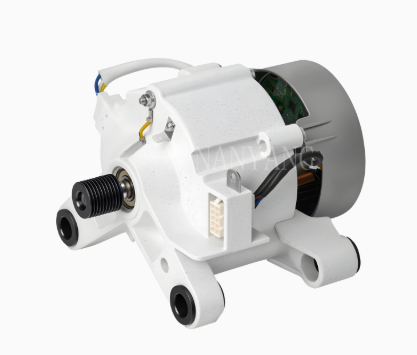
Why Wash and Spin Need Different Measurements
Start by setting up a duty-cycle comparison of what your appliance does. The nameplate ratings of your candidates are of little use to determine their energy consumption, since the drive most likely operates away from the nameplate rating most of the time.
Wash Loads Require Repeated Torque Changes
For washing, the typical cycle consists of short reverses of the drum, variable amounts of water and fabric, and operation at relatively low speed for much of the time. Start/stop as well as torque control all consume a significant portion of the cycle time, and therefore current and input power need to be measured and recorded throughout the cycle rather than just averaging the steady running sections.
Useful comparisons are made with the same mass of laundry, same water level, same program and same mechanical configuration etc., otherwise apparent motor savings may be due to milder programs or to different transmissions, not more efficient drives.
Spin Loads Emphasize Acceleration and Speed
When testing spin, separately measure the energy used to accelerate up to speed and the energy used while running at constant speed. Note any unbalance corrections and end speed. A design that uses less power at constant speed may use more power if it frequently down-ramps and re-starts to constant speed.
Determine if the selected motor will maintain the required speed when connected to the expected drum inertia and wet mass. Lower input power is of little value if the washer fails to meet its water extraction targets.
Include the Drive and Mechanical Path
The motor efficiency is calculated as the mechanical output divided by the electrical input to the motor at a specific point. The Appliance electricity use also includes losses in the controller and the effect of any belt, pulley and other transmission components. State clearly where the measurements were taken and report both efficiency and electricity use.
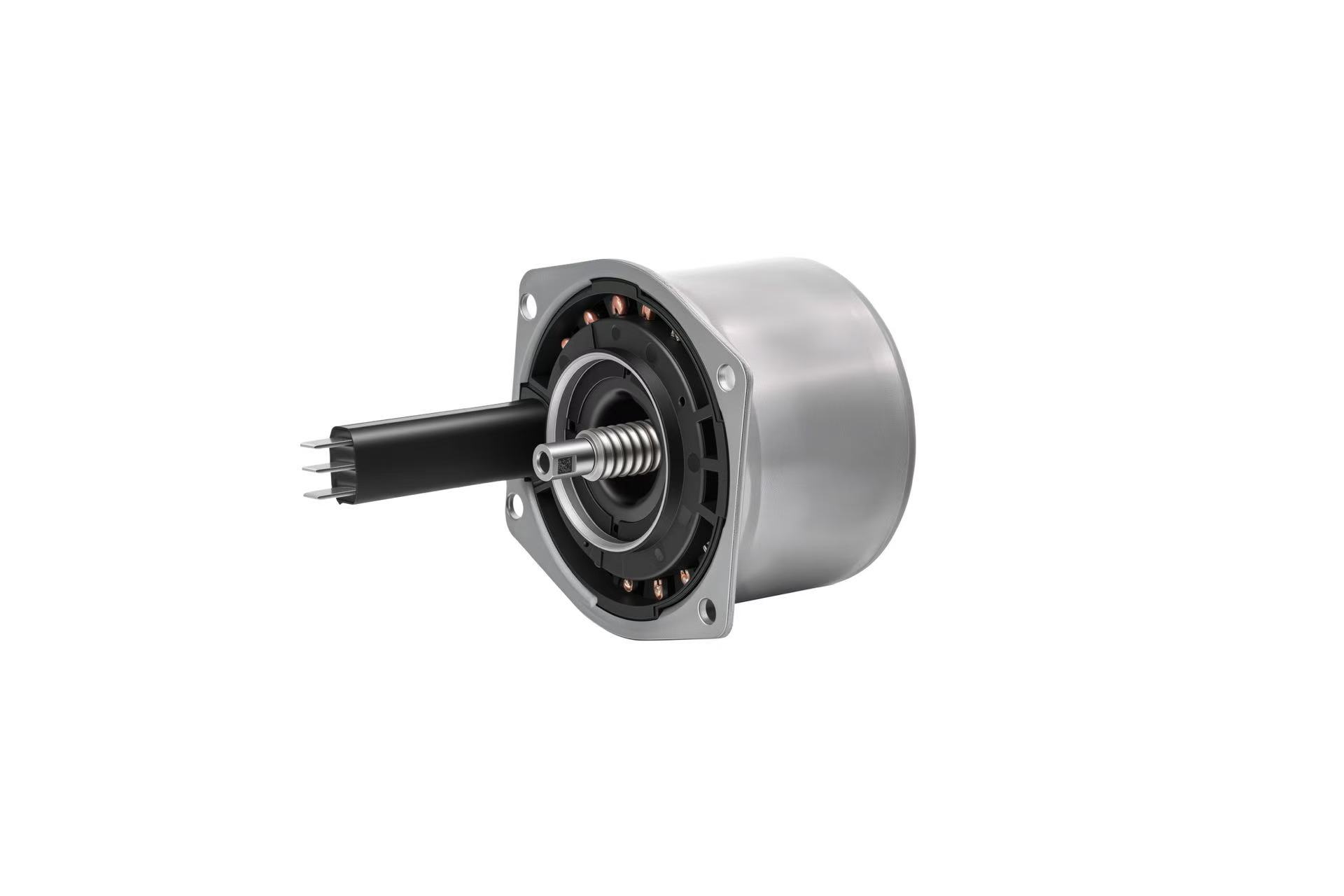
إن محرك BLDC ذو التحميل الأمامي page gives individual efficiency values for wash and spin as well as torque and speed range. Since one label is not sufficient, one has to ask for the test method used for these values and a reference point to compare figures with other suppliers.
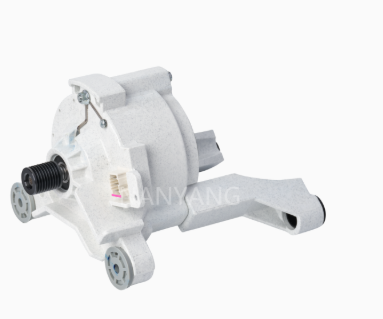
Build a Fair Efficiency Comparison
One useful worksheet to prevent wrong comparison: Record motor, controller and machine settings for each test run.
Fix the Test Conditions
A test specification for a washing machine could define the following parameters: the size and distribution of the laundry load, the amount of water used, supply voltage, program, ambient temperature and starting motor temperature. One could test until the same elapsed time has passed, until the same wash result has been achieved or until the same amount of extraction water has been removed. Matching the result of the appliance required for procurement is usually more relevant than matching the runtime.
For the tests, include several load sizes instead of just picking one ‘ideal’ load size for the test. If the washer changes to a different program during the test, then record the complete program path that the controller took to automatically correct for an unbalanced drum, since the amount of time spent correcting will influence the total cycle energy for that type of unbalanced wash load.
Capture More Than One Efficiency Number
Collect and analyze the following: speed, torque where available, current, voltage, input energy to motor and controller temperatures. Log start and reversal periods as well as steady wash, spin acceleration and steady spin individually. Assign a duration and related energy for each result measured, to ensure short peaks are not reported for entire program duration.
Nanyang’s BLDC motors and electrically controlled solutions are designed for various washer capacities and washer designs. Nanyang can provide the recommended model for a specific washer and also a measured operating map for the proposed pairing as opposed to the published data for a product family that may not be applicable as designed.
Calculate Cycle Energy at Equal Output
Add up the energy used during each relevant part of a cycle and compare like with like complete cycles. Note that a reduction in steady-state motor losses may be offset by an increase in acceleration current and/or cycle time. Record the wash and extraction results next to the energy figure so that the figure has some meaning.
It’s also important to make a distinction between the energy in the electricity and the efficiency of the appliance. Even if a motor is efficient at a given test point, the total energy used by the appliance can be higher because it runs for a longer time or even corrects itself several times.
Interpreting Results for Motor Selection
While efficiency should be a factor in purchasing a washer, it should not be the only factor to consider. Look at the trade-offs that the design of a particular washer impose.
Check Low-Speed Control and Thermal Headroom
A low-loss motor is only useful if it is paired with a suitable controller that is able to maintain constant torque during wash reversals without overheating. Compare the winding and electronics temperatures at the same duty cycle. What is limiting – the motor, the inverter or the enclosure of the appliance?
Request a temperature margin for the mounting you intend to use. The open bench and a washer installed in it do not cool alike.
Compare Service-Relevant Construction
The motor’s shaft, mounting geometry, bearings, connectors, and protection requirements must suit the machine. A nominally better efficiency result does not justify a new mechanical failure mode or an unserviceable interface. Record the approved part, its controller revision, and the tests required after a change in either component.
Nanyang’s motor testing and validation capabilities can frame a supplier conversation. However, it is the OEM’s responsibility to obtain supplier-specific evidence for a particular machine running at the supplier’s specified load profile and within the supplier’s specified acceptance limits.
Decide Using the Application Map
First rank candidates on total cycle energy, wash quality, extraction, temperature, noise and cost at production volume of interest. Note that published numbers must be ranked after verifying that they were achieved at same voltage, duty, and boundary as numbers for other candidates being compared. Numbers for motor efficiency published by one supplier and for machine electricity use by another must be translated to equivalent numbers for motor proposal by supplier’s design support.
The test procedure described above also indicates whether a BLDC motor is suitable or not. It has to be adjustable, and the buyer has to validate the controller, the transmission and the motor. It doesn’t prove that every single BLDC design is better than alternative solutions in each and every wash application.
استنتاج
Efficiency comparison of BLDC motors used in wash and spin cycles across a number of duty cycles with corresponding energy consumption in complete wash cycles that produce similar laundry results. Based on the motor data, choose a number of candidates and then choose the best washer + motor combination. نانيانغ موتور supplies BLDC motors as well as provides appliance motor development services. We can help recommend a motor for a specific wash cycle profile and a set of acceptance criteria.
أسئلة متكررة
Is spin efficiency the same as wash efficiency?
No. They are characterized for different operating conditions. Compare them only at the test points and within the measurement boundaries stated for each test.
Does a higher motor efficiency percentage guarantee a lower electricity bill?
No. Total cycle energy depends on many parameters, including controller losses, load behavior, mechanical losses and the duration of the program.
What should be kept constant in two motor tests?
Use the same appliance, supply, laundry load, water conditions, program goal and measurement method where possible.
Why measure starts and reversals separately?
It draws different amounts of current for what is essentially steady rotation and recycles often enough to affect total wash-cycle energy.
Can published motor data replace washer-level testing?
No. The published values are used to select from a number of possible motors but the finally chosen motor and controller must be tested on the proposed machine.