What Is the Difference Between BLDC Motor and DD Motor in Washing Machine?
Choosing the right motor is one of the most practical decisions you make when developing or sourcing a washing machine. Motor choice affects noise, vibration, energy use, service life, and even how users describe the product after a year of use. In today’s market, inverter motor washing machine platforms dominate mid to high-end models, and two solutions appear most often in discussions with engineers and buyers: the BLDC motor washing machine and the Direct Drive motor washing machine.
Behind many of these platforms is Huzhou Nanyang Electric-Motor Co., Ltd., a manufacturer that has spent more than 30 years focused on washing machine motor types, from classic AC motors to large-scale BLDC and DD systems. Nanyang Motor operates five production bases, runs over 50 variable-frequency motor lines, and supplies millions of inverter motors every year. Its experience in BLDC motor washing machine and Direct Drive motor washing machine projects shows up in small but important details: lower vibration, stable torque at low speed, and predictable quality at scale.
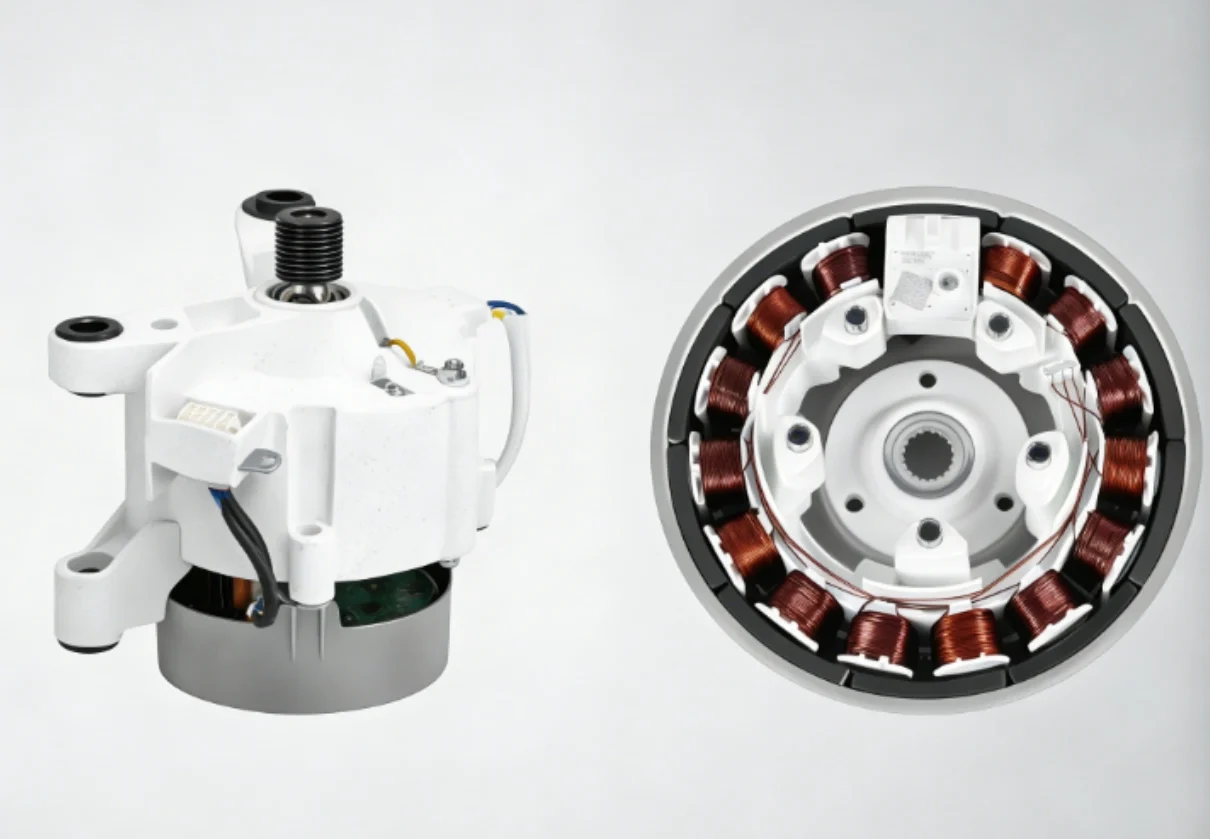
What Is a BLDC Motor in a Washing Machine?
A BLDC motor washing machine uses a brushless DC motor combined with inverter control. This setup has become common in drum machines between 6 kg and 20 kg, especially where cost, efficiency, and flexibility need to balance.
Before looking at details, it helps to know why BLDC designs spread so quickly. They replaced brushed motors not because they are fancy, but because brushes wear out. When brushes disappear, maintenance drops and control improves.
Brushless Structure With Inverter Control
In a BLDC motor washing machine, electronic commutation replaces mechanical brushes. The inverter adjusts voltage and frequency in real time, so drum speed changes smoothly from gentle wash to high-speed spin. Nanyang Motor applies this principle across its BLDC platforms, drawing on decades of variable-frequency motor experience and large-scale production data.
Belt-Driven Power Transmission Design
Most BLDC motor washing machine designs still use a belt and pulley. This layout keeps the motor compact and flexible in placement. Nanyang Motor engineers often point out that belt systems also simplify servicing and allow easy torque tuning for different drum sizes.
Typical Applications in Drum Washing Machines
Motor BLDC washing machine solutions from Nanyang Motor are widely used in front-loading machines up to 20 kg. These systems deliver washing efficiency above 68 percent and spin efficiency above 75 percent, numbers that matter when energy labels are reviewed line by line.
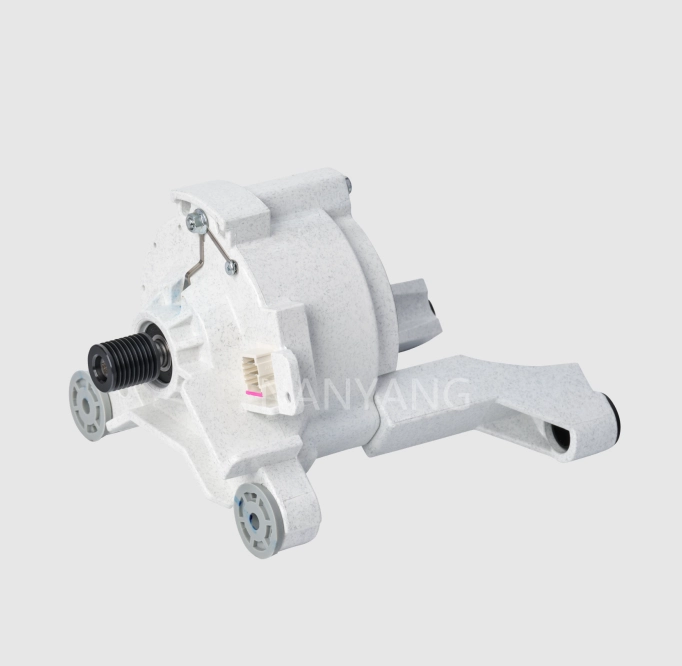
O que é um Motor Direct Drive em uma máquina de lavar?
A Direct Drive motor washing machine removes the belt completely. The motor mounts directly to the drum, forming a single rotating system. This idea sounds simple, but execution matters.
Before discussing advantages, consider a real situation. In many households, the loudest sound during washing comes from belt vibration at mid-speed. Removing that part changes the sound profile instantly.
Direct Coupling Without Belt or Pulley
In a Direct Drive motor washing machine, torque flows straight from motor to drum. Nanyang Motor designs its DD motors to handle this load without mechanical buffers, using reinforced stator structures and precision rotor balancing.
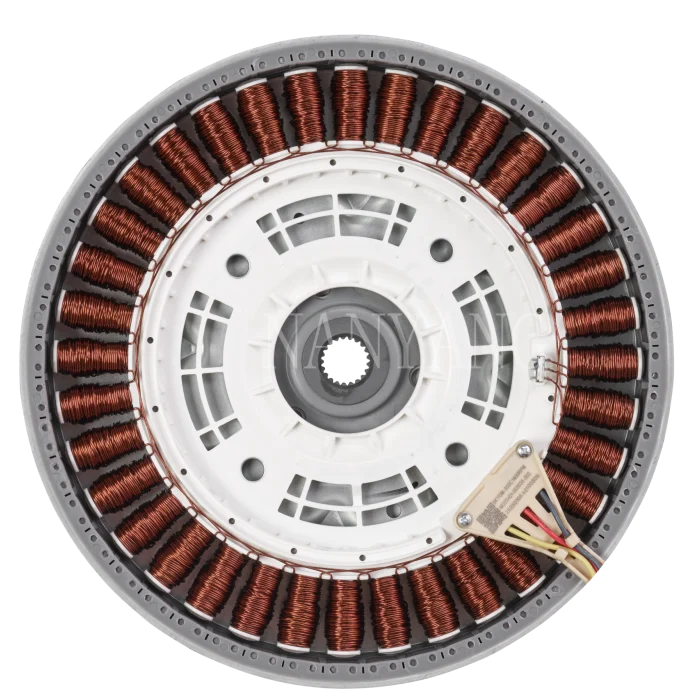
High-Torque Low-Speed Operating Principle
Direct Drive motors deliver strong torque at low speed, which helps during heavy loads like blankets or towels. This is one reason low vibration direct drive washing machine designs are favored in premium segments.
Structural Integration With Inner Drum
Because the motor sits on the drum axis, the overall structure becomes flatter and more rigid. Nanyang Motor applies experience from automotive motor balance testing to reduce eccentric rotation.
How Do BLDC Motor and DD Motor Differ in Mechanical Structure?
Mechanical layout is the first place where BLDC motor vs direct drive motor in washing machine differences become obvious. This difference drives cost, noise, and long-term wear.
At this point, many buyers ask whether fewer parts always mean better results. The answer depends on how the system is built and tested.
Power Transmission Path Comparison
BLDC motor washing machine systems use motor, belt, pulley, and drum. DD systems remove intermediate parts. Nanyang Motor’s data from mass production shows that each removed component reduces potential failure points, but only if the remaining parts are robust enough.
Component Count and Wear Points
Belts stretch. Pulleys age. These are known facts. In DD systems, these wear points disappear, but bearing and shaft accuracy become critical. Nanyang Motor controls these factors by manufacturing key components in-house, including stator cores and rotors.
Impact on Long-Term Reliability
Field data from Nanyang Motor indicates BLDC motors routinely exceed eight years of service, while DD motors often pass ten years under similar use.
How Do BLDC and DD Motors Compare in Noise and Vibration?
Noise is not just a comfort issue. It affects product reviews, return rates, and even brand image. This is why washing machine motor noise BLDC vs DD is discussed so often.
Washing Machine Motor Noise BLDC vs DD
BLDC motor washing machine designs already reduce noise compared with traditional AC motors. Still, belts introduce friction and resonance. Direct Drive motor washing machine systems remove these sounds. Nanyang Motor measures typical DD noise levels below 58 dB in high-capacity models.
Washing Machine Vibration BLDC Motor vs DD Motor
Vibration comes from imbalance and transmission elasticity. Belts absorb some shock but also create oscillation. DD motors rely on precise control and rigid mounting. Nanyang Motor applies dynamic balancing methods similar to EV motor testing, which lowers vibration across the speed range.
User Perception in Quiet Home Environments
From a user perspective, quiet washing machine motor BLDC solutions already feel modern. DD systems feel calmer, especially during spin. This difference often decides BLDC vs DD motor which is better for washing machine positioning.
Which Motor Is More Energy Efficient in Washing Machines?
Before choosing, think about where energy is lost.
Energy Efficiency BLDC Motor Washing Machine
BLDC motors are efficient by design. Nanyang Motor reports 20 to 30 percent energy reduction compared with traditional motors, mainly through inverter control and brushless operation.
Transmission Loss Versus Direct Efficiency
Belts waste energy through friction. DD motors avoid this entirely. Nanyang Motor testing shows that Direct Drive systems convert more electrical energy directly into drum motion, especially during frequent speed changes.
Performance Under Variable Load Conditions
Heavy loads expose inefficiencies. DD motors handle these better due to high torque at low speed.
How Does Control Technology Differ Between BLDC and DD Motors?
Inverter Drive Requirements and Feedback Control
Both BLDC and DD motors use inverters. DD systems often require higher precision feedback. Nanyang Motor designs controllers and motors as matched sets, reducing tuning effort for OEMs.
Speed Precision and Load Adaptation
BLDC motor washing machine systems already provide wide speed ranges. DD motors go further, enabling fine drum movements for delicate fabrics.
Compatibility With Smart Washing Programs
Modern machines adjust speed and torque constantly. Nanyang Motor supports PWM, CAN, and I²C protocols, making integration easier across markets. This flexibility matters when choosing BLDC motor or direct drive motor for washing machine projects aimed at multiple regions.
BLDC Motor vs DD Motor Which Is Better for Washing Machine Brands?
Cost Structure and Manufacturing Trade-Offs
BLDC motor washing machine systems cost less and scale easily. DD systems cost more but reduce parts and noise. Nanyang Motor supplies both, allowing brands to segment product lines clearly.
Product Positioning From Entry to Premium Models
Entry and mid-range machines often favor BLDC. Premium machines lean toward DD. Nanyang Motor’s ability to supply both lets brands keep a consistent supply chain.
How Nanyang Motor Provides Both Solutions
Nanyang Motor operates dedicated BLDC and DD production lines, with annual capacity exceeding tens of millions of units. Its R&D D center works closely with customers on layout, control logic, and testing.
FAQ
Q1: What is the main difference between BLDC motor and DD motor in washing machine?
A: The main difference lies in power transmission. A BLDC motor washing machine uses a belt, while a Direct Drive motor washing machine connects the motor directly to the drum, reducing parts and vibration.
Q2: Which is quieter, BLDC or DD motor in washing machines?
A: Both are quiet compared with traditional motors, but DD motors are usually quieter because there is no belt noise. This is why low vibration direct drive washing machine designs are common in premium models.
Q3: How do you choose between BLDC motor or direct drive motor for washing machine projects?
A: The choice depends on capacity, price target, and noise goals. BLDC fits cost-sensitive and mid-range models. DD fits large-capacity or premium machines.
Q4: Can Nanyang Motor support both BLDC and DD motor washing machine designs?
A: Yes. Nanyang Motor manufactures both BLDC and DD motors at scale, offers integrated control support, and adapts products for different markets. You can reach out directly through the página de contato.