Comment fonctionne un contrôleur de moteur BLDC dans une machine à laver ? Contrôle de la vitesse, du couple et du courant
Un circuit de commande de moteur BLDC fonctionne en commutant le courant à travers les phases du moteur dans le bon ordre, en utilisant les informations de position du rotor et la régulation du courant pour contrôler le couple, la vitesse, le sens de rotation, l'accélération, le freinage et la protection. Dans un lave-linge, ce même circuit de commande doit permettre des inversions de sens de rotation lentes et répétées pendant le lavage, une accélération contrôlée et un essorage à grande vitesse sans dépasser les limites électriques ou thermiques.
Pour les équipes OEM, le circuit de commande n'est pas un accessoire choisi après le moteur. Les caractéristiques de l'enroulement moteur, la tension du bus CC, le courant de phase, la méthode de rétroaction, la logique de commande, l'inertie de la charge, le chemin thermique et les limites de protection doivent être compatibles au sein d'un même système. Cet article répond à cette problématique ; la comparaison générale entre moteurs BLDC et onduleurs est mieux traitée sur une page de comparaison existante.
Nanyang moteurFondée en 1992, cette entreprise développe des systèmes de motorisation pour appareils électroménagers, notamment des moteurs BLDC, DD, DDM, AC, des moteurs de sèche-linge et des contrôleurs de moteur intégrés. Ses gammes de produits et de variateurs constituent un guide pratique pour l'association du moteur et de l'électronique avant la finalisation de la conception de l'appareil.
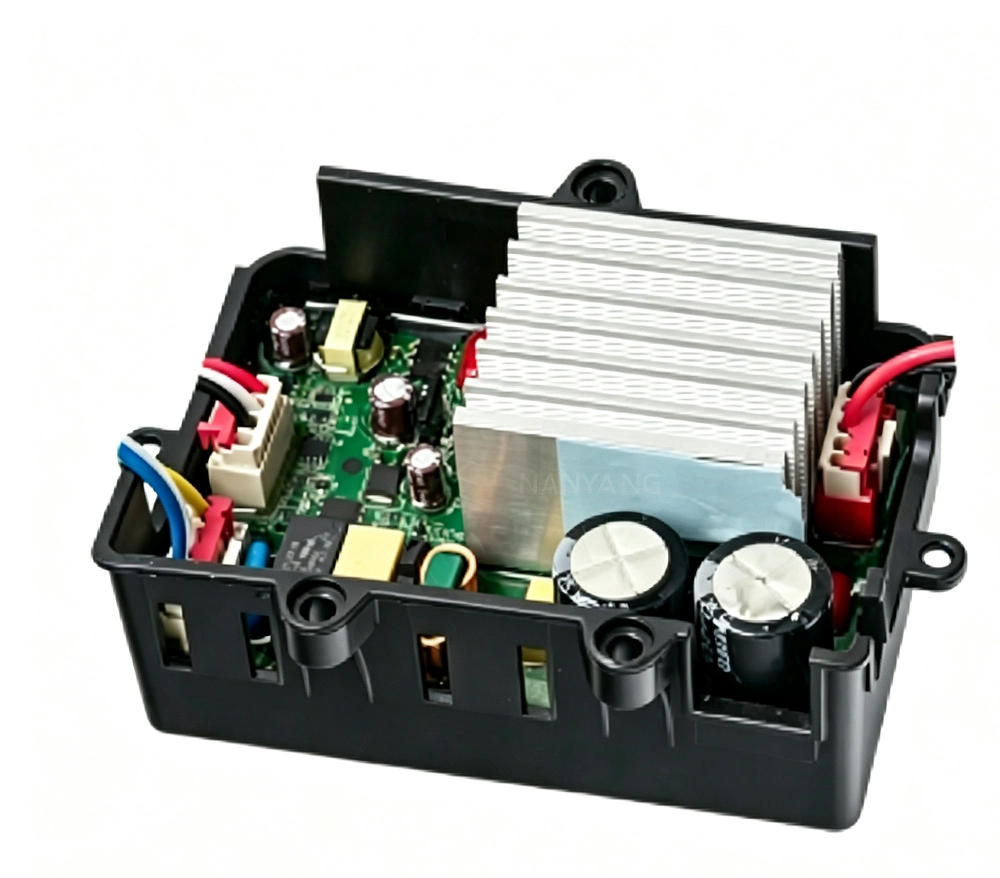
Que fait concrètement un pilote de moteur BLDC ?
Le circuit de commande génère le courant électrique multiphasé contrôlé qui fait tourner un moteur BLDC. « BLDC » désigne la construction du moteur ; le circuit de commande ou l’onduleur assure la commutation électronique. Pour une comparaison terminologique plus détaillée, voir : Moteur BLDC vs moteur à onduleur.
Commutation électronique
Le circuit de commande commute le courant entre les phases du stator afin que le champ magnétique tournant reste correctement positionné par rapport au rotor à aimant permanent. Cette commutation électronique remplace le collecteur mécanique utilisé dans un moteur à courant continu à balais. Un calage incorrect peut réduire le couple, augmenter le courant, générer du bruit ou rendre le démarrage instable.
Informations sur la position du rotor
Le système de commande a besoin d'informations sur la position du rotor pour déterminer le moment d'activation de chaque phase. Certains modèles utilisent des capteurs à effet Hall ou d'autres systèmes de retour d'information sur la position. Les systèmes sans capteur estiment la position du rotor à partir de signaux électriques. La méthode appropriée dépend de la charge au démarrage, du comportement à basse vitesse, du coût, de l'environnement et de la plage de vitesses requise par la machine à laver.
Réglementation actuelle
La demande de couple est étroitement liée au courant de phase. Le variateur régule le courant dans les limites électriques et thermiques approuvées, tandis que la boucle de contrôle ajuste le comportement de commutation pour maintenir le mouvement demandé. C'est pourquoi un variateur qui semble adéquat du seul point de vue de la tension peut s'avérer inadapté lors d'un démarrage brutal ou de cycles d'inversion répétés.
Comment le conducteur contrôle-t-il la vitesse et le couple ?
Contrôle du couple à basse vitesse
Pendant le lavage, le tambour peut nécessiter un mouvement lent d'avant en arrière, avec un couple régulier à chaque changement de sens. Le circuit d'entraînement doit positionner le rotor, établir le courant progressivement et maintenir un couple stable à basse vitesse. Un mauvais réglage du courant peut se traduire par un mouvement saccadé du tambour, un courant excessif ou des ondulations de couple.
Accélération jusqu'à la vitesse de rotation
Lors du passage en rotation, le contrôleur commande une augmentation de vitesse tandis que le variateur fournit le courant de phase nécessaire à l'accélération de la masse rotative. L'accélération admissible dépend du couple moteur, de l'inertie du tambour, de la charge hydraulique, de la tension du bus CC, de la limite de courant et de la marge thermique. Une commande rapide est inutile si le couple moteur-variateur ne peut pas fournir le couple requis en toute sécurité.
Freinage et changements de direction
Le système doit également ralentir le tambour et inverser son sens de rotation de manière répétée. La stratégie de freinage, le comportement de la tension du bus, les limites de courant et la synchronisation de la commande doivent être validés en conditions réelles de fonctionnement de la machine à laver, et non déduits des données de vitesse nominale.
Pourquoi le contrôle du conducteur est-il important dans une machine à laver ?
Une machine à laver combine des points de fonctionnement très différents les uns des autres. L'article établi du site sur Comment fonctionne un moteur de machine à laver ? Il couvre déjà l'ensemble du cycle de fonctionnement ; au niveau du pilote, le principal défi consiste à maintenir chaque transition électriquement stable et thermiquement sûre.
Inversion du lavage
Les inversions de sens répétées à basse vitesse mettent l'accent sur la maîtrise du démarrage, la montée en courant, le retour d'information de position et la régularité du couple. Le moteur pouvant fonctionner longtemps bien en dessous de sa vitesse maximale, la qualité de la commande à basse vitesse est plus importante qu'un simple rendement à vitesse nominale.
Rotation à grande vitesse
L'essorage à grande vitesse génère une force contre-électromotrice, des pertes par commutation, des limitations de vitesse du rotor, des vibrations et de la chaleur. Le variateur doit maintenir le contrôle tandis que la machine à laver gère le déséquilibre et la résonance mécanique. Le bruit du moteur et le comportement de commutation du variateur doivent donc être mesurés sur l'ensemble de l'appareil.
Protection et marge thermique
Un circuit de commande de production peut intégrer des protections contre les surintensités, les surtensions, les surchauffes, le blocage ou d'autres fonctions, selon sa conception. Les ondulations de courant et les pertes par commutation génèrent de la chaleur dans les composants électroniques, tandis que les pertes par effet Joule (cuivre et fer) du moteur contribuent à son échauffement. Il est important de valider ces deux températures lors d'un même cycle réaliste.
Contrôleur ou pilote de moteur BLDC : quelle est la différence ?
étage de puissance du pilote
L'étage de puissance du circuit de commande comprend les dispositifs de commutation qui appliquent un courant contrôlé aux phases du moteur. Il doit supporter la tension du bus CC, le courant de crête, les pertes de commutation, la chaleur et les conditions de défaut susceptibles de se produire dans le produit réel.
Logique de contrôleur
Le contrôleur détermine le comportement du produit. Il interprète les commandes de vitesse, de direction, l'état du programme, les retours d'information, les communications et les réponses aux défauts. Dans de nombreux assemblages commerciaux, la logique du contrôleur et l'étage de puissance du pilote sont intégrés sur une seule carte ; par conséquent, la terminologie des catalogues peut employer ces termes de manière imprécise.
Relation avec l'onduleur
Pour un moteur BLDC, le terme « onduleur » désigne souvent l’étage de commutation qui convertit un bus CC en courant multiphasé contrôlé. La règle de sélection de l’alimentation reste inchangée : il ne faut pas choisir le moteur indépendamment de l’électronique qui assure sa commutation et sa régulation.
Comment les fabricants d'équipement d'origine (OEM) doivent-ils associer un moteur BLDC et son variateur ?
Limites électriques et rétroaction
Vérifiez la tension du bus CC, le courant nominal et de crête par phase, la résistance et l'inductance du moteur, la force contre-électromotrice ou les données de constante du moteur, la méthode de retour d'information, la plage de vitesse, la communication et les limites de protection. Un variateur adapté à la vitesse nominale peut néanmoins présenter une défaillance lors d'un démarrage brutal ou d'inversions de marche répétées si les marges de courant de crête et thermiques sont insuffisantes.
Charge mécanique et refroidissement
Fournissez au fournisseur la courbe de charge réelle plutôt que la seule puissance nominale. Indiquez l'inertie du tambour, le rapport de transmission (le cas échéant), le temps d'accélération, la charge de démarrage, le couple maximal, le cycle de fonctionnement, la température ambiante, le circuit de refroidissement et l'espace d'installation. La structure de l'armoire, les roulements, l'équilibrage du tambour et la suspension peuvent également induire des bruits et des vibrations provenant du moteur.
Validation du prototype et de la production
Tester le démarrage à froid, le démarrage à chaud, la basse tension, la charge importante, l'inversion lente, l'accélération, le fonctionnement à haute vitesse, le freinage, les redémarrages répétés, l'élévation de température, le rendement, le bruit, les vibrations et la récupération après panne. Lors de l'évaluation du moteur lui-même, les éléments existants avantages et inconvénients des moteurs BLDC Cet article peut servir de référence plus générale au niveau du moteur, tandis que cette page reste axée sur la correspondance des conducteurs.
La base de connaissances de Nanyang répertorie 19 lignes de production de moteurs BLDC parmi ses 54 lignes de moteurs à fréquence variable et décrit le support au développement intégré des contrôleurs de moteurs. Catégorie des conducteurs Cela est particulièrement pertinent lorsque les paramètres électroniques et moteurs sont coordonnés avant que la conception de l'appareil ne soit finalisée.
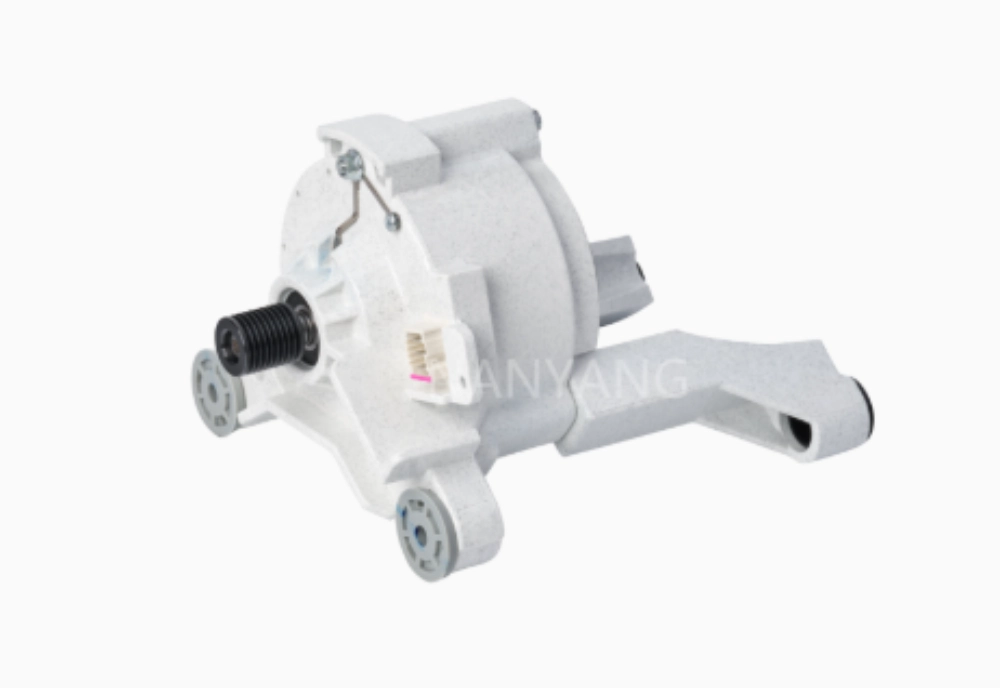
Conclusion
Un contrôleur de moteur BLDC gère la séquence électrique et le courant qui génèrent le couple moteur. Dans une machine à laver, il doit assurer une inversion de sens de rotation stable à basse vitesse, une accélération contrôlée, un essorage à grande vitesse, un freinage efficace et une protection contre les variations de charge. La question cruciale lors de la conception n'est donc pas simplement de savoir si le moteur est un moteur BLDC, mais de s'assurer de la compatibilité entre le moteur, le contrôleur, le système de retour d'information, la logique de commande et le cycle de service mécanique.
Pour un projet OEM, définissez conjointement le moteur et le variateur, vérifiez le cycle de service complet et ne figez les interfaces électriques et mécaniques qu'après les tests du prototype. Recherche et développement de Nanyang peuvent consulter les exigences du système, et les acheteurs peuvent contacter Nanyang avec les données du moteur, le profil de charge, les besoins du contrôleur, les dimensions et le volume de production.
FAQ (questions fréquentes)
Q1 : Comment fonctionne un pilote de moteur BLDC ?
A1 : Il commute le courant à travers les phases du moteur en fonction de la position du rotor et des commandes de contrôle, régulant le courant pour produire le couple et la vitesse requis.
Q2 : Que contrôle un pilote de moteur BLDC dans une machine à laver ?
A2 : Il contrôle la commutation de phase, le courant, le couple, la vitesse, la direction, l'accélération, le freinage et la protection à travers différentes conditions de lavage et d'essorage.
Q3 : Un pilote de moteur BLDC est-il la même chose qu’un contrôleur de moteur ?
A3 : Pas exactement. Le circuit de commande gère la commutation de puissance, tandis que le contrôleur fournit la logique de niveau supérieur. Ils sont souvent intégrés sur une même carte.
Q4 : Pourquoi le courant de phase est-il important dans la commande des moteurs BLDC ?
A4 : Le courant de phase est étroitement lié au couple produit, donc les limites de courant et le comportement de la boucle de courant affectent fortement le démarrage, l'inversion, l'accélération, la chaleur et la protection.
Q5 : Que faut-il vérifier avant d’associer un pilote BLDC à un moteur de machine à laver ?
A5 : Vérifier la tension du bus, le courant de phase de crête et nominal, les paramètres du moteur, la rétroaction, la plage de vitesse, la charge de démarrage, le freinage, le refroidissement, la communication, la protection et le cycle de service mécanique réel.