info@zjnanyang.com.cn |
湖州南洋电机有限公司

How Does a BLDC Motor Driver Work in a Washing Machine? Speed, Torque, and Current Control

发布时间: 访问次数:100

A BLDC motor driver works by switching current through the motor phases in the correct sequence, using rotor-position information and current regulation to control torque, speed, direction, acceleration, braking, and protection. In a washing machine, the same driver has to support slow repeated reversing during wash, controlled acceleration, and high-speed spin without exceeding electrical or thermal limits.


For OEM teams, the driver is not an accessory chosen after the motor. Motor winding data, DC-bus voltage, phase current, feedback method, control logic, load inertia, thermal path, and protection limits must be matched as one system. This is the search intent this article owns; broad BLDC-versus-inverter terminology is better handled by an existing strong comparison page.


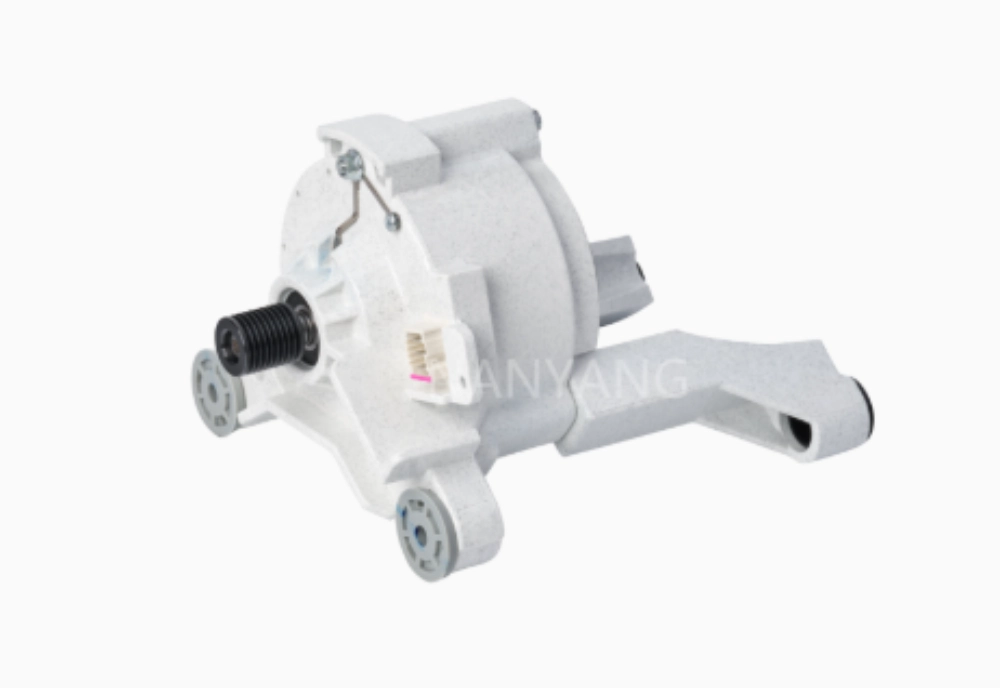
南洋汽车, founded in 1992, develops home-appliance motor systems that include BLDC, DD, DDM, AC, dryer motors, and integrated motor-controller support. Its product and driver categories provide a practical reference for matching the motor and electronics before appliance design is frozen.

How Does a BLDC Motor Driver Work in a Washing Machine Speed, Torque, and Current Control

What Does a BLDC Motor Driver Actually Do?

The driver creates the controlled multi-phase electrical output that makes a BLDC motor rotate. “BLDC” describes the motor construction; the driver or inverter performs the electronic commutation. For a deeper terminology comparison, see BLDC motor vs inverter motor.

Electronic Commutation

The driver switches current among the stator phases so the rotating magnetic field stays correctly positioned relative to the permanent-magnet rotor. This electronic switching replaces the mechanical commutator used in a brushed DC motor. Incorrect timing can reduce torque, increase current, create audible noise, or make startup unstable.

Rotor Position Information

The control system needs rotor-position information to decide when to energize each phase. Some designs use Hall sensors or other position feedback. Sensorless systems estimate rotor position from electrical signals. The correct method depends on startup load, low-speed behavior, cost, environment, and the speed range required by the washer.

Current Regulation

Torque demand is closely related to phase current. The driver regulates current within the approved electrical and thermal limits while the control loop adjusts switching behavior to maintain the requested motion. This is why a driver that looks adequate from voltage alone can still be wrong for a heavy start or repeated reversing cycle.

How Does the Driver Control Speed and Torque?

Low-Speed Torque Control

During washing, the drum may need slow forward and reverse motion with smooth torque at each direction change. The driver must establish rotor position, build current without a harsh step, and keep torque stable at low speed. Poor current tuning can appear as jerky drum motion, excess current, or torque ripple.

Acceleration to Spin Speed

During transition to spin, the controller commands increasing speed while the driver supplies the phase current needed to accelerate the rotating mass. The allowable acceleration depends on motor torque, drum inertia, wet load, DC-bus voltage, current limit, and thermal margin. A fast command does not help if the motor-driver pair cannot deliver the required torque safely.

Braking and Direction Changes

The system also has to decelerate the drum and reverse direction repeatedly. Braking strategy, bus-voltage behavior, current limits, and control timing should be validated under the actual washer duty cycle rather than inferred from rated-speed data.

Why Does Driver Control Matter in a Washing Machine?

A washing machine combines operating points that are very different from one another. The site’s established article on 洗衣机电机的工作原理 already covers the broad operating cycle; at driver level, the key challenge is keeping each transition electrically stable and thermally safe.

Wash Reversing

Repeated low-speed reversing puts emphasis on startup control, current rise, position feedback, and smooth torque. The motor may spend significant time far below its maximum speed, so low-speed control quality matters more than a single rated-speed efficiency figure.

High-Speed Spin

High-speed spin adds back-EMF, switching loss, rotor-speed limits, vibration interaction, and heat. The driver must maintain control while the washer also manages imbalance and mechanical resonance. Motor sound and driver switching behavior should therefore be measured in the complete appliance.

Protection and Thermal Margin

A production driver may include overcurrent, overvoltage, overtemperature, stall, or other protection functions depending on the design. Current ripple and switching losses add heat to the electronics, while motor copper and iron losses add heat to the motor. Validate both temperatures during the same realistic cycle.

BLDC Motor Driver vs Controller: What Is the Difference?

Driver Power Stage

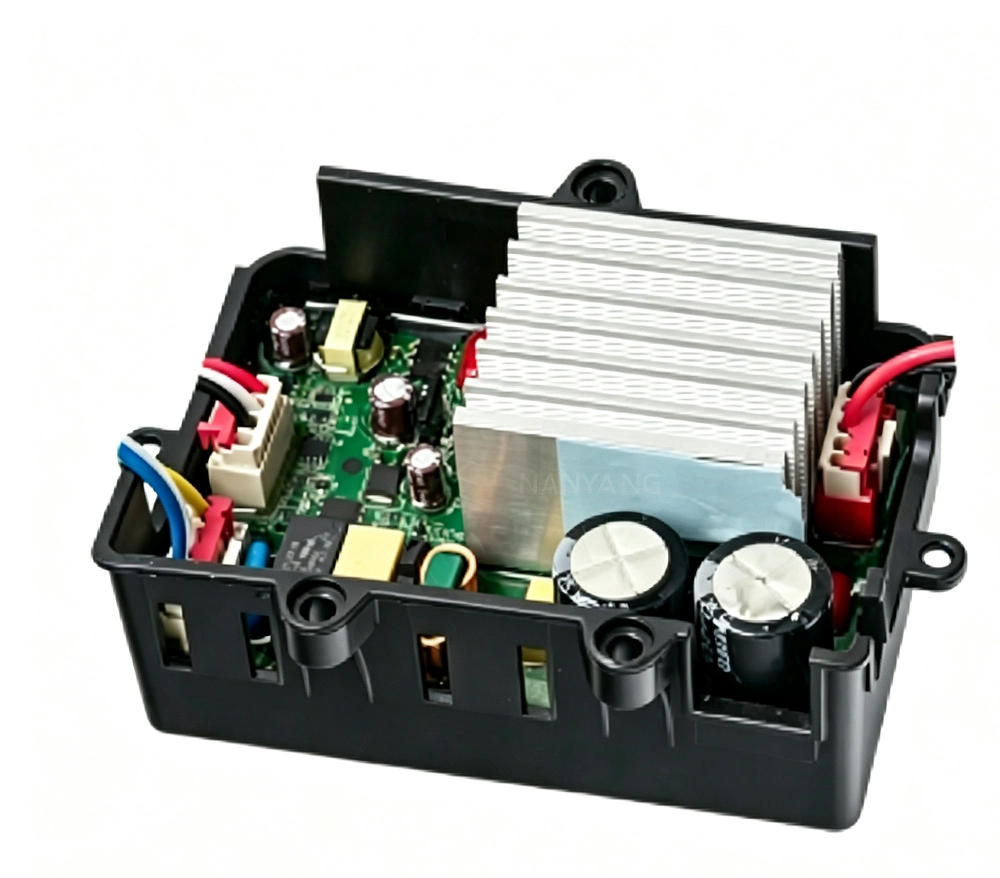
The driver power stage contains the switching devices that apply controlled current to the motor phases. It must tolerate DC-bus voltage, peak current, switching losses, heat, and fault conditions expected in the real product.

Controller Logic

The controller decides what the product should do. It interprets speed commands, direction, program state, feedback, communication, and fault responses. In many commercial assemblies, controller logic and the driver power stage are integrated into one board, so catalog language may use the terms loosely.

Inverter Relationship

For a BLDC motor, “inverter” often refers to the switching stage that converts a DC bus into controlled multi-phase power. The sourcing rule remains the same: do not select the motor independently of the electronics that commutate and regulate it.

How Should OEMs Match a BLDC Motor and Driver?

Electrical Limits and Feedback

Confirm DC-bus voltage, rated and peak phase current, motor resistance and inductance, back-EMF or motor-constant data, feedback method, speed range, communication, and protection limits. A driver that is adequate at rated speed may still fail a heavy start or repeated reversal if peak-current and thermal margins are too small.

Mechanical Load and Cooling

Give the supplier the real load curve rather than rated power alone. Include drum inertia, transmission ratio if used, acceleration time, starting load, peak torque, operating cycle, ambient temperature, cooling path, and installation space. Cabinet structure, bearings, drum balance, and suspension can also affect sound and vibration attributed to the motor.

Prototype and Production Validation

Test cold start, hot start, low voltage, heavy load, slow reversal, acceleration, high-speed operation, braking, repeated restart, temperature rise, efficiency, sound, vibration, and fault recovery. When evaluating the motor itself, the existing advantages and disadvantages of BLDC motors article can serve as a broader motor-level reference, while this page remains focused on driver matching.


Nanyang’s knowledge base lists 19 BLDC production lines within its 54 variable-frequency motor lines and describes integrated motor-controller development support. The Drivers category is most relevant when electronics and motor parameters are coordinated before the appliance design is frozen.

无刷直流电机

结论

A BLDC motor driver controls the electrical sequence and current that create motor torque. In a washing machine, it has to deliver stable low-speed reversing, controlled acceleration, high-speed spin, braking, and protection across a changing load. The critical design question is therefore not simply whether the motor is BLDC, but whether the motor, driver, feedback, controller logic, and mechanical duty cycle are matched.


For an OEM project, define the motor and driver together, verify the complete duty cycle, and freeze electrical and mechanical interfaces only after prototype testing. 南洋研发 can review system requirements, and buyers can 联系南洋 with motor data, load profile, controller needs, dimensions, and production volume.

常见问题解答

Q1: How does a BLDC motor driver work?

A1: It switches current through the motor phases according to rotor position and control commands, regulating current to produce the required torque and speed.

Q2: What does a BLDC motor driver control in a washing machine?

A2: It controls phase commutation, current, torque, speed, direction, acceleration, braking, and protection through different wash and spin conditions.

Q3: Is a BLDC motor driver the same as a motor controller?

A3: Not exactly. The driver is the power-switching stage, while the controller supplies the higher-level logic. They are often integrated on one board.

Q4: Why is phase current important in BLDC motor control?

A4: Phase current is closely related to produced torque, so current limits and current-loop behavior strongly affect starting, reversing, acceleration, heat, and protection.

Q5: What should be checked before matching a BLDC driver to a washing machine motor?

A5: Check bus voltage, peak and rated phase current, motor parameters, feedback, speed range, startup load, braking, cooling, communication, protection, and the real mechanical duty cycle.

相关产品

告诉我们您的申请要求

南洋团队欢迎您的到来,通过提前了解您的需求,我们将准备相应的解决方案,以方便现场协调,快速解决您的问题。我们期待与您交流与合作!

客户服务

南洋系统广泛应用于世界各地的各个领域,为您提供动力、精度和效率。我们的销售和工程支持团队随时准备回答您的任何问题,包括报价、应用程序支持和产品配置。请通过我们的定制服务表格提交您的要求,以便我们更快地回应您的需求。

 
首页
WhatsApp
电子邮件
联系人
聊天图标