Universal Motor vs Induction Motor: Which Fits a Washing Machine?
A universal motor and an induction motor can both appear in washing-machine designs, but they are built and controlled differently. A universal motor uses brushes and a commutator and can reach high speed from an AC supply. A single-phase induction motor has no mechanical commutator and is commonly selected when simple construction, stable operation, and controlled cost matter.
In a universal motor vs induction motor comparison, neither type is automatically better for every washer. The right choice depends on the drum or agitator mechanism, required speed range, reversal method, transmission, noise target, service plan, controller, regional supply, and production cost. A motor that performs well in one appliance architecture may be a poor replacement in another.
For OEM buyers, the useful comparison is not a list of isolated advantages. It is a check of how each motor starts, changes speed, handles the load, wears over time, and connects to the rest of the washer.
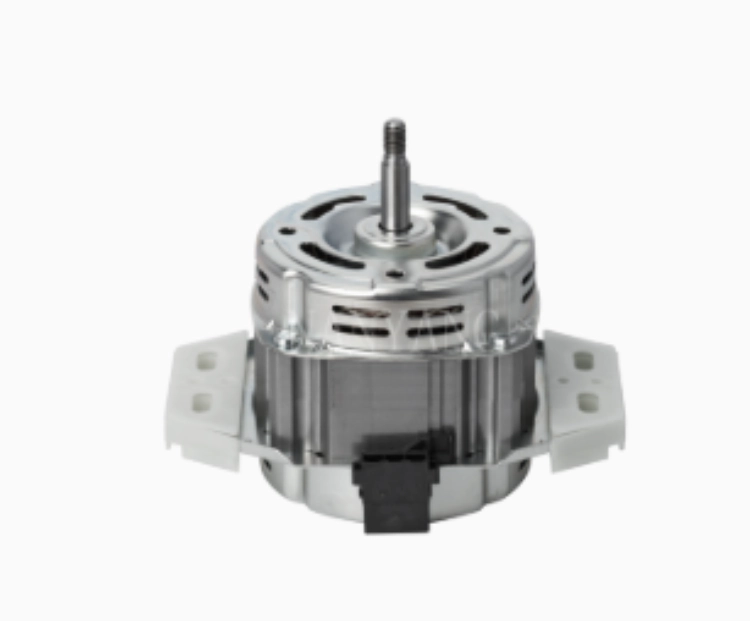
How Do Universal and Induction Motors Work?
Their electromagnetic principles lead to different speed, control, maintenance, and integration requirements.
A Universal Motor Uses Brushes and a Commutator
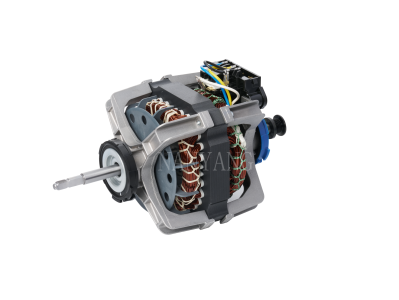
A universal motor has a wound stator and a wound rotor connected through carbon brushes and a commutator. Current direction changes mechanically at the rotor, allowing the motor to produce torque on alternating current. The same basic construction can also operate on direct current when designed for it, which explains the name universal.
This architecture can produce high rotational speed in a compact package. The designer must manage brush wear, commutator condition, electrical noise, cooling, and the transmission needed to convert motor speed into useful washer motion.
An Induction Motor Produces Rotor Current Magnetically
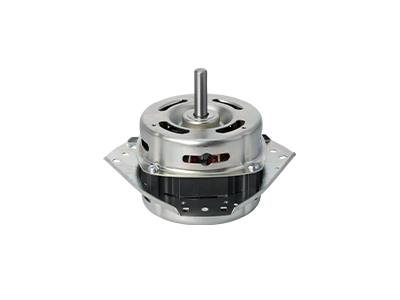
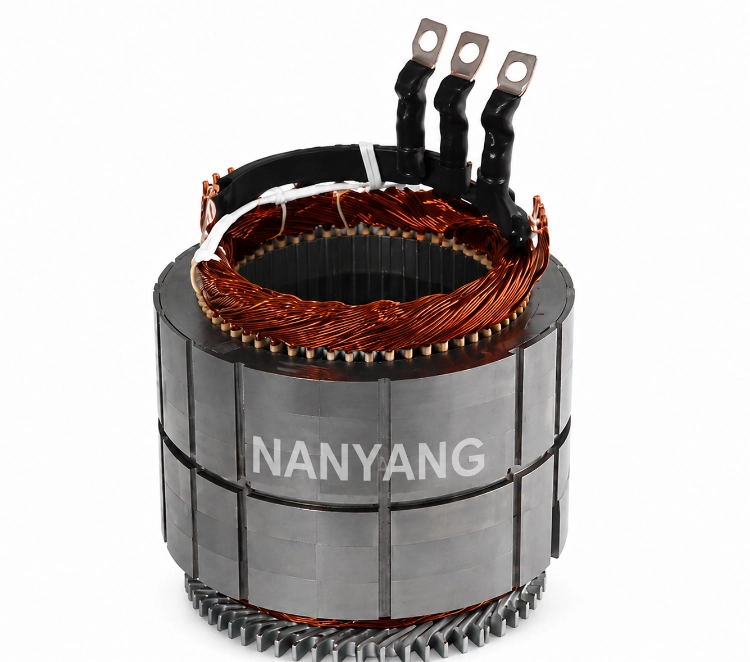
An induction motor creates a rotating magnetic field in the stator. That field induces current in the rotor, and the interaction produces torque without brushes or a commutator. A single-phase appliance motor may use an auxiliary winding and capacitor to support starting or running behavior.
Nanyang’s AC感应电机 is identified as a single-phase induction motor for agitator washing machines with capacities up to 15 kg. The page presents a simple, reliable, and cost-controlled motor family for automatic washer applications.
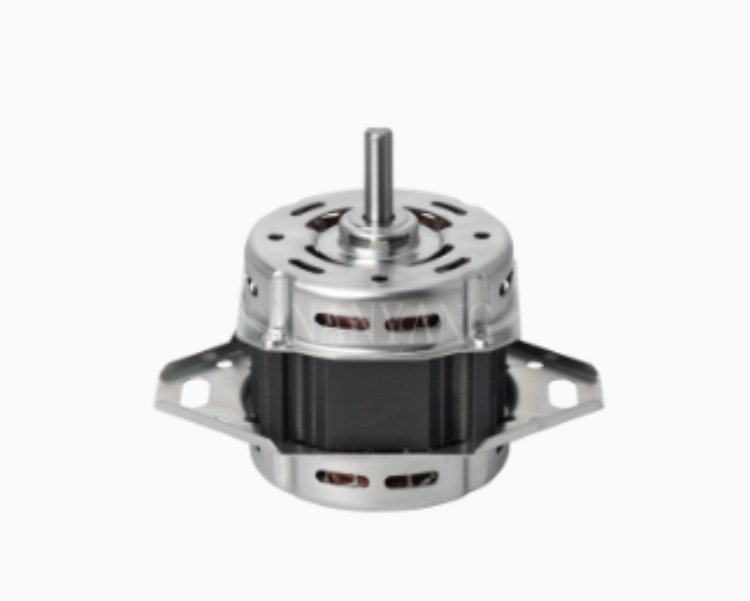
Motor Construction Changes the Control Strategy
A universal motor can be regulated through an appropriate electronic control system, but its brushes and commutator remain part of the current path. A conventional single-phase induction motor is often used with a simpler operating arrangement, although the final circuit depends on the specific design.
Do not assume that both motors accept the same controller, capacitor, wiring, or speed command. The complete electrical diagram must follow the selected motor and washer architecture.
How Do Their Operating Characteristics Differ?
The application should be compared at wash, reversal, acceleration, and spin conditions rather than at no-load speed alone.
Speed Range and Transmission
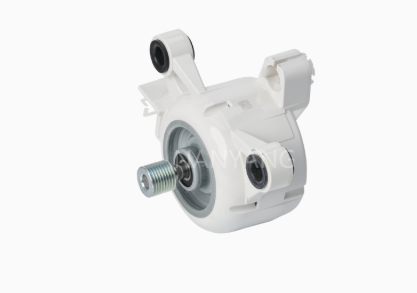
Universal motors can operate at relatively high speed, so washer designs often use a belt and pulley reduction between the motor and drum. Electronic regulation may support different wash and spin speeds, but the useful output still depends on the transmission and load.
An induction motor’s speed is tied more closely to supply frequency, pole count, and slip. It can be a practical fit for an agitator or transmission system designed around a narrower speed range and predictable mains conditions.
Starting Torque and Reversal
Washer loads change with water, textile mass, distribution, and mechanism friction. The motor must start under the worst intended condition and reverse according to the cycle without exceeding current or temperature limits.
A universal motor and an induction motor achieve these tasks through different winding and control arrangements. Compare measured loaded starting, acceleration, reversal, current, and temperature. Do not infer performance from motor type alone.
Noise and Wear Sources
Brush contact and commutation can add wear and electrical or acoustic noise to a universal motor. Belt, pulley, bearings, ventilation, mounting, and controller switching can also affect the final sound.
An induction motor avoids brush and commutator wear, but it is not silent by definition. Magnetic forces, bearings, rotor balance, capacitor condition, transmission, and cabinet resonance remain relevant. Noise should be measured in the complete appliance under the same load and cycle.
Which Motor Fits Different Washer Designs?
Start with the appliance platform and user requirement, then select the motor architecture.
Universal Motors Fit Designs That Need High Motor Speed
A universal motor may suit a washer architecture that uses a geared or belt transmission and needs a broad operating range from one compact motor. The buyer should account for brush service life, commutator quality, control electronics, electromagnetic compatibility, and acoustic behavior.
This does not make a universal motor the default upgrade for an induction-motor washer. The transmission, control board, harness, mounting, cooling, and service parts may all need redesign.
Induction Motors Fit Mature Agitator Platforms
A single-phase induction motor can suit a mass-market agitator washer when the mechanism, supply, and cycle support its operating characteristics. The absence of brushes can simplify the wear system, while mature construction can support controlled production cost.
The official 南洋交流汽车电机系列 lists voltage options from 110 V to 240 V, 50 Hz, 60 Hz, and 50/60 Hz frequency options, 25-250 W rated power, four- or six-pole options, and several winding and insulation choices. These are family options, not a statement that every combination is available in one model.
Other Motor Types May Fit Other Platforms
Modern front-load or premium top-load washers may use electronically commutated BLDC, DD, or DDM systems when variable-speed control, packaging, direct drive, or other product targets justify them. The universal-versus-induction decision should not exclude a third architecture that better matches the requirement.
湖州南洋电机有限公司 presents both home-appliance and new-energy-vehicle motor activities. Buyers should identify the correct product family before asking for detailed application matching.
What Should OEM Buyers Verify?
A comparison becomes useful when it leads to a controlled requirement and test plan.
Define the Complete Duty Cycle
Provide wash load, water level, speed points, reversal timing, acceleration, spin target, braking, starts per hour, ambient temperature, airflow, and abnormal-load cases. Include the supply voltage and frequency for every target market.
The supplier needs this information to evaluate winding, pole count, current, capacitor or controller, shaft, mounting, insulation, and thermal margin.
Compare Installed Performance
Use the same washer, load, cycle, supply, ambient condition, and measurement method. Record starting, current, speed, temperature rise, noise, vibration, stopping, and protection response.
Nanyang’s 测试能力 provides an official reference for discussing validation. The test plan should still state the project’s exact acceptance limits and sample configuration.
Lock the Approved Configuration
Approve drawings, winding data, capacitor or controller, shaft, mounting, connector, materials, inspection points, and change notification. Keep the motor revision linked to the washer control and transmission revision.
结论
A universal motor offers compact high-speed capability but includes brushes and a commutator. A single-phase induction motor removes those wear parts and can fit mature agitator washer platforms with suitable speed and control requirements. The decision should follow the complete washer architecture, not a claim that one type is always superior. For an induction-motor project, submit the load, supply, mechanism, and test targets through the 南洋联系页面 before selecting an AC Auto-motor model.
常见问题解答
Q1: Is a universal motor the same as an induction motor?
A1: No, a universal motor uses brushes and a commutator, while an induction motor produces rotor current through electromagnetic induction.
Q2: Does an induction washing-machine motor have brushes?
A2: A conventional induction motor does not use carbon brushes or a mechanical commutator.
Q3: Why are universal motors used in some washing machines?
A3: They can provide high motor speed and electronic speed regulation in compact belt-driven or geared washer designs.
Q4: Can an induction motor replace a universal motor?
A4: Not as a direct substitution unless the supply, control, transmission, speed, torque, mounting, cooling, and appliance cycle are redesigned and validated.
Q5: What should an OEM test before choosing either motor?
A5: Test loaded starting, speed, torque, reversal, acceleration, current, temperature, noise, vibration, braking, protection, and complete-cycle durability.