Why Is an Inverter Used in a BLDC Motor? 7 Functions That Control Speed, Torque, and Efficiency
A BLDC motor needs an inverter because it has no brushes or mechanical commutator to switch current from one stator phase to the next. The inverter performs that job electronically. It keeps the magnetic field moving and controls speed, torque, direction, braking, and protection.
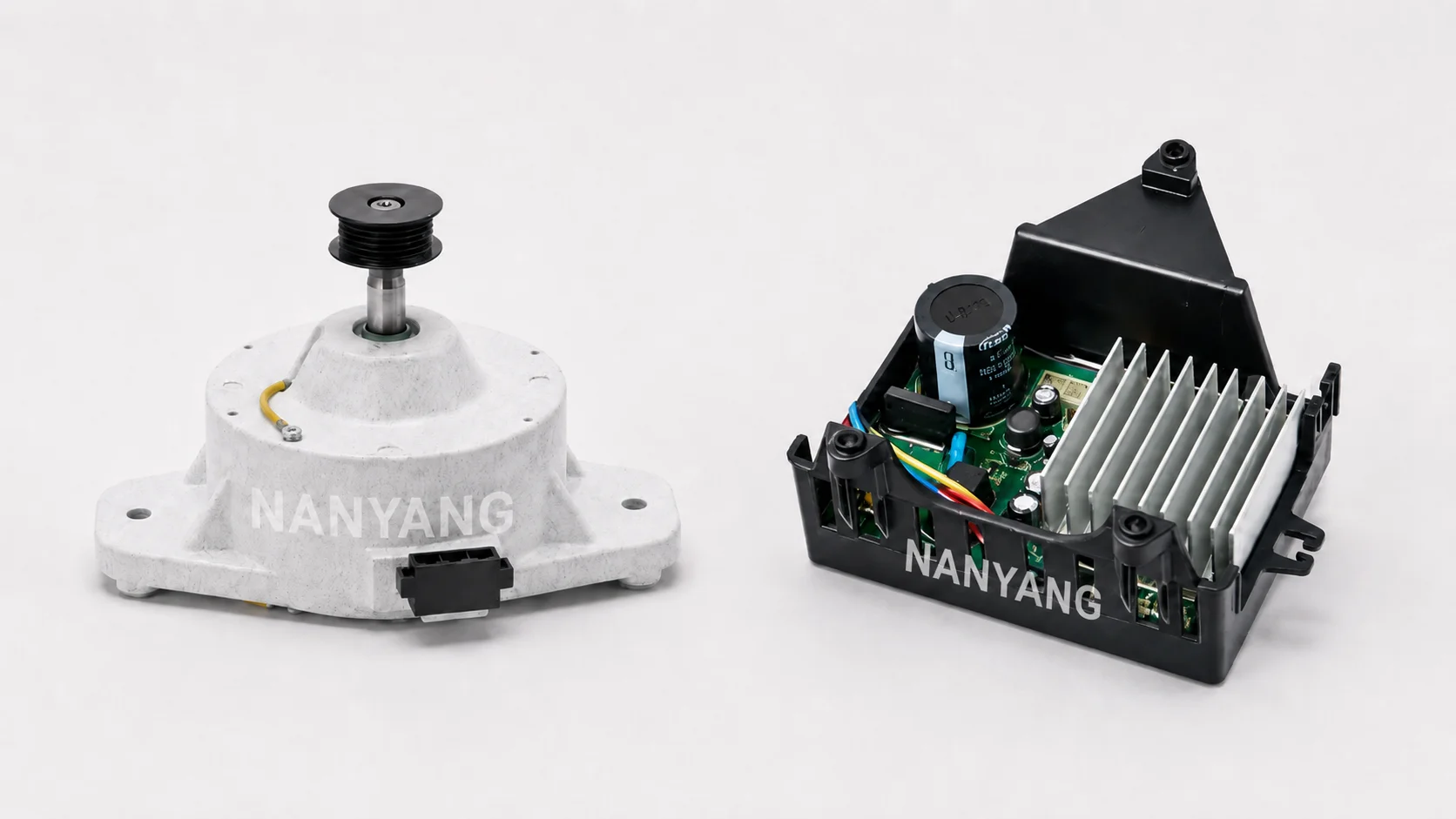
Strictly speaking, the inverter works with the BLDC motor as part of the electronic drive system. It is not a mechanical part inside the motor. That distinction matters in a top-loading washer, where the motor must start under a wet load, reverse many times, change speed, and complete the spin stage without rough movement or excess heat.
Huzhou Nanyang Electric-Motor Co., Ltd. has worked in electric motor development and manufacturing since 1992. Its work covers home-appliance motors, drive-system design, core components, assembly, testing, and project support. Enameled wire, stator and rotor cores, molded parts, aluminum die-cast parts, and stamped metal parts are handled within its supply system. This gives appliance buyers one technical route for motor performance, mechanical limits, samples, and volume production.
What Role Does an Inverter Play in a BLDC Motor?
The motor and inverter do separate jobs. Once those jobs are clear, the need for an inverter is easy to see.
The Motor Turns Electrical Input into Motion
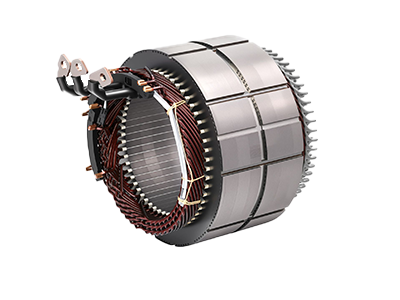
A BLDC motor has a wound stator and a permanent-magnet rotor. Current in the correct stator phases creates a rotating magnetic field, and the rotor follows it.
The motor produces mechanical output. It does not decide which phase should receive current next, how quickly speed should rise, or when direction should change.
The Inverter Builds the Rotating Field
The inverter switches power through the motor phases in a timed sequence. Changing switching frequency, pulse width, and phase current changes speed and torque.
This control lets one motor behave differently during starting, washing, reversing, and spinning. The switching pattern directly affects current draw, noise, temperature, and load response.
Fixed DC Cannot Keep the Rotor Moving
A fixed DC connection creates a fixed magnetic field. The rotor may move toward one magnetic position and stop when it reaches magnetic balance.
Continuous rotation needs a field that keeps moving. The inverter creates it by changing the energized phases as the rotor turns.
Why Does Electronic Commutation Matter in a Top-Loading Washer?
A top-loading washer does not run at one speed in one direction. Its washing action depends on repeated changes, so poor commutation quickly becomes visible.
Phase Switching Replaces Mechanical Brushes
A brushed motor changes current through brushes and a commutator. A BLDC motor removes those wear parts and uses electronic commutation.
That reduces brush wear, but phase order and switching timing must be correct. Errors can cause hard starting, weak torque, reverse rotation, or excess current.
Rotor Feedback Keeps Timing Correct
The controller needs to know or estimate rotor position before energizing the next phase. It may use position, speed, current, or back-EMF data.
Good feedback keeps the magnetic field aligned with the rotor. Poor feedback may cause shaking, hesitation, electrical noise, or repeated protection stops.
Frequent Reversing Creates Water Flow
During washing, the motor turns forward, slows, stops, and reverses. This repeated movement changes water flow and fabric motion inside the tub.
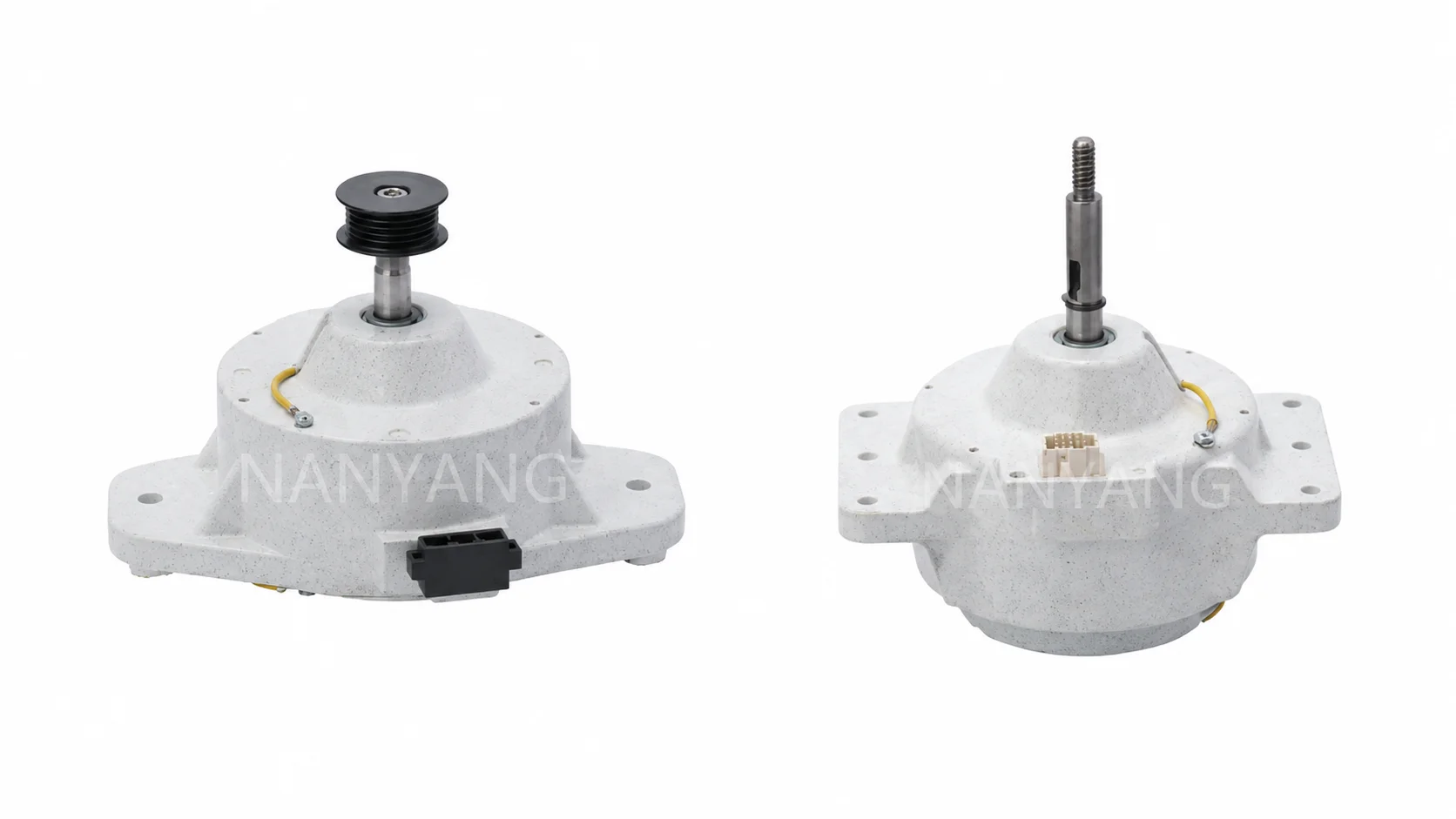
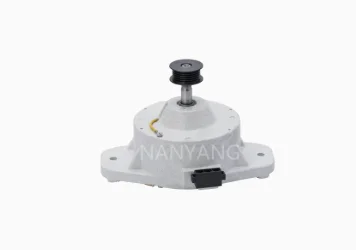
The BLDC Motor is designed for top-loading washing machines. Its listed range includes 310 VDC, 100–250 W, eight poles, 2,700–3,000 rpm, and washer capacities from 6 to 15 kg. The product is intended for frequent forward and reverse operation rather than one fixed running condition.
What Are the 7 Functions That Control Speed, Torque, and Efficiency?
The inverter has one basic purpose, electronic control, but that purpose becomes seven practical functions in the washer.
Electronic Commutation and Speed Control
Function 1 is electronic commutation. The inverter energizes each phase in the right order so the rotating magnetic field continues to pull the rotor.
Function 2 is speed control. It changes switching output to reach and hold the required speed during washing, reversing, and spinning. This helps limit speed changes when the laundry load shifts.
Torque, Soft Start, and Direction Control
Function 3 is torque control. The inverter adjusts phase current as wet-load resistance changes. This gives the motor more usable torque when the load becomes heavier without applying unnecessary current all the time.
Function 4 is soft starting, which raises current and speed gradually. Function 5 is forward and reverse control. The inverter slows the rotor, changes phase sequence, and restarts it in the other direction.
Braking, Energy Management, and Protection
Function 6 is controlled braking and energy management. The inverter reduces speed before reversal and supplies current according to the actual load instead of keeping the system at full output.
Function 7 is protection. Current limits, temperature checks, stall protection, and feedback monitoring help prevent damage during overload, blocked motion, or abnormal operation.
What Problems Appear When the Motor and Inverter Do Not Match?
A good motor can perform badly with the wrong settings. These problems often appear after the prototype has already fixed the wiring and mounting layout.
Correct Phase Settings Prevent Jerky Starts
Wrong phase sequence or poor commutation timing may cause a knock at startup, unstable low-speed motion, or incorrect rotation.
Check phase connections, rotor feedback, starting logic, and reversal timing together. Test with an actual load, not only an empty tub.
Proper Current Limits Prevent Weak Torque and Heat
A current limit set too low may leave the motor unable to move wet laundry. A setting that is too high can raise winding and controller temperature.
Match current limits to rated power, washer capacity, reversal frequency, duty cycle, and measured temperature rise. Motor wattage alone does not provide enough information.
Real Load Tests Reduce Noise and Trips
Noise may come from switching, mounting, bearings, the tub, or an uneven load. Protection trips may come from heat, blocked motion, weak feedback, or a control program that does not suit the motor.
The company’s motor R&D and application development covers electromagnetic design, torque ripple, vibration, insulation, sealing, high-speed behavior, and thermal performance. Validation should include rated load, repeated reversing, spinning, temperature rise, and abnormal stopping.
How Should OEM Buyers Select a BLDC Motor Solution?
Selection should start with the washer, not with a familiar wattage. Work backward from the motion required at the pulsator or tub.
Confirm Voltage, Power, Speed, and Capacity
Define the DC bus voltage, rated and peak current, required speed, starting load, reversal cycle, and total operating time.
Then confirm washer capacity, water load, transmission ratio, shaft details, and spin requirements. The same power rating can behave very differently in two washer designs.
Review Mounting, Wiring, and Controller Needs
Check the mounting flange, shaft position, connector layout, cooling space, cable route, and distance from wet areas.
The controller must match phase sequence, feedback type, current range, and protection logic before the final sample is approved. A late change may affect the harness, cabinet, control board, and test schedule.
Match the Product to the Wash Cycle
The TL BLDC Motor fits top-loading washers that need frequent forward and reverse motion, electronic speed control, and a compact motor platform for 6–15 kg applications.
Motor data gives you a starting point. Full-cycle testing confirms whether torque, heat, vibration, and control timing are right for the finished washer.
Conclusion: Why the Complete BLDC System Matters
The inverter is essential because a BLDC motor has no mechanical commutator. It creates the moving field and controls motor behavior through the wash cycle.
The Product Fits Top-Loading Washer Demands
The BLDC Motor combines brushless construction with electronic speed and direction control. Its range suits projects where repeated reversing is central to washing action.
Its real value comes from stable starts, changing-load response, frequent direction changes, and controlled running. One headline parameter cannot describe all of those conditions.
In-House Production Supports Stable Supply
Huzhou Nanyang Electric-Motor Co., Ltd. combines motor design, component production, assembly, testing, and application support. This helps control part consistency and makes parameter changes easier to manage.
For volume orders, that production control also supports more stable batch quality, clearer sample follow-up, and practical custom development.
Service and Contact Complete the Project
Before requesting a sample, prepare the washer capacity, voltage, power, target speed, reversal pattern, mounting drawings, controller requirements, expected volume, and target market.
You can then contact the sales and engineering team for product selection, parameter matching, application review, custom development, service, and quotation.
FAQ
Q1: Can a BLDC Motor Run Without an Inverter?
A1: A BLDC motor needs electronic commutation. Fixed DC cannot switch the stator phases in the sequence required for continuous rotation.
Q2: Is the Inverter Part of the BLDC Motor?
A2: It is normally part of the electronic drive system. It works with the motor to control phase current, speed, torque, and direction.
Q3: Does the Inverter Control Both Speed and Torque?
A3: Yes. It changes switching output to control speed and regulates phase current to produce the torque required by the load.
Q4: Why Does a Top-Loading Washer Reverse So Often?
A4: Repeated forward and reverse movement changes water flow and fabric motion during washing.
Q5: What Information Should You Provide Before Requesting a BLDC Motor Sample?
A5: Provide washer capacity, voltage, power, speed, load conditions, reversal cycle, mounting details, controller requirements, cooling conditions, and expected production volume.