How Does an Inverter Motor Work in a Washing Machine? Power Conversion, Speed Control, and Drum Performance
An inverter motor in a washing machine does not run at one fixed speed. The control system changes the electrical output sent to the motor, letting the drum wash slowly, reverse, rebalance the load, and accelerate for spinning. The motor and controller must work as one unit. Poor control can still cause rough starts, weak low-speed torque, or unstable spinning.
Huzhou Nanyang Electric-Motor Co., Ltd. has worked in motor design and manufacturing since 1992. Its work covers home-appliance motors, drive control, components, assembly, and application support. In-house work includes enameled wire, stator and rotor cores, injection molding, aluminum die casting, and sheet-metal stamping. For washer projects, electrical performance is tied to rotor balance, insulation, housing accuracy, heat control, and driver matching. The company can match or develop a motor-and-driver set for a target drum size, load, speed range, and cost.
What Does an Inverter Motor Mean in a Washing Machine?
Before looking at the electrical path, it helps to separate three terms that are often mixed together. They describe different parts of the drive system.
The Motor Converts Electrical Power into Rotation
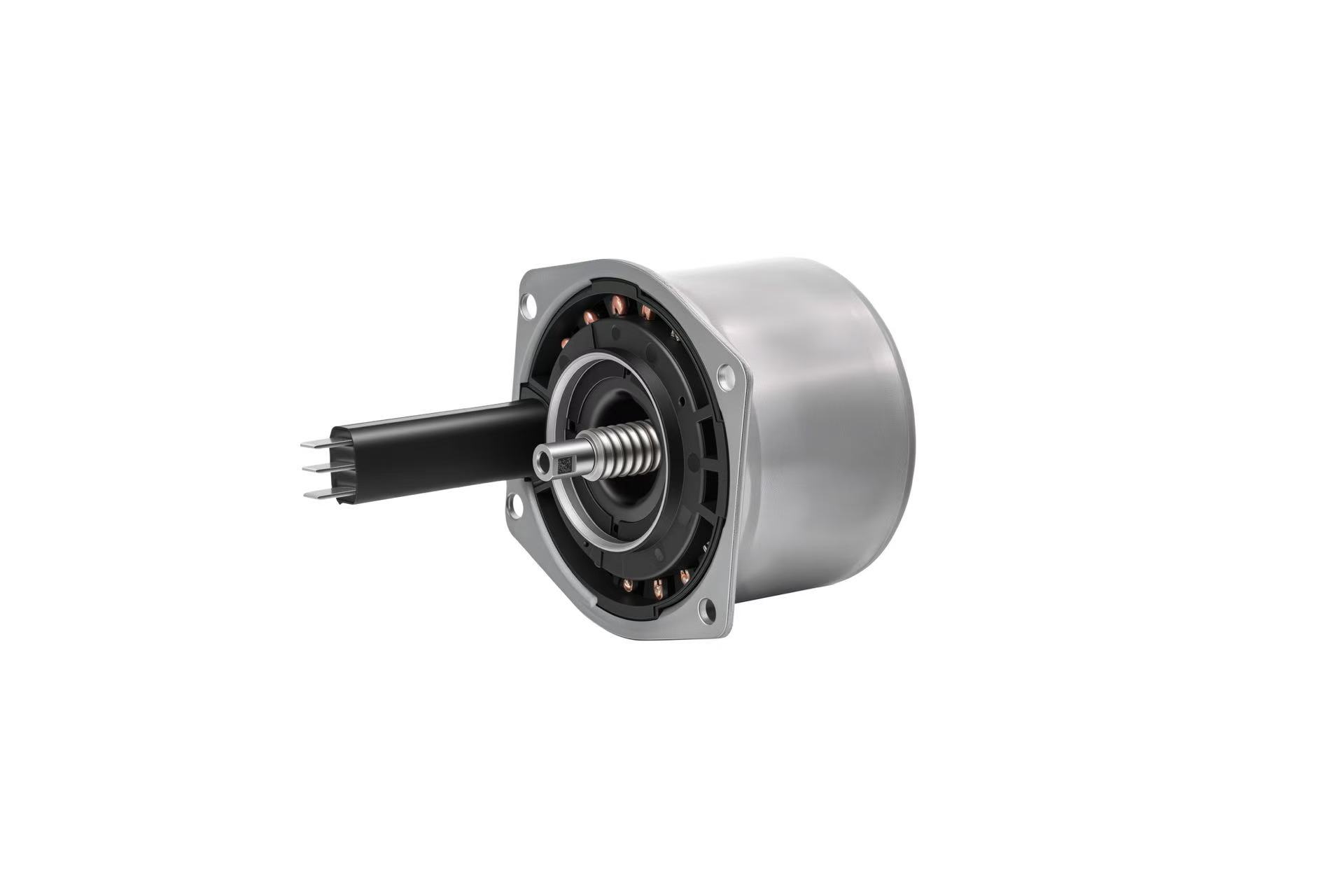
The motor creates the mechanical output that turns the drum. Many variable-speed front-loading washers use a brushless motor because it covers a wide speed range without mechanical brushes and can reverse often during washing.
The Driver Controls Commutation, Speed, and Torque
The driver receives commands from the washer’s main control board. It switches current through the motor windings in the correct sequence. Changing the switching pattern and current level changes speed, direction, and torque.
Inverter Control Is Not the Same as Direct Drive
“Inverter” refers to electrical control. “Direct drive” refers to how mechanical power reaches the drum. A washer may use inverter control with different transmission layouts. This prevents the common assumption that every inverter washer is beltless.
How Does Power Conversion Control the BLDC Motor?
Household input power must be prepared before the motor can run at controlled speeds.
AC Input Is Converted and Stabilized
Incoming AC power is rectified into DC inside the control system. A DC bus and capacitor help hold the voltage steady when the load changes. This matters when the drum starts, reverses, or accelerates with wet laundry.
Electronic Switching Creates a Rotating Magnetic Field
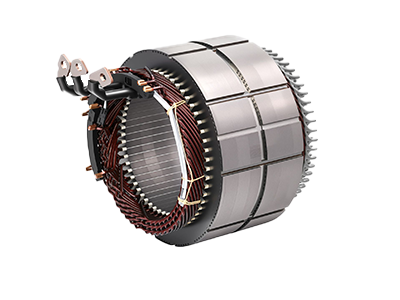
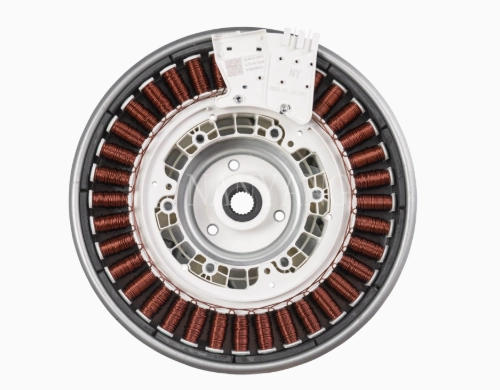
Power devices inside the driver switch the DC supply across the stator windings. The switching order creates a rotating magnetic field. Permanent magnets in the rotor follow that field, causing the shaft to turn. Electronic commutation removes brush-and-commutator contact.
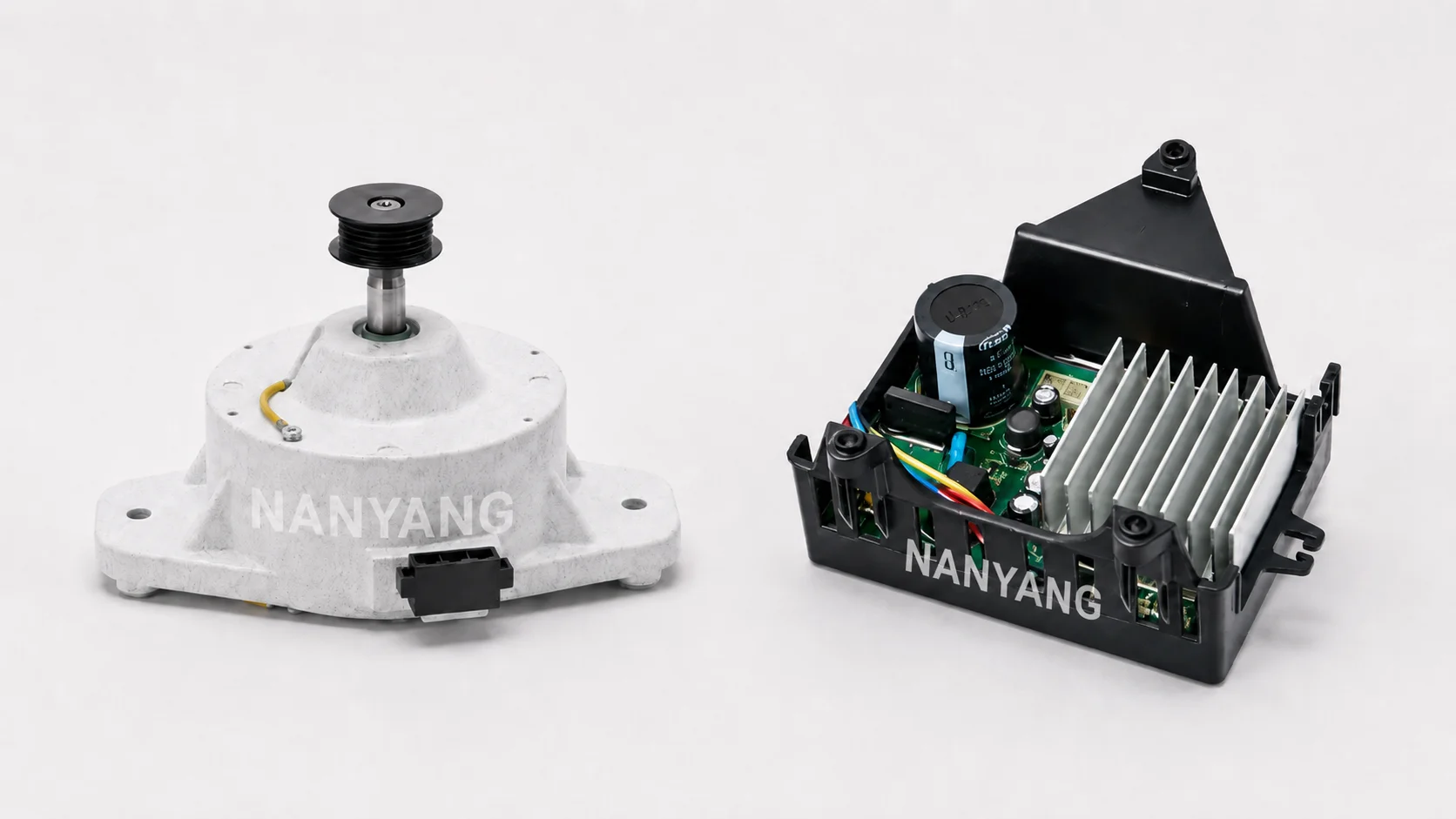
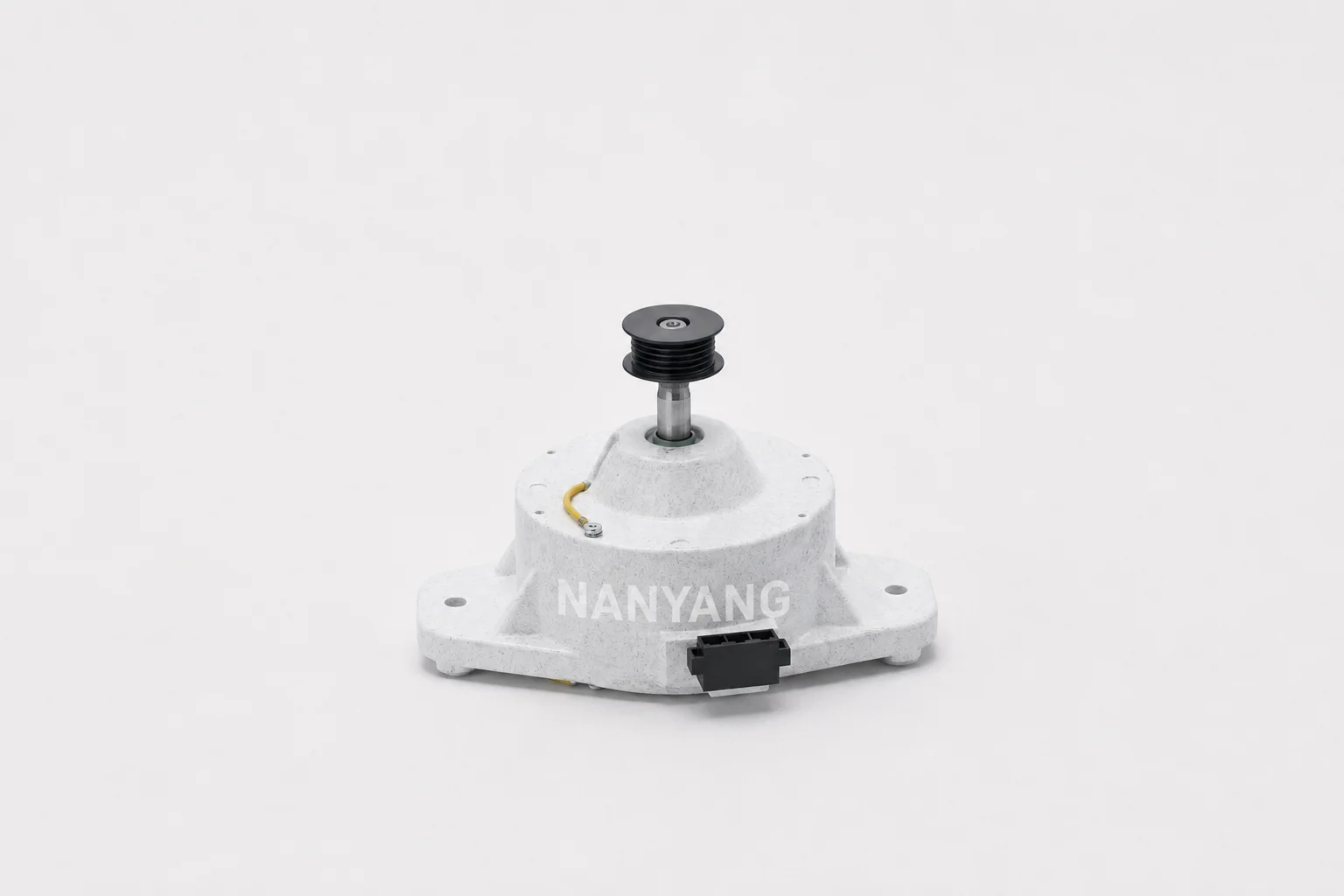
The BLDC Motor is made for front-loading washer applications and comes with control-system options for different capacities and layouts. Its published range includes 310 VDC operation, wash torque from 2.0 to 3.5 N·m, spin torque from 0.20 to 0.40 N·m, speeds up to 17,000 rpm, and washer capacities from 6 to 25 kg.
Feedback Keeps Actual Speed Close to the Command
The controller checks rotor position, speed, current, or back EMF, depending on the design. It compares actual operation with the programmed target and corrects the output. This closed loop keeps drum speed steadier as the load changes.
How Does Speed and Torque Change During the Wash Cycle?
One wash program asks the motor to handle low-speed washing, load distribution, and high-speed spinning.
Low-Speed Reversing Handles the Wash Stage
During washing, the drum moves slowly and reverses often. The driver must provide steady low-speed torque, smooth starts, and clean direction changes. Poor matching can create a knock or rough pull at each direction change.
Load Balancing Prepares the Drum for Spinning
Before high-speed spin, the washer usually turns the drum at a lower speed to check how the clothes are distributed. If the load sits on one side, the system can stop, reverse, and try again before speed rises.
Controlled Acceleration Protects the Whole Machine
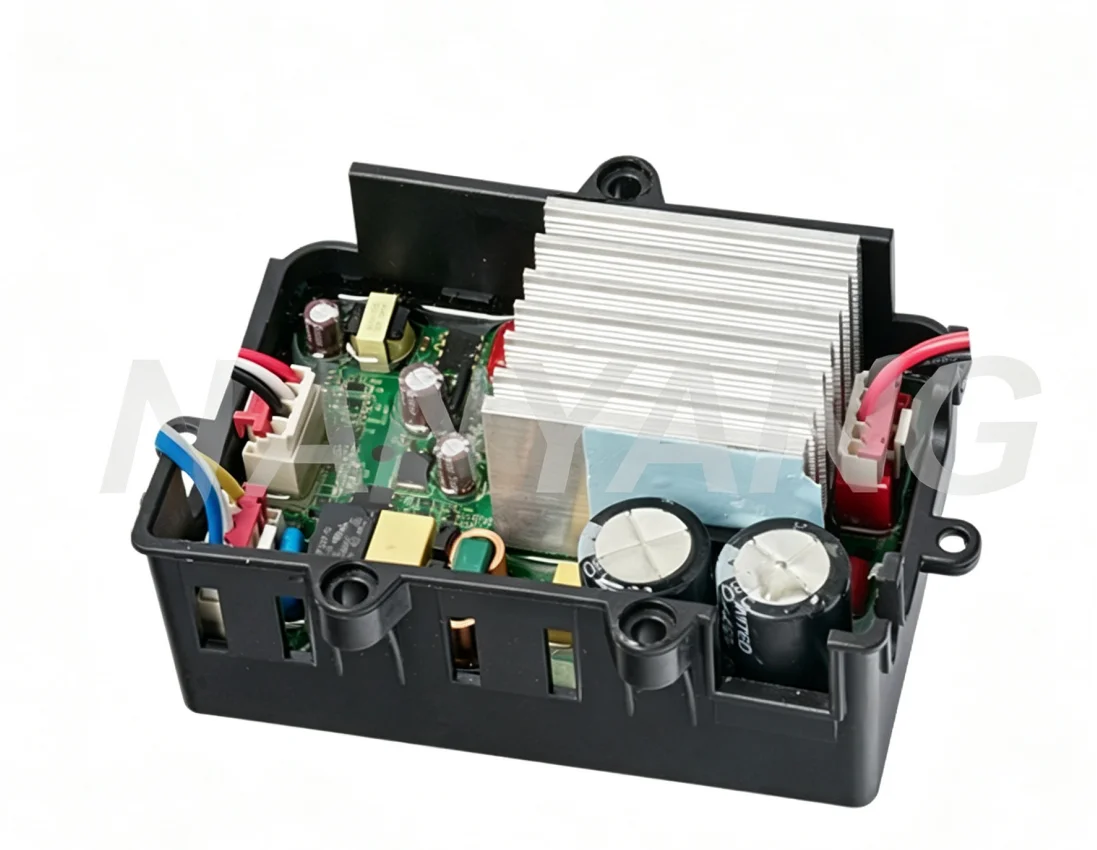
The drum should not jump straight from wash speed to maximum spin speed. The driver raises speed in steps while watching current and load behavior. The compact Drivers for front-loading washers combine a voltage-stabilizing capacitor, heat sink, and control PCB, allowing real-time adjustment of commutation, speed, and torque.
Why Can an Inverter Washer Still Become Noisy or Weak?
An inverter system gives more control, but noise and weak spinning can still have several causes.
Poor Motor-Driver Matching Causes Rough Commutation
A driver with the wrong current limit, phase sequence, feedback setting, or control map can make a good motor behave badly. Signs include jerky starts, unstable low-speed movement, whine, and protection trips. The motor and driver should be tested as a matched pair.
Drum Balance and Suspension Still Matter
A smooth motor cannot correct worn bearings, loose mounting points, weak suspension, or a badly balanced drum. Control can detect uneven loads, but the structure must still carry them at high speed.
Heat and Overload Can Reduce Spin Performance
If the motor or driver runs too hot, the system may reduce current or stop the cycle. Restricted airflow, poor heat-sink contact, oversized loads, and repeated high-current starts raise temperature. Thermal checks should use real wash and spin conditions, not only bench operation.
How Should Appliance Manufacturers Select a Matched System?
For OEM work, start with the machine requirement. Drum size, capacity, transmission layout, spin speed, and cabinet space shape the choice.
Match Torque and Speed to the Drum
You need enough wash torque for wet load movement and enough spin capability for the target extraction speed. Peak speed means little if low-speed control is weak. The torque-speed curve, acceleration time, and duty pattern should match the actual program.
Check Electrical, Thermal, and Structural Fit
Voltage, current, feedback type, connector layout, mounting points, shaft dimensions, cooling space, and protection settings should be reviewed together. Huzhou Nanyang Electric-Motor Co., Ltd. supports this work through motor R&D and application development, including magnetic design, high-speed performance, torque ripple, noise, sealing, insulation, and thermal behavior.
Test the Motor and Driver as One Assembly
Validation should cover low-speed reversing, empty and rated loads, uneven-load recovery, high-speed spin, deceleration, temperature rise, noise, vibration, and protection. Testing only the motor or only the driver leaves too many system risks unchecked.
Conclusion: From Controlled Power to Stable Drum Performance
Good drum performance comes from power conversion, switching, feedback, motor output, and mechanical design.
A BLDC Motor Provides the Mechanical Output
The motor should deliver stable torque during washing and remain efficient as speed rises. A reliable stator structure, accurate rotor parts, sound insulation, and balanced assembly support smoother operation over the washer’s service life.
The Driver Turns Program Commands into Motion
The driver decides when the motor starts, how quickly it accelerates, how much torque it provides, and when it must slow down or stop. It directly shapes how the washer feels and performs.
Service and Contact Support Reduce Project Risk
Huzhou Nanyang Electric-Motor Co., Ltd. can support motor selection, driver matching, product configuration, testing discussion, and custom development. Prepare the washer capacity, drum size, voltage, target speeds, torque needs, mounting space, noise target, control interface, and expected volume, then contact the sales and engineering team for service and project review.
FAQs
Q1: Is every inverter washing machine motor a BLDC motor?
A1: No. “Inverter” describes the electronic control method, while BLDC describes a motor type. Other motor types can also use inverter-based control.
Q2: Why does a washing machine need different motor speeds?
A2: Washing needs slow reversing motion, load balancing needs controlled trial movement, and spinning needs steady high speed. One fixed speed cannot perform all three jobs well.
Q3: Does a BLDC motor work without a driver?
A3: A BLDC motor needs electronic commutation. Without a suitable driver or controller, the stator windings will not receive current in the correct sequence.
Q4: Why can an inverter washer still vibrate during spinning?
A4: Vibration may come from uneven laundry, drum balance, bearings, suspension, cabinet structure, mounting, or control settings. Motor control helps, but it cannot correct every mechanical fault.
Q5: What information should you provide when requesting a motor-and-driver solution?
A5: Provide washer capacity, drum size, voltage, target speeds, wash and spin torque, transmission layout, mounting limits, cooling conditions, noise goals, control interface, and expected production volume.