Inverter Motor vs Traditional Motor in Washing Machines: Which One Fits Your Product?
For your washer the best option is typically an inverter motor, as it allows for variable speed, smooth operation of the drum, low noise and a wide variety of wash programs. However, for simpler applications a traditional commercial motor can be the smarter option, provided the washer has a simple duty of use, a fixed price, and existing controls that are mature and not in need of further development.
You need a motor that matches the washer capacity, drive layout, controller, target price, and production volume.
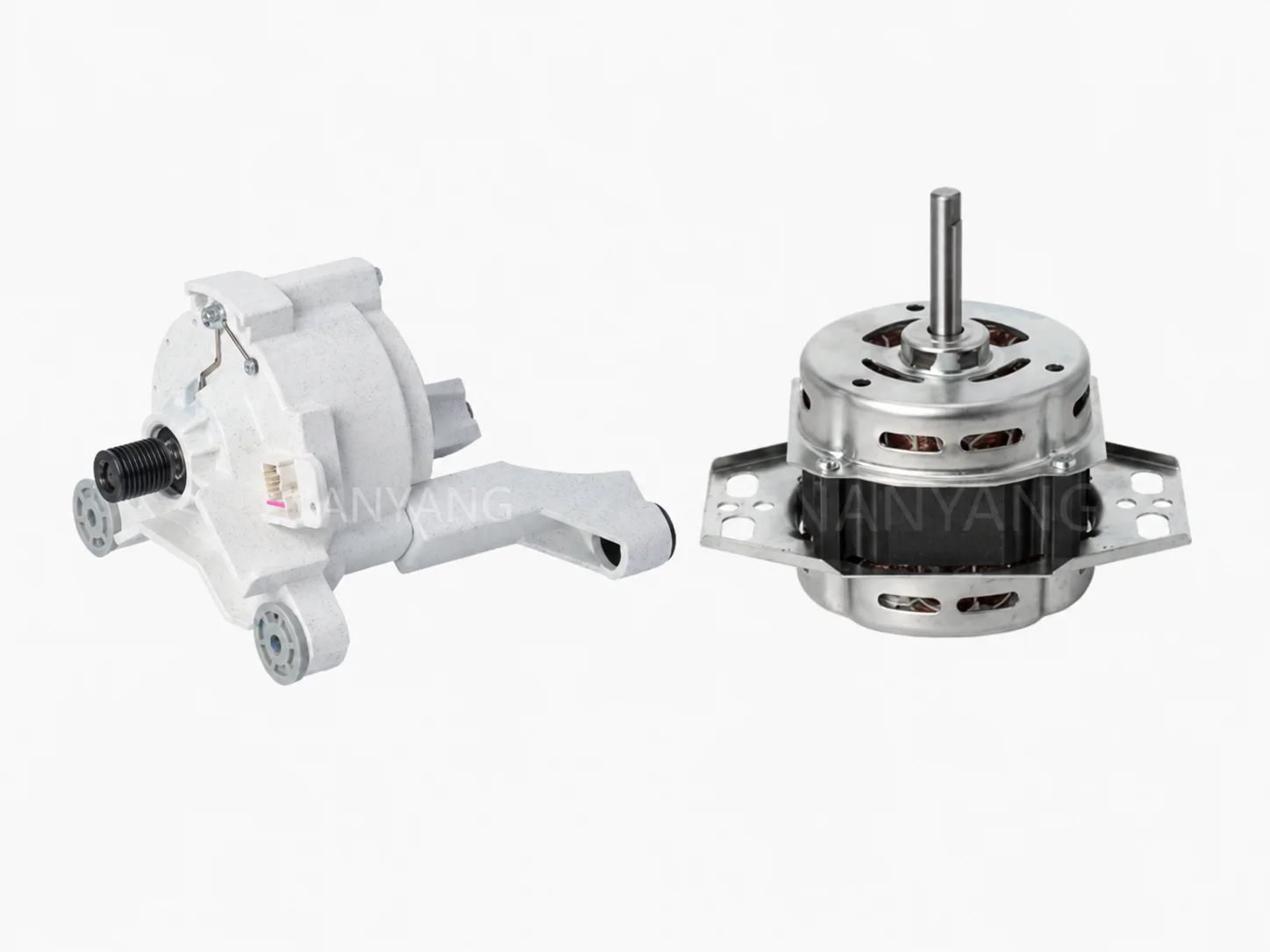
What Do Inverter and Traditional Motors Mean in Washing Machines?
Product catalogs often mix motor type, control method, and drive layout. Clear definitions prevent a costly mismatch.
An Inverter Changes Motor Control
Inverter motor meaning generally refers to an electronic control of speed, current, direction and torque. During a wash cycle for example, the controller slowly drives the drum forward, reverses it, tries to balance the load, and finally increases the speed for the spin drying.
So, what is an inverter motor in a washing machine? It is normally a motor working with an electronic drive that changes output for each operating stage. The word inverter does not identify the complete motor structure.
A BLDC Motor Uses Electronic Commutation
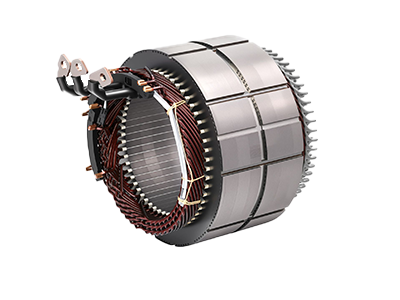
BLDC Motors do not have any mechanical brushes or a conventional commutator. Current is switched through the stator windings by the motor controller. In a BLDC Motor, the permanent magnets in the rotor follow the rotating magnetic field in the stator.
A BLDC inverter motor combines this brushless structure with electronic variable-speed control. BLDC describes the motor. Inverter describes how electrical output is managed.
A Traditional Motor Usually Means an AC Induction Motor
In washing machine sourcing, traditional motor often means a single-phase AC induction motor. The structure is simple and mature. Speed choices are more limited, but production, controller matching, and field repair can be easier.
The same point applies to inverter motor vs normal motor. “Normal motor” is not a strict technical class, so it should be defined as the conventional AC motor used in the washer being compared.
Where Do the Main Performance Differences Appear?
Users notice drum movement, sound, vibration, and cycle performance. The controller, transmission, bearings, suspension, and software also matter.
Speed and Torque Control
Gentle washing needs low speed and frequent reversals. Load balancing needs small corrections. Spin drying needs controlled acceleration and stable high-speed operation.
An inverter-controlled BLDC Motor can adjust speed and torque across these stages. A traditional AC motor supplies dependable power but gives engineers less freedom to tune each part of the cycle. This gap matters most on washers with many programs and changing loads.
Energy Use and Heat
An inverter system can match output to the current load instead of running near one fixed operating point. It can also reduce harsh starts and unnecessary current peaks.
Still, the inverter label alone does not guarantee an efficient washer. Poor settings, worn transmission parts, weak bearings, or an unbalanced drum can waste energy. Compare the full drive system rather than one efficiency figure.
Noise, Vibration, and Wear
Smooth acceleration and deceleration can reduce sudden movement. A brushless motor also removes brush friction and brush replacement from the maintenance list, which gives BLDC inverter systems a useful base for low-noise products.
A traditional AC motor can also run quietly in a well-designed washer. No motor can fully correct poor drum balance, weak suspension, or inaccurate installation.
Which Costs Matter Beyond the Motor Price?
The unit quotation is only part of the cost. Controller work, testing, production changes, and service can change the result.
Compare the Motor and Controller Together
A BLDC Motor needs a matched controller. Confirm who supplies the hardware, sets operating parameters, checks feedback signals, and supports software changes. Add wiring, sensors, protection logic, and communication needs to the quotation.
An AC motor washing machine can use a simpler control system. That may shorten development when you already have a stable top-loading platform.
Include Validation and Production Changes
Your cost sheet should cover mounting changes, control-board work, load tests, temperature-rise tests, noise checks, endurance tests, and line adjustments. The design must also stay consistent in mass production.
Huzhou Nanyang Electric-Motor Co., Ltd. was founded in 1992 and works across home-appliance motors, drive-system design, core-component supply, assembly, and testing. Its company profile lists a 420,000 m² factory area, annual home-appliance motor capacity of 46 million units, and 134 patents. For a buyer, the practical value is having design and production support handled within one supply system.
Judge Cost by Product Positioning
Entry-level washers often prioritize cost and easy repair. Mid-range or premium models may justify quieter operation, more wash modes, and smoother control.
Do not use premium-machine criteria for a basic washer. Do not cut drive cost so far that the washer misses its noise, load, or service target.
When Does Each Motor Fit Better?
Start with the washer platform rather than forcing one motor into every product family.
Choose BLDC for Flexible Washer Programs
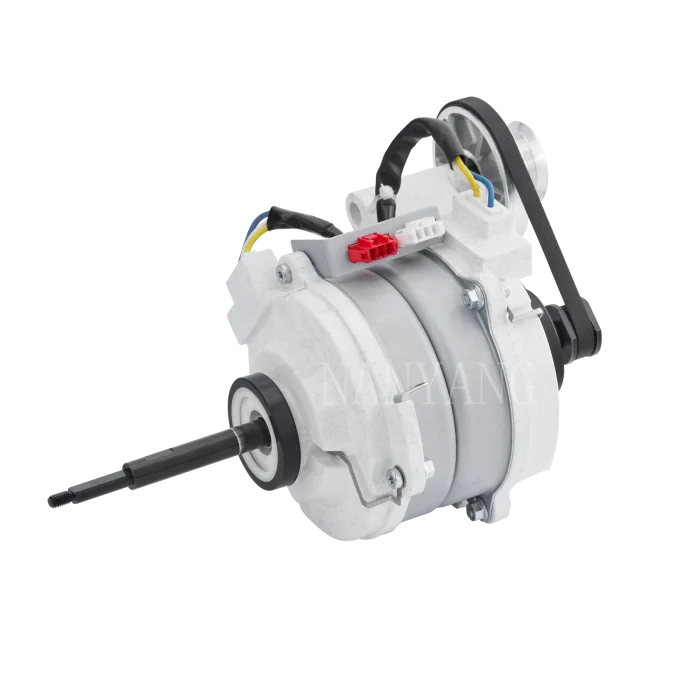
The BLDC Motor suits projects that need electronic commutation, precise speed regulation, and different demands during washing and spinning. Its official data lists 310 VDC operation, wash efficiency of at least 65%, spin efficiency of at least 75%, and separate wash and spin torque ranges.
It fits washers with delicate cycles, quick programs, changing loads, or controlled high-speed spinning.
Choose AC Auto-Motor for Simple, Cost-Controlled Platforms
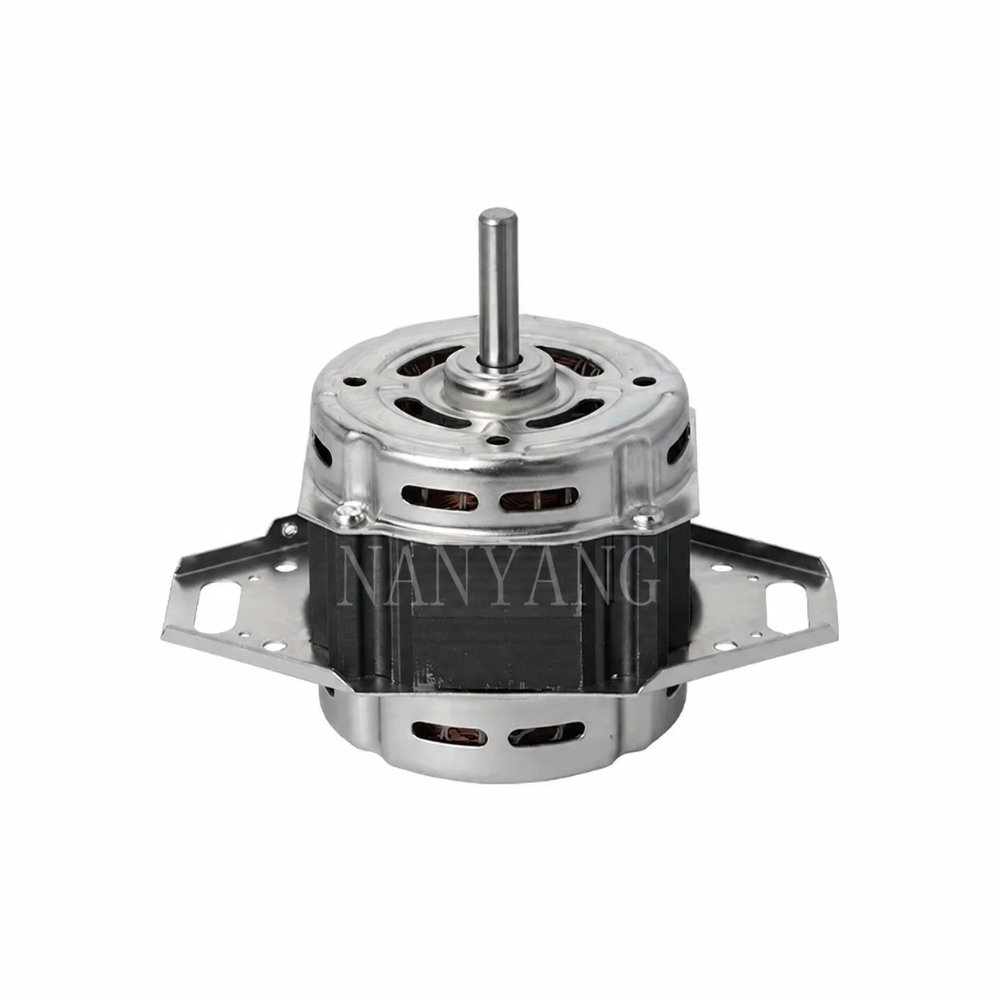
The AC Auto-motor is designed for agitator washing machines up to 15 kg. It uses single-phase AC power and has a simple, reliable, cost-effective structure. The listed power range is 25 to 250 W, with several voltage, frequency, winding, insulation, and duty options.
It is a practical fit for mass-market top-loading washers with simple control logic and an established induction motor washing machine supply chain.
Check the Drive Layout Before You Decide
Inverter motor vs direct drive is a separate comparison. Inverter describes power control. Direct drive describes how the motor connects to the drum. One washer can use both.
Check mounting space, drum inertia, transmission ratio, target speed, and service access. The company’s motor R&D work covers BLDC rotor design and integrated molding aimed at efficiency, noise, sealing, insulation, and thermal performance. This support matters when catalog data does not fully match your washer.
Which Motor Should You Put Into Production?
The final choice should follow product requirements, not a popular label.
Select BLDC When Control Creates Real Value
Choose BLDC when the washer needs a wide speed range, smoother torque response, several drum patterns, low-noise positioning, or stronger energy performance. Include the controller, mounting layout, software, and test plan from the start.
The BLDC Motor is the recommended option when these benefits directly improve product use and market positioning.
Select AC When Simplicity Protects the Budget
Choose AC when the washer uses a mature top-loading platform, simple programs, stable operating points, and a strict cost target. It can also suit markets where service teams prefer familiar parts and basic electrical diagnosis.
The AC Auto-motor is the recommended option when dependable mass production and controllable cost matter more than wide-range electronic control.
Use Supplier Support to Close the Final Gap
Huzhou Nanyang Electric-Motor Co., Ltd. supports both routes through in-house component work, manufacturing, product configuration, and application support.
Send the washer type, capacity, voltage, speed range, torque demand, duty cycle, mounting drawing, noise target, and annual volume. For selection, service, quotation, or custom configuration, contact the sales and engineering team. The better motor is the one that reaches your product target without adding cost or complexity that the market will not pay for.
FAQ
Q1: Is an Inverter Motor Always a BLDC Motor?
A1: No. Inverter describes electronic power and speed control, while BLDC describes a brushless motor structure. A BLDC Motor often works with an inverter controller, but the terms are not interchangeable.
Q2: Which Motor Is Better for a Top-Loading Washing Machine?
A2: A simple, cost-focused model may suit an AC Auto-motor. A model that needs flexible speed and torque control may benefit from a BLDC Motor.
Q3: Does an Inverter Motor Always Use Less Electricity?
A3: Not always. Motor efficiency, controller settings, transmission losses, drum balance, bearings, and wash software all affect actual energy use.
Q4: Is a Direct Drive Motor the Same as an Inverter Motor?
A4: No. Direct drive describes the mechanical connection between the motor and drum. Inverter describes electronic control. One washing machine can use both.
Q5: What Information Should You Send Before Motor Selection?
A5: Send the washer type, capacity, voltage, frequency, speed range, torque, duty cycle, drive layout, mounting dimensions, noise target, controller details, and annual volume.