The Pros and Cons of Different Dryer Motors: DC Motor vs AC Motor
Selecting an appropriate motor for a dryer involves more than technical aspects. It influences product operation in everyday scenarios, energy usage, and customer views on quality throughout its service life. When a dryer operates softly, dries fabrics uniformly, and endures for many years without problems, the motor often handles much of the effort in the background.
In the current appliance sector, the discussion regarding DC and AC dryer motors holds greater importance. Consumers no longer prioritize cost alone. They examine energy savings, sound levels, and ongoing dependability. For this reason, numerous producers rely on established providers like Huzhou Nanyang Electric-Motor Co., Ltd., an organization with over 30 years in motor production, a complete supply chain, and demonstrated high-volume manufacturing ability. With more than 2,000 staff members, several factory locations, and millions of motors made each year, their expertise appears in actual results.
This discussion examines the distinctions between DC and AC dryer motors in a straightforward manner. It reveals where each variety suits best, which challenges they address, and how to select according to specific product objectives.
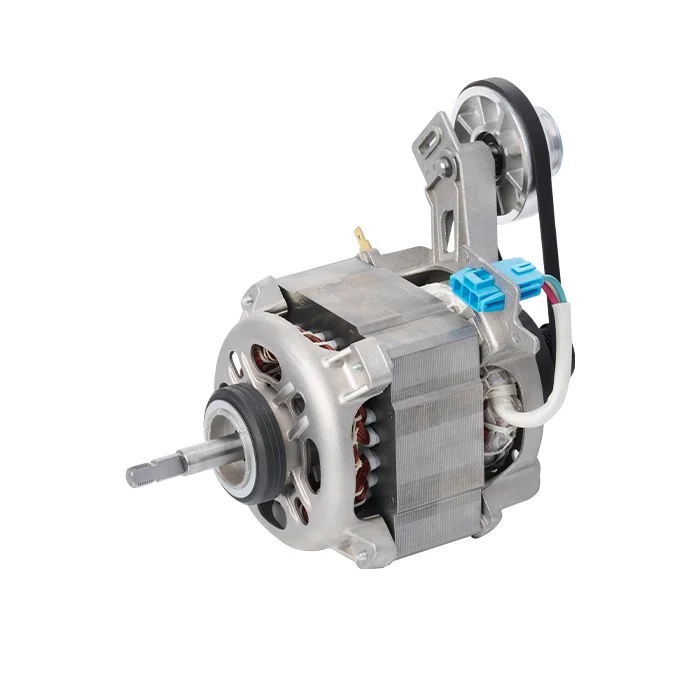
What Are DC and AC Dryer Motors and How Do They Work?
Prior to evaluating benefits and drawbacks, understanding the operation of these motors in a dryer proves useful. The fundamental mechanism affects factors ranging from sound to performance.
A dryer motor needs to manage drum rotation, air circulation, and occasionally speed adjustments according to load. Thus, steadiness and regulation hold equal importance to basic strength.
How Do DC Dryer Motors Function?
DC dryer motors function using direct current and frequently feature adjustable speed management. In contemporary devices, they are generally brushless, which lessens abrasion and extends service duration.
Within a dryer, such a motor can vary speed evenly based on the drying phase. For instance, soaked heavy fabrics early on demand greater force, whereas final phases call for mild turning. This adaptability cuts down on energy loss and enhances drying uniformity.
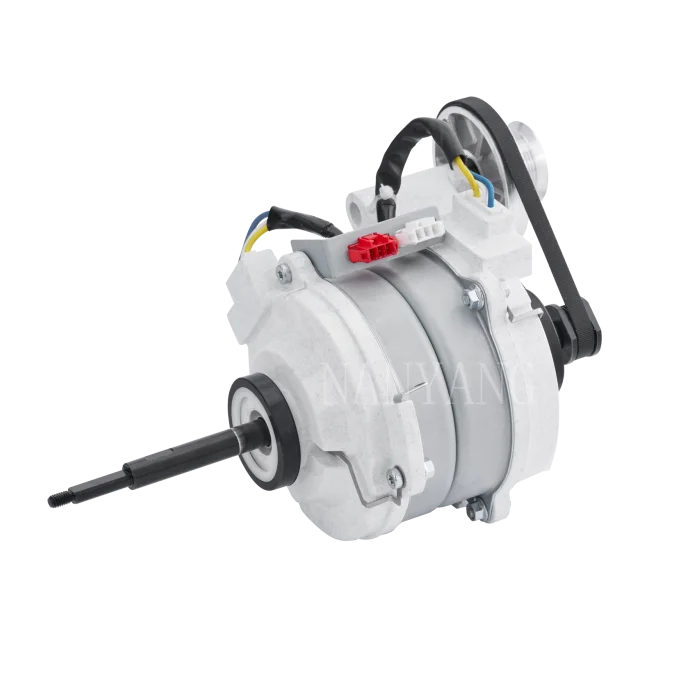
Items like the DC-Dryer Motor are constructed for this form of smart regulation. They suit dryers up to 15 kg and enable two-axis functionality, permitting the drum and blower to function separately. This arrangement can lower energy use by roughly 25 percent and decrease drying duration.
How Do AC Dryer Motors Function?
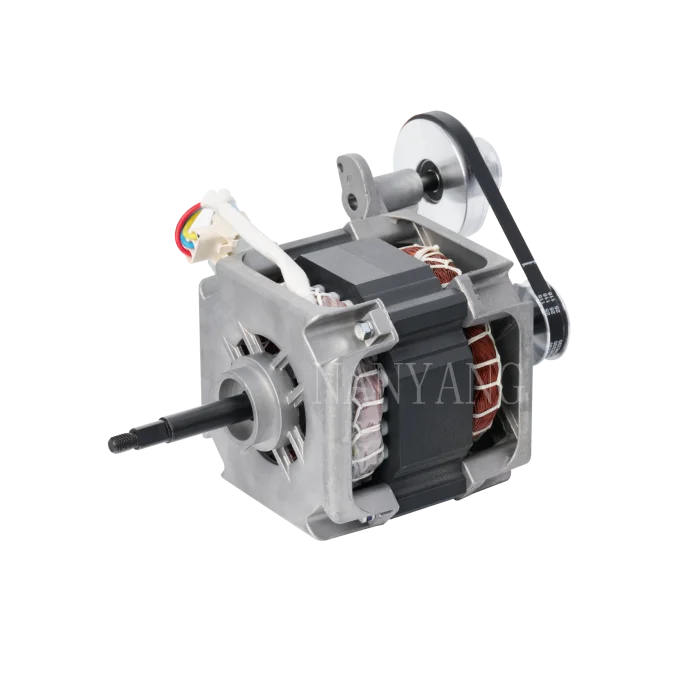
AC motors work with alternating current and depend on electromagnetic principles. Their build is more basic, and they have served in devices for many years.
In a dryer, an AC motor commonly operates at a constant rate. It offers reliable output without demanding intricate control setups. As a result, it serves as a sensible option for routine drying duties where sophisticated options remain unnecessary.
The AC-Dryer Motor appears often in dryers below 10 kg. Its design is uncomplicated, which aids in lowering production expenses while upholding steady function over extended times.
What Are the Advantages of DC Dryer Motors?
As appliance development shifts toward upscale models, DC motors reveal their key strengths. These benefits stem from practical behavior during actual drying processes, not just concepts.
Better Speed Control and Energy Use
A DC motor permits ongoing speed variation. Consequently, the dryer can align its output with the load rather than operating at maximum capacity throughout.
In real terms, this results in clear energy reductions. Based on engineering information, adjustable frequency motors can decrease energy intake by 20 to 30 percent relative to conventional setups. For those using dryers regularly, this gap accumulates rapidly.
Lower Noise and Smoother Operation
Sound stands out as an initial customer observation. DC motors, particularly brushless versions, perform more evenly due to reduced mechanical contact.
In a calm household setting, this aspect counts significantly. Even a modest drop in decibels can alter product perception. It appears more high-quality, despite comparable outer appearance.
Strong Torque for Changing Loads
Damp fabrics weigh substantially at cycle beginnings. A DC motor delivers robust initial torque, enabling the dryer to manage these situations without stress.
This lowers the chance of stopping and boosts general endurance. Moreover, it supports uniform output across varying load amounts.
Longer Lifespan with Fewer Wear Parts
Since current DC motors avoid brushes, they sidestep a frequent breakdown source. Paired with safeguards like overheat and overload measures, these motors can operate beyond 10 years in typical settings.
What Are the Disadvantages of DC Dryer Motors?
Although they offer clear gains, DC motors do not suit every scenario. Certain constraints emerge when examining expenses and setup intricacy.
Higher Initial Cost
DC motors necessitate sophisticated control mechanisms. This raises both production expenses and planning demands.
In high-volume output targeted at cost-aware regions, this factor can restrict options. Despite superior future savings, the starting expense remains relevant.
More Complex Integration
Incorporating a DC motor into a dryer framework lacks the ease of a standard part. It typically demands matching regulators and programming.
Such requirements can extend preparation periods, particularly for producers lacking robust technical assistance.
Not Always Necessary for Basic Applications
When a dryer targets straightforward tasks, numerous advanced capabilities of a DC motor might go unused. Under those circumstances, the added spending yields limited returns.
What Are the Advantages of AC Dryer Motors?
AC motors continue in broad use for valid reasons. They provide trustworthiness, affordability, and straightforward incorporation into current builds.
Simple Structure and Proven Reliability
An AC motor contains fewer elaborate elements. This diminishes failure risks and simplifies upkeep.
In expansive manufacturing contexts, this ease holds worth. It maintains low error levels and secures uniform product standards.
Lower Cost for Mass Production
Expense management proves essential in the appliance field. AC motors cost less to manufacture and procure in bulk.
For beginner or intermediate dryers, this renders them a feasible selection. They ensure dependable function without elevating item prices.
Stable Performance in Standard Conditions
For routine drying activities, a set-speed motor performs adequately. It supplies steady turning and air movement, sufficient for typical users.
The extended operational span, frequently surpassing 8 years, further renders AC motors appealing for lasting devices.
What Are the Disadvantages of AC Dryer Motors?
Although AC motors offer steadiness, they exhibit restrictions evident in sophisticated uses.
Limited Speed Control
An AC motor generally maintains a set rate. Modifying this involves extra parts, which heightens expenses and demands.
Lacking adaptable speed management, the dryer adapts less effectively to diverse loads. This might cause irregular drying or increased energy intake.
Lower Efficiency in Variable Conditions
As the motor lacks precise output adjustment, it could use more power than required for smaller loads.
With time, this diminishes total performance relative to adjustable-speed arrangements.
Slightly Higher Noise Levels
AC motors may generate additional shaking and sound, notably against brushless DC builds. In serene surroundings, this variance stands out.
How to Choose Between DC and AC Dryer Motors for Your Business?
At this stage, the selection gains clarity. It centers less on superiority and more on product requirements.
When aiming to create an upscale dryer featuring intelligent options, soft sound, and solid energy output, a DC motor fits better. It enables advanced regulation and elevates user satisfaction.
When emphasizing affordability, dependability, and extensive output, an AC motor stands as a firm choice. It yields steady output without raising expenses.
A functional element also warrants attention. Providers possessing capable research and production strengths can influence outcomes substantially. An entity with over 100 patents, various assembly lines, and thorough evaluation processes can supply motors that function reliably in varied regions. For instance, units passing more than 30 verification stages and enduring nonstop full-load trials for two hours prior to distribution often show reduced error occurrences in practice.
Conclusion Which Dryer Motor Type Is the Better Choice?
No single response applies universally. DC motors provide adaptability, savings, and a calmer operation. AC motors deliver ease, endurance, and expense benefits.
The choice hinges on intended audience, product placement, and future aims. An elite dryer gains from the accuracy of a DC motor. A economical unit functions effectively with an AC motor.
Ultimately, the key lies in how aptly the motor aligns with the task. When alignment succeeds, the dryer operates superiorly, endures longer, and fulfills user needs without excess demands.
FAQ
Q1: Which Motor Type Is More Energy Efficient?
A: DC motors are generally more energy efficient because they adjust speed based on load. This reduces unnecessary power consumption during lighter drying stages.
Q2: Are AC Motors Still Relevant in Modern Dryers?
A: Yes, AC motors are still widely used, especially in cost-sensitive products. Their simple structure and stable performance make them reliable for standard applications.
Q3: How Long Does a Dryer Motor Typically Last?
A: AC motors can last more than 8 years, while DC motors often exceed 10 years due to fewer wear components and better control systems.
Q4: Which Motor Is Better for Quiet Operation?
A: DC motors are quieter because they run more smoothly and have less mechanical friction. This makes them suitable for premium home appliances.
Q5: What Should You Focus on When Selecting a Motor Supplier?
A: Look for production scale, testing standards, R&D capability, and industry experience. A supplier with a complete industrial chain and proven quality control can provide more consistent and reliable products.