How Should BLDC Control Respond to Changing Washing Machine Loads?
For applications such as washing machines that have to maintain a constant speed or torque while load changes, closed-loop BLDC control is often more suitable since feedback is used to correct for measured errors as opposed to open-loop control which issues a command and does not correct for any difference between desired and actual output. However, there are several design issues which have to be addressed depending on the operating point, available feedback, cost, start-up method and wash/sweep cycle requirements.
Note that “sensorless” does not necessarily equal “open loop”. It is important to establish what is being measured and/or estimated against what is actually being controlled. In addition, important information about a drive’s performance at low speed as well as during a sudden change in load can be extracted from a quotation. This is far more important than the corresponding word being highlighted.
What Changes When the Laundry Load Changes?
A washer’s load is not constant. Fabric gathers and separates, water redistributes, and the controller repeatedly starts, stops, or reverses the drum. Compare control strategies under those events rather than under a single steady-speed test.
Open Loop Follows the Commanded Pattern
An open-loop speed control scheme is one where the drive is set to run at a pre-determined speed, without checking the current speed against the desired speed. This type of control is typically suitable for very limited applications where there is little requirement for high output accuracy and starting torque is known to be low.
Don’t confuse open-loop speed control with the feedback used by a BLDC motor control for commutation. Ensure the supplier is describing these functions separately from each other.
Closed Loop Responds to Measured Error
A closed-loop speed controller compares target speed with actual or estimated speed and thus influences the drive in order to reduce any difference. The torque- or current-control loop is normally nested within the speed-control loop. The controller ensures that the washer can handle an unexpected increase in wash load or even spin load while still adhering to the current and thermal limits of the motor and inverter.
Although feedback is used to improve control of the system, the system can still oscillate, draw excessive current or trip due to a number of causes including poor tuning, noisy signals and an inadequate motor when load changes rapidly.
The Transition Matters More Than a Label
Test the initial start, low-speed reversal, load step, and acceleration to spin. These test events are designed to test whether the controller has sufficient information regarding the rotor position, is able to respond to changes in load in a timely manner, and has the capability to protect the power stage. A controller that holds speed in a test of a steady state operation can lose synchronization during a reversal of a wet drum.
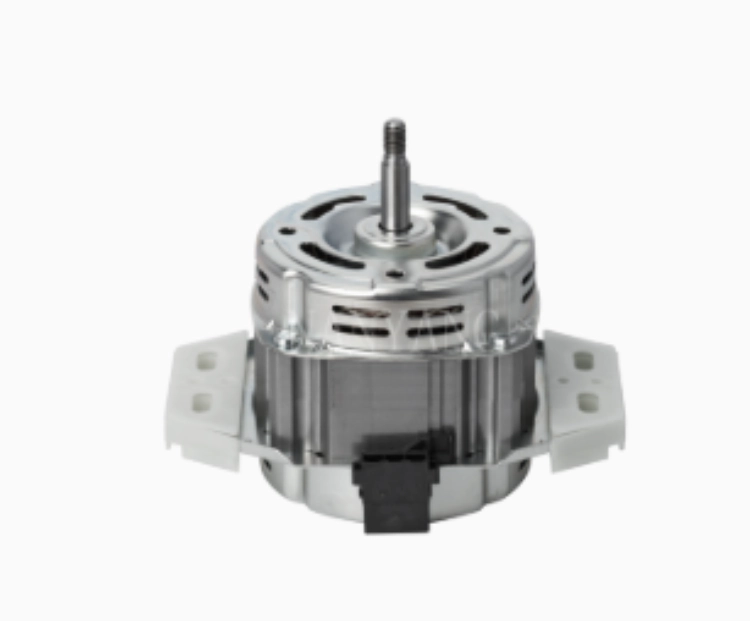
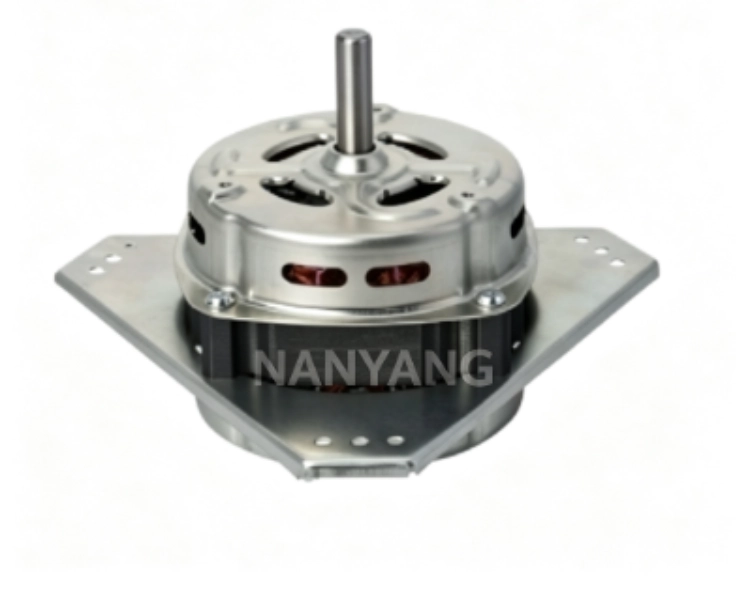
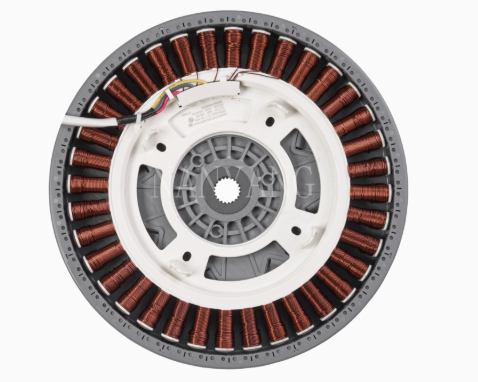
这 Nanyang DD Motor is a direct-drive product designed for front-loading washer applications. Direct drive means that no belt is sitting between the motor and the tub, and thus the behavior of the motor and the control, are clearly visible on the drum. This information is not specified on the product page, so always check whether the proposed drive is also suitable for your project.
Compare Wash and Spin Requirements
Neither duty can be judged from maximum motor speed alone. Each phase has a required output and an acceptable range.
Low-Speed Wash Needs Predictable Reversals
Record minimum drum speed, reversal time, allowed speed deviation, required torque and load variation. A feedback-regulated drive could be of interest if wash quality depends on repeatable motion of the fabrics despite varying distribution. Check if the position-estimation/sensing method chosen still works at the low start-up speed required.
Request to plot current and temperature traces. A controller can maintain a set speed by drawing more current if required. Therefore the motor and power stage must be rated for the resulting duty.
Spin Needs Controlled Acceleration
The spin control adds a higher target speed, increased drum inertia and unbalance. Compare acceleration time, speed tracking, peak current, vibration and the controller’s strategy for reversing the motor when the load is uneven. Controlling the commanded speed is only part of a working spin program.
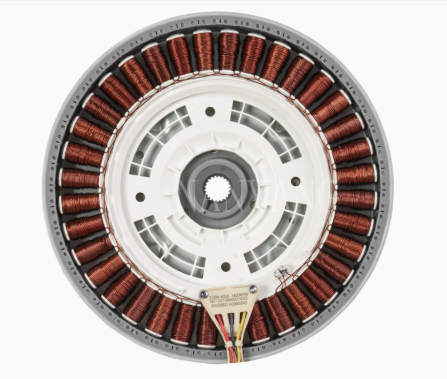
Nanyang DD motor product data lists separate wash and spin operating characteristics. When selecting a product for an OEM application, ask for a proposal for the required motor-controller set up and test the complete appliance instead of trying to work out the type of control from the motor product page.
Fault Response Is Part of the Control Choice
Define what happens when speed feedback becomes unavailable or implausible, the drum is blocked, or the measured current exceeds a limit. A closed-loop system needs diagnostics for the signals it relies on; an open-loop design still needs protection against unsafe or stalled operation.
Record the recovery sequence as well as the trip threshold. Repeated automatic retries under an unresolved mechanical fault can make an otherwise adequate design unsuitable for the washer.
Questions to Put to the Drive Supplier
Supplier terminology for control systems can differ greatly from one another. Verify that you understand what the supplier’s proposed system does by asking for a block diagram and for a test to be conducted.
What Is the Feedback Path?
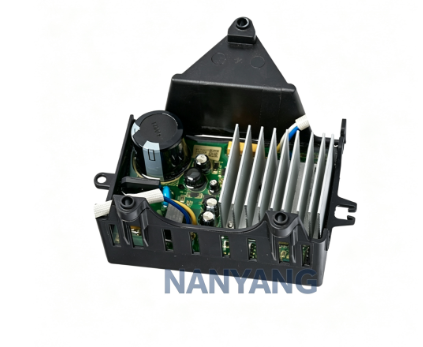
Identify whether speed and position come from physical sensors, electrical estimation, or another method. Ask for the valid speed range and behavior when a signal is lost. Separate commutation feedback, speed regulation, and appliance-level supervision so the specification does not use one word to describe three different functions.
Adding a sensor is not automatically improving the complete washer. All additional parts, wires and diagnostics also have to be validated.
Which Limits Apply During a Load Step?
Request response traces for a defined increase in load, including target speed, actual speed, current, bus voltage, and temperature. Review overshoot, recovery time, and whether protective limits intervene. Two controllers may both be described as closed loop while producing materially different washer behavior.
使用 Nanyang’s motor and system design capabilities as a starting point for a discussion on a specific drive-system and establish measured acceptance criteria rather than a number of assumed performance figures.
How Will the Approved Combination Be Maintained?
Document the Motor, Controller, Sensors / Estimation, Software Release Number and Tuning Values. Document whether changes to the Drum / Load Program require retesting. Compare the new Supplier proposed Algorithm to original test results at same Load / Wash outcome.
It is possible to perform service diagnostics. Intermittent speed errors can be traced back to a defined combination of parameters instead of unknown controller settings. Nanyang’s testing information can be used as a starting point to agree on the necessary evidence for a certain combination of parameters.
结论
For applications like changing laundry loads, you need to choose a control method based on washer’s required speed profile, low-speed start, spin and fault handling. While closed-loop control corrects for error as it’s measured, the benefit is largely dependent on a good motor, good sound tuning and proven feedback. That Nanyang Motor direct-drive washer product can be considered as part of a project-specific motor and drive-system discussion. Please provide evidence of the actual control architecture in use and consider for approval.
常见问题解答
Is every sensorless BLDC controller open loop?
No. It estimates the rotor position and closes the control loop using electrical measurements.
Does closed-loop control always maintain the requested drum speed?
None. Current limit, thermal limit, supply limit and unbalance limit can prevent a drive from achieving a target speed.
Why is low-speed washing difficult to control?
Low speed operation is more difficult than normal running as starts, reverses, variable load and limited position information are involved.
Does a direct-drive motor require one particular feedback method?
Confirm the sensing or estimation method and the controller design proposed for the exact washer program.
What should an OEM measure in a load-step test?
Record the requested speed and the actual speed, current, voltage, temperature, recovery time and any relevant fault or protection action.