BLDC, DD, DDM, or AC Motor: Which Fits Your Washing Machine Design?
For a front-load washer that needs wide variable-speed control, BLDC is often a strong fit. For a platform engineered around direct drum drive, DD can be more appropriate. For a top-load direct-drive design, DDM may fit the architecture, while an AC induction motor remains practical for suitable cost-controlled top-load platforms. The right answer depends on washer structure, torque-speed profile, controller, capacity, noise, service, and cost target.
Once the main washing machine motor architectures are clear, the next step is to match BLDC, DD, DDM, or AC to the washer’s mechanical layout, motion profile, controller, capacity, noise target, and cost requirements.
Nanyang Motor, founded in 1992, develops and manufactures home-appliance motors across BLDC, DD, DDM, AC, and dryer categories. Its portfolio allows OEM teams to compare several architectures against the same product requirements.
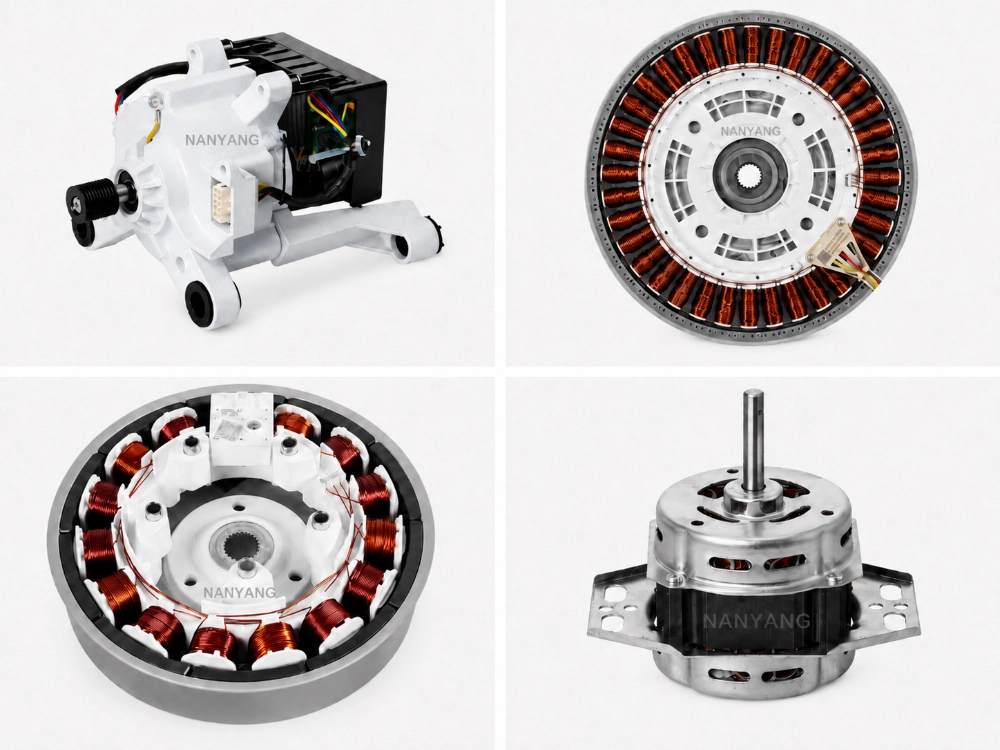
Which Motor Architecture Fits a Front-Load or Top-Load Washer?
Different washing machine motor types suit different mechanical layouts and motion requirements. For OEM selection, the key is to connect each architecture to the washer’s operating profile and drive structure.
BLDC for Variable-Speed Front-Load Platforms
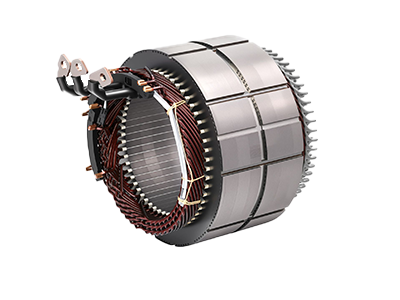
A BLDC motor is a brushless permanent-magnet motor that uses electronic commutation. It is a strong fit when the washer needs precise low-speed reversing, controlled acceleration, high-speed spinning, electronic braking, and multiple programs. Nanyang’s drum BLDC category is designed for front-loading washing machine applications up to 20 kg.
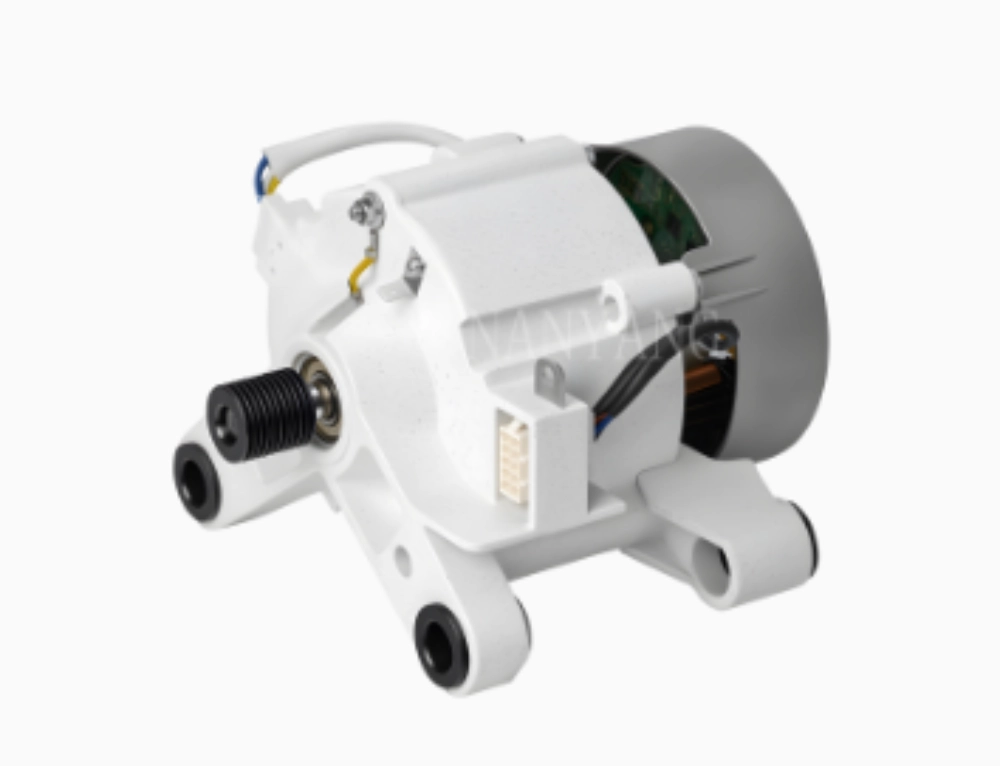
Front-loading BLDC Motor is the relevant product reference when a washer requires a wide speed range and coordinated electronic control.
DD or DDM When the Platform Is Built Around Direct Drive
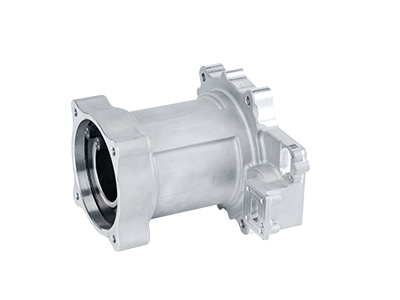
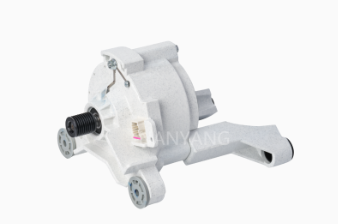
A DD motor removes the belt stage in a drum washer and gives the controller more direct influence over drum movement. DDM serves direct-drive top-loading designs.
The choice between direct drive and belt drive also affects packaging, transmission loss, service access, and control strategy.
In OEM motor selection, DD and DDM should be evaluated together with the washer structure, controller, bearings, and service layout.
AC Induction for Suitable Cost-Controlled Top-Load Designs
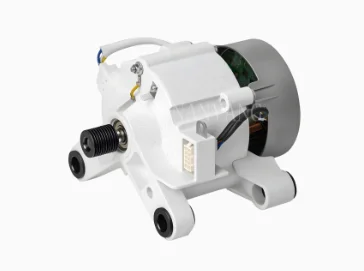
AC induction motors are mature and practical where the washer does not need the same degree of electronic low-speed control and the platform prioritizes a proven architecture and controlled cost. Nanyang’s top-load AC motor category is designed for washing machines up to 15 kg.
How Should You Match Motor Architecture to the Washer Motion Profile?
Wash Speed and Reversing
A wash cycle may require slow forward and reverse motion, repeated starts, and controlled torque at low speed. BLDC and direct-drive electronically controlled systems can be strong choices when those motions are central to the program. The supplier needs more than a target rpm; it needs starting torque, low-speed torque, reversal frequency, and the inertia of the loaded drum or basket.
Acceleration and Spin
Spin performance depends on acceleration time, peak torque, high-speed limit, imbalance condition, braking, and thermal margin. A motor that reaches the requested rpm with no load may still be unsuitable once wet laundry and drum inertia are included. Compare the full torque-speed curve rather than a single rated-power number.
Controller Responsibility
For BLDC and many direct-drive systems, motor construction and electronic control must be specified together. BLDC and inverter describe different aspects of the drive system: BLDC refers to motor construction, while inverter refers to electronic control. The selected controller must deliver the required current, feedback, protection, communication, and tuning for the washer.
Which Tradeoffs Matter After the Architecture Is Chosen?
Noise and Vibration
Motor type alone does not determine washer sound. Electromagnetic force, current ripple, bearings, rotor balance, belt behavior, drum imbalance, cabinet stiffness, suspension, and control tuning all contribute. Measure sound and vibration in the complete appliance across wash, acceleration, spin, and unbalanced-load conditions.
Efficiency and Heat
Efficiency should be checked across realistic operating points. Repeated low-speed torque can heat the motor even when average power looks modest, while high-speed operation can increase iron and switching losses. For electronically controlled motors, include driver loss and cooling in the same thermal assessment.
Service and Lifecycle Cost
AC induction motors can offer a familiar service path. BLDC eliminates brush wear but depends on electronic control. Direct drive removes the belt but can make the rear drive system more integrated. Compare controller cost, assembly, testing, spare parts, replacement access, expected service, and warranty exposure rather than motor purchase price alone.
What Specifications Decide Motor Capacity and Fit?
Load and Torque Curve
Washer capacity is only a starting point. Define drum or basket diameter, textile and water load, transmission ratio if used, acceleration time, low-speed wash torque, peak torque, spin speed, imbalance condition, braking, and duty cycle. A supplier needs the torque-speed profile to select winding and control correctly.
Electrical and Controller Limits
Confirm motor voltage, rated and peak current, feedback, commutation method, communication, protection, software responsibility, and destination-market electrical architecture. Selecting BLDC, DD, or DDM before these limits are defined can create unstable starts, excess current, noise, or delayed development.
Dimensions, Environment, and Compliance
Confirm shaft, mounting, connector, rear clearance, bearing loads, insulation, humidity, temperature, cooling, and destination-market certification requirements. The selected motor has to fit the mechanical envelope and production process, not just the electrical specification.
How Should an OEM Compare Motors Before Mass Production?
Test the Complete Washer
Prototype validation should include cold and hot start, low voltage, heavy load, low-speed reversal, acceleration, high-speed spin, unbalanced load, temperature rise, humidity, repeated cycles, abnormal load, sound, vibration, braking, and protection. Bench data is useful, but the complete washer exposes interactions between drive, drum, bearings, cabinet, and suspension.
Audit Production Capability
For volume sourcing, review winding consistency, rotor balance, bearing controls, traceability, end-of-line test, controller programming, change management, and failure analysis. Nanyang operates 54 variable-frequency motor production lines, including 13 DD lines, 7 DDM lines, 19 BLDC lines, and 15 dryer motor lines, supported by 5 production bases.
Use a Design-Fit Selection Sequence
-
Define front-load or top-load architecture and target capacity.
-
Build the complete wash, reverse, acceleration, spin, and braking torque-speed profile.
-
Decide whether a belt stage or direct drive is part of the mechanical architecture.
-
Match BLDC, DD, DDM, or AC to the motion and packaging requirement.
-
Match controller current, feedback, protection, and communication.
-
Confirm shaft, mounting, rear clearance, cooling, insulation, and certification.
-
Validate the complete washer under normal and abnormal loads.
-
Audit production controls before mass production.
If a platform needs coordinated motor and controller development, Nanyang R&D can review the electrical, mechanical, and test requirements before the design is frozen.
Conclusion
BLDC, DD, DDM, and AC motors should be selected by design fit, not by a generic ranking. BLDC is a strong fit for many variable-speed front-load platforms. DD is relevant when the drum-drive structure is intentionally designed without a belt. DDM serves direct-drive top-loading designs, while AC induction remains useful for appropriate cost-performance platforms. The winning architecture is the one that meets the real torque-speed, controller, packaging, thermal, noise, service, and production requirements with the least redesign risk.
For a targeted recommendation, contact Nanyang with washer type, capacity, voltage, torque-speed profile, controller status, dimensions, noise target, certification requirements, and annual quantity.
FAQ
Which motor fits a variable-speed front-load washing machine?
BLDC is often a strong fit because it supports controlled low-speed reversing, acceleration, high-speed spin, and electronic braking when matched to the right driver.
When should an OEM choose DD instead of a belt-driven motor?
Choose DD when the platform is designed around direct drum drive and the motor, bearings, tub, controller, and service layout can be engineered together.
What is DDM used for in a washing machine?
DDM is a direct-drive motor architecture used for suitable top-loading washer designs, including higher-capacity platforms where direct basket drive is part of the product concept.
When is an AC induction motor still a good choice?
It remains practical for suitable top-loading and cost-controlled designs that use a mature architecture and do not require the same degree of variable-speed electronic control.
What data should be compared before choosing a washing machine motor?
Compare torque-speed profile, load inertia, voltage and current, controller, transmission layout, dimensions, thermal margin, noise target, service method, certification, and production volume.