Direct Drive vs Belt Drive Washing Machine: Key Differences Explained
A comparison of direct drive washing machines and belt drive washing machines not only encompasses the two different motor configurations. Rather, it also includes aspects such as noise and vibration, as well as the energy requirements, the possibility of repairs and the purchase price. Above all, a comparison also includes the washing-drying experience which a customer will have after a washing machine has left the factory.
Huzhou Nanyang Electric-Motor Co., Ltd. is a modern motor group focused on home appliance motors and new energy vehicle motors. The company works on motor design, R&D, manufacturing, sales, core component supply, and complete drive system support. Its business covers washing machine motors, dryer motors, AC motors, variable frequency motors, and new energy vehicle motor products. For appliance brands, this means you can discuss motor selection, matching, testing, and supply with one experienced team instead of piecing everything together from different suppliers.
In this article, direct drive washing machine refers to a washing machine using DD Motor, while belt drive washing machine refers to a washing machine using BLDC Motor. Both are useful. The better choice depends on your machine type, price level, noise target, and long-term service plan.
Why Drive Type Matters in a Washing Machine
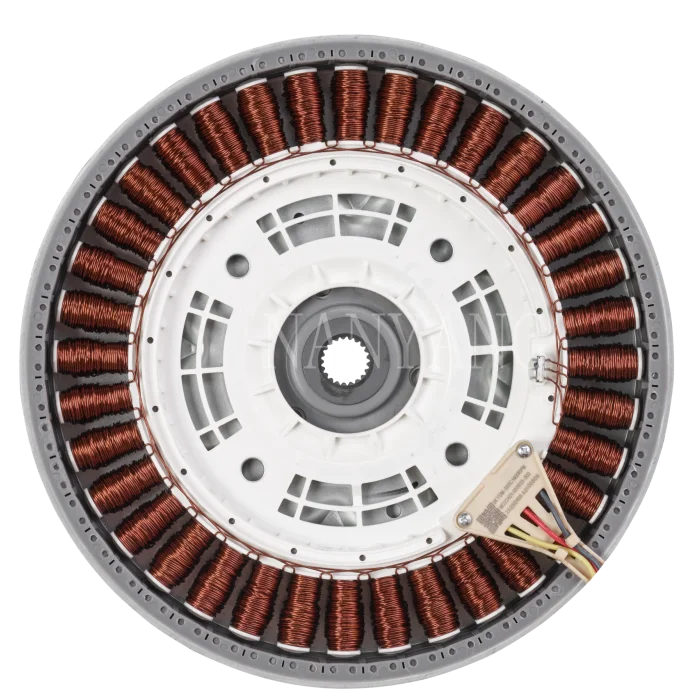
A washing machine motor determines how a drum is started, rotated, switched in speed and how it handles huge laundry loads. If the motor system isn’t matched correctly, there are a lot of problems that are perceptible to the user: unpleasing noise and vibrations as well as premature wearing and required maintenance. This component therefore is not a minor detail in terms of technology – it determines a great deal about a washing machine.
Noise and Vibration Are Easy to Notice
For people who don’t know much about washing machine motor types, a loud spin cycle is usually a very noticeable problem. The main advantage of a direct drive motor is that there are fewer transfer parts from the motor to the drum, thus not allowing any of the usual shaking and movement caused by belts and pulleys.
The belt drive motor can also function well provided the correct motor, belt, pulleys, and accurate assembly. If any of these components are not stable the machine will start to produce noise as it ages.
Energy Use Depends on Both Motor and Structure
Many customers are curious to know what is an inverter motor in washing machine as it helps save a lot of power and energy. An inverter motor operates at varying speeds of smooth operation but this is only made possible with the help of transmission structure as well.
The primary way to reduce mechanical loss in a system is to provide power to the drum directly by a direct drive motor. A BLDC inverter motor used in a belt drive system can also save energy, provided the inverter motor is operated accurately to control the speed. A belt path adds an extra transfer stage, in addition to the other losses.
Maintenance Cost Can Affect Brand Feedback
For appliance brands after-sales cost is part of the real product cost. A direct drive washing machine is designed to eliminate belt wear and tear that can require frequent maintenance.
The typical form of a belt drive washing machine, cost-effective and familiar, may require servicing of the belt after long use. The comparison between DD motor and BLDC motor should not be limited to cost only.
What Is a Direct Drive Washing Machine
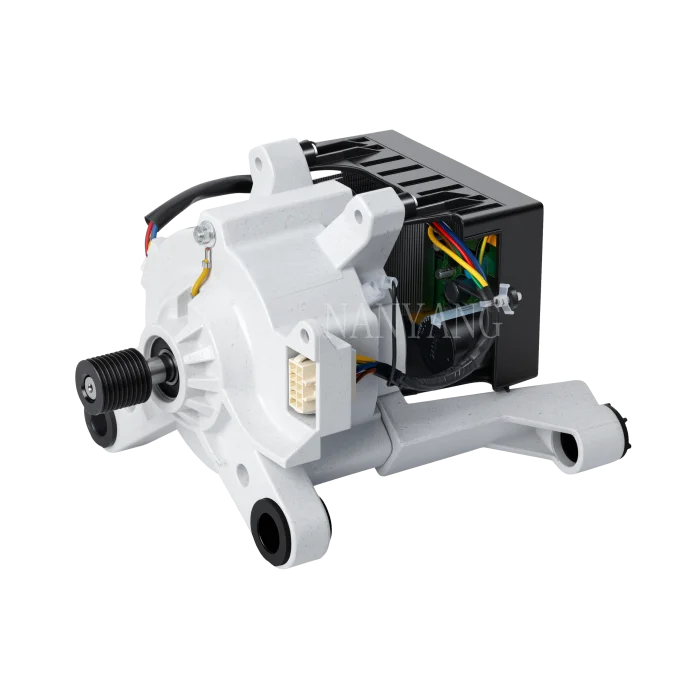
Direct drive washing machines are typically associated with quieter operation and more premium front-loading washers. At its core, direct drive washing machines simply feature a motor that directly drives the drum of the washer.
Direct Power Transfer to the Drum
In a direct drive system the motor is directly connected to the drum and not via belts and pulleys. This shorter transfer path of force minimizes transfer loss.
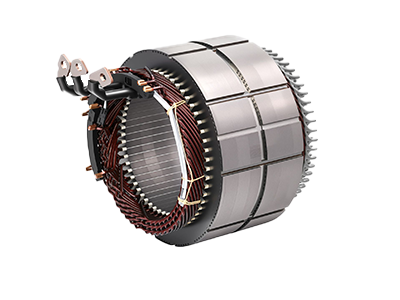
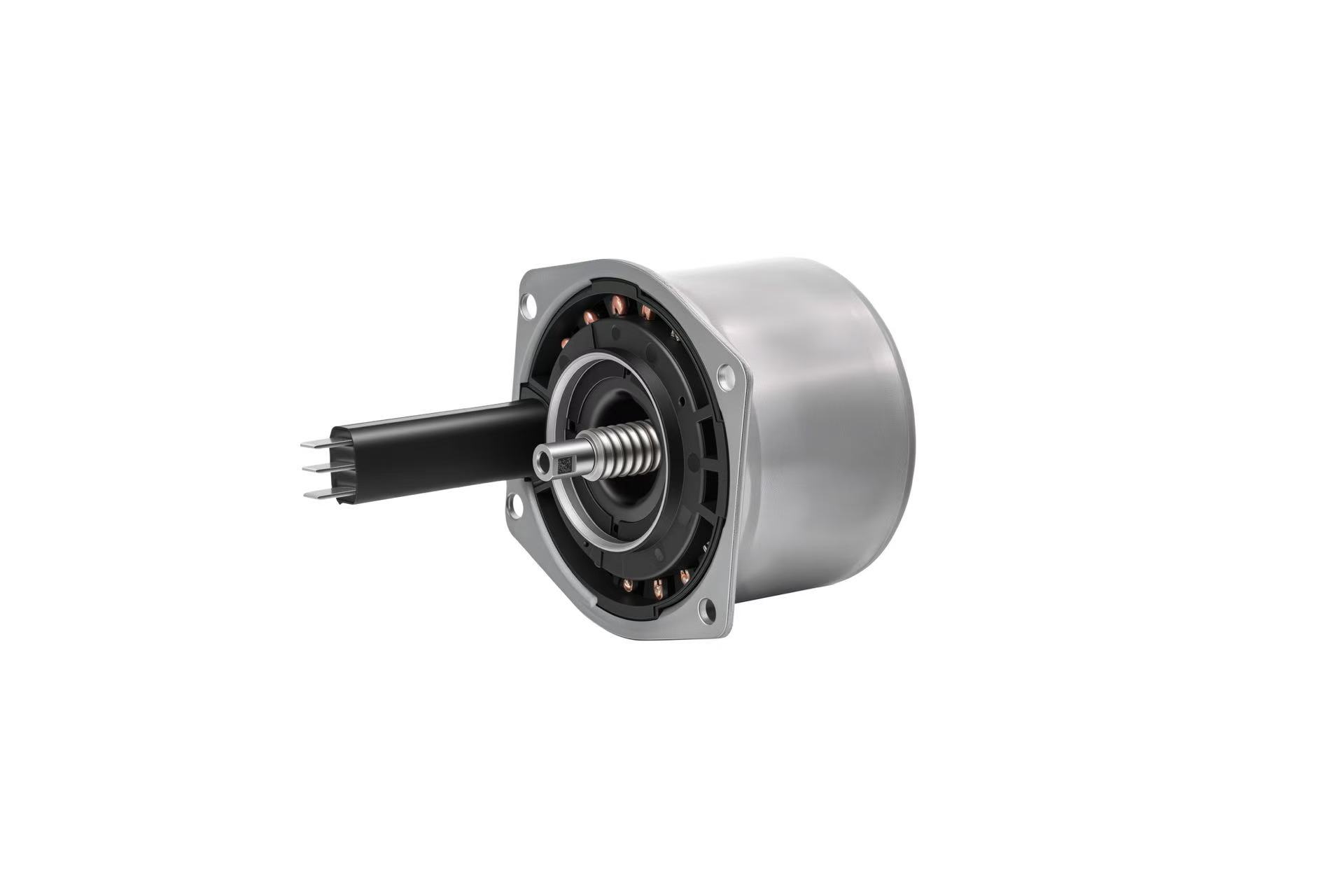
DD Motor is recommended for this direction. DD Motor is a product specifically designed for front-loading washing machines that is meant for direct drive applications. Such applications place a premium on the washing machine having quiet running, strong spin and robust movement.
Better Choice for Quiet Front-Loading Machines
If your target product is a front-loading washing machine for mid-to-high-end customers, a direct drive solution could be the better choice. In comparison to a belt-driven solution, direct drive helps to reduce vibration and provides a more stable spin experience.
This feature will be a benefit to consumers who care about a quiet laundry room, apartment laundry, night time washing and proper washing care. The direct drive design of this model supports a smooth drum movement during all of the model’s various wash modes.
Lower Belt-Related Maintenance
Direct drive washing machines are operated without a belt to transfer power. Thus, no stretching of a belt, slipping of a belt, or replacement of a belt is required in the main drive train of a direct drive washing machine.
The removal of one of the most common wearing parts on the machine does not mean the machine will never require service. However for some brands this will reduce after-sales problems.
What Is a Belt Drive Washing Machine
The basic structure of a belt drive washing machine is simple and can be used for many different types of articles. It is still a widely used solution for washing machines and in combination with a good BLDC motor it can offer a stable, efficient and cost effective solution.
Power Transfer Through Belt and Pulley
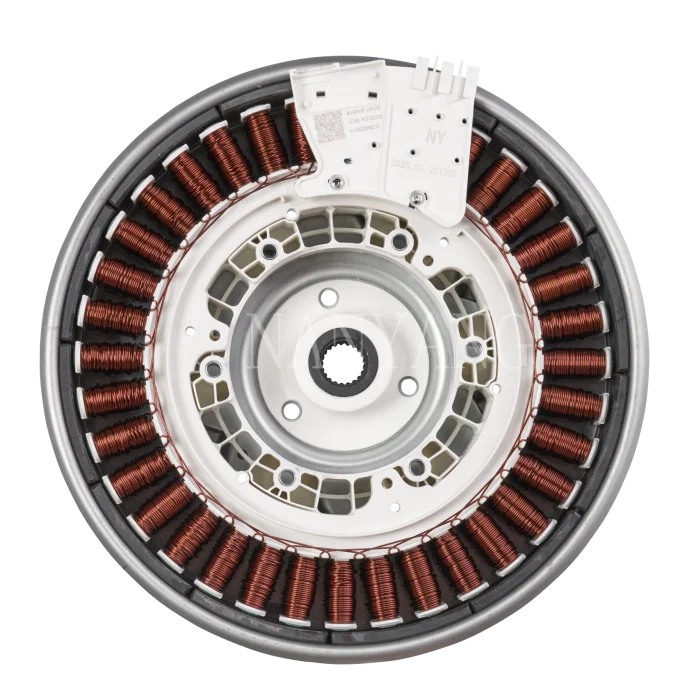
In a belt drive washing machine the motor turns a belt. This belt is used to drive the drum via a pulley. Most production teams are familiar with this design which has been around for a long time.
If you are asking which motor is used in washing machine, the answer may be BLDC motor, DD motor, DDM motor, or AC induction motor. For belt drive designs, BLDC Motor is a common modern choice because it supports brushless operation and speed control.
Flexible Design for Different Models
A belt drive structure gives designers more room to arrange the motor and drum. This can be useful when you need several washing machine models with different capacities, layouts, and cost targets.
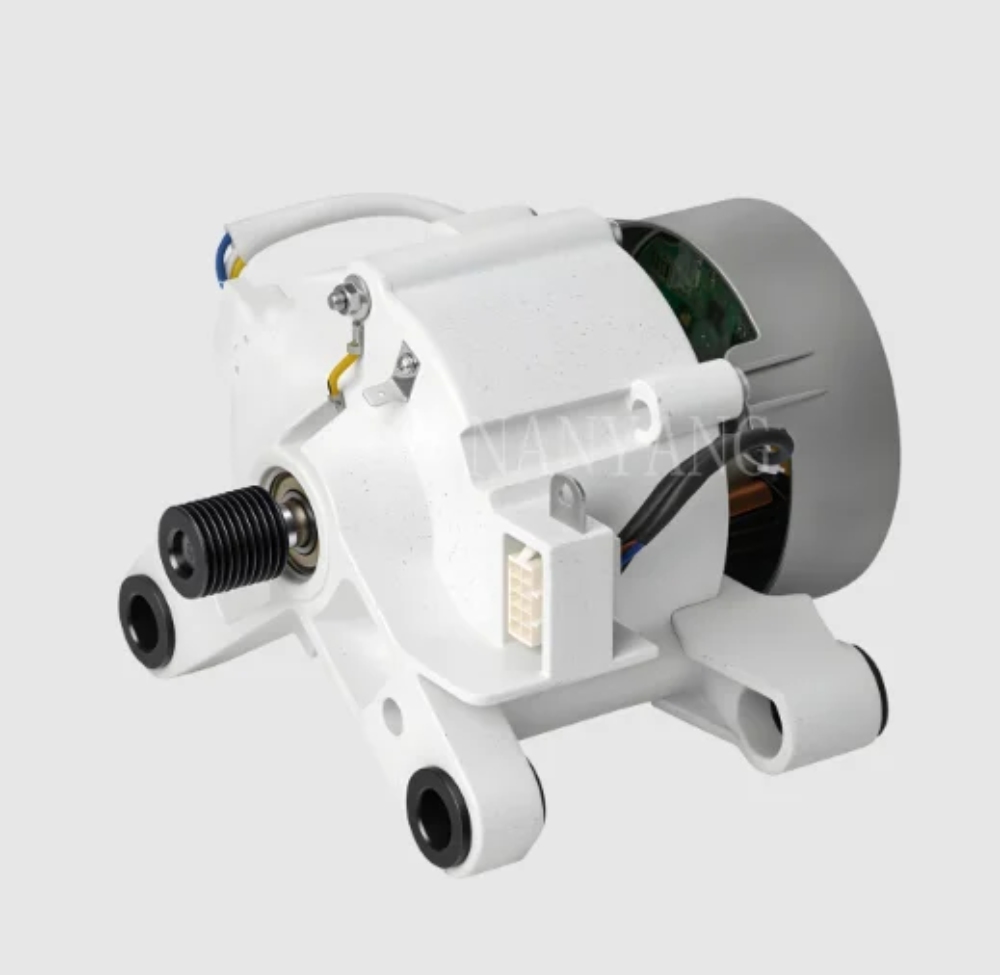
For this type of design we recommend BLDC Motor. It’s suitable for washing machine projects that require efficient brushless motor, electronic control and matching options.
Good Balance Between Cost and Performance
The BLDC motor has no brushes, therefore it has less wear and tear than the typical brushed motor. Also the speed of the motor can be adjusted to best suit the washing, rinsing and spinning of clothes.
Compared to direct drive a BLDC belt drive system has more mechanical parts but is better for brands who want cost control and flexibility in their machine layout. For standard / mass market washing machines this is probably the best balance.
Direct Drive vs Belt Drive Washing Machine: Key Differences
You can see the main differences in these two drive systems now. DD Motor is optimized for direct power, very quiet running and high-class design of products. The BLDC Motor is optimized for flexible structure, for stable and robust performance and for cost-controlled products.
Structure and Power Path
DD Motor uses a direct connection to the motor. Power is transmitted to the drum directly without the use of belts or pulleys. This eliminates the need for many mechanical transfer parts, promoting stability.
BLDC Motor in a belt drive system is actually a system with a belt and pulleys. Even an efficient BLDC Motor in a belt drive system is more a system than a motor and it’s efficiency depends heavily on the quality of the belt, the match of the pulleys and the strict control of the assembly.
Noise, Vibration, and User Experience
Direct drive generally offers advantages when it comes to noise and vibrations, due to fewer moving parts in the drive train. A large number of top-class front-loading washer-dryers are therefore equipped with a direct drive motor.
A BLDC belt drive washing machine can still function well when the motor and the rest of the washing machine’s structure are matched well together. It might not look or function as simply as a direct drive washing machine for example, but for most standard machines it should still be able to do a good job.
Efficiency, Price, and Market Position
Direct drive has a natural advantage in terms of energy transfer, since there is no belt loss. In terms of price and structural flexibility for different machine designs, BLDC Motor has a larger scope of application.
The choice of BLDC inverter motor vs. direct drive for your product depends on your product goals. For silent, premium and low-maintenance, front-loading machines, the DD Motor is the better choice. For efficient, flexible and cost-sensitive solutions for belt drive machines, the BLDC Motor is more suitable.
How to Choose the Right Motor for Your Project
The most expensive motor is not necessarily the best for your application. The best motor is one that fits your machine, your budget, and your goal to avoid user complaints.
Start With Machine Type and Capacity
Check the type of washing machine and capacity. We have here a compact model, a large front loader and a high-end quiet washing machine so they are probably going to need different type of motors.
For a design that front loads the structure and quiet spin, DD Motor is the best choice. For a design that requires several capacities to be able to fit into different layouts, BLDC Motor would be more appropriate.
Match the Motor With Buyer Expectations
For customers who want a low noise level, low vibration and fewer maintenance items than a traditional belt drive, direct drive is an easy sell.
Customers that prioritize value, efficiency and stable daily use can also greatly benefit from a BLDC belt drive system. Most brands involved in large volume production will benefit from using a BLDC belt drive system.
Check Technical Support Before Final Selection
Motor selection is not just about choosing a product name. Also check voltage, controller design, drum, noise, service life, test requirements and supply stability.
We can provide R&D support to match up a motor as well as to select a drive system. By supporting appliance manufacturers in this manner, we can prevent them from going through a trial and error process before they go into mass production.
Conclusion
There is not one definitive answer to whether Direct drive washing machine or a belt drive washing machine is better. DD Motor and BLDC Motor were developed for different product goals.
When designing a more quite higher-end front-loading washing machine DD Motor is the better choice to achieve direct power transfer, lower vibration, less belt related failure and a more stable user experience.
BLDC Motor is a great option for a flexible washing machine platform that is efficient and cost effective. For belt drive washing machines the brushless BLDC Motor offers a reliable and robust structure that is easy to match with the washing machine’s structure.
The stronger point of both routes is that they are supplied by the same motor supplier. As home appliance motor specialists with core component suppliers, strong manufacturing base and professional drive system service providers, we can assist you in choosing the most suitable product based on capacity, voltage, control type, machine structure and market requirements. Please refer to the contact page for product selection, service discussion and project details.
FAQ
Q1: What is the main difference between Direct Drive washing machines and Belt Drive washing machines?
A1: Direct Drive washing machines have the motor directly connected to the drum whilst Belt Drive washing machines have the motor connected to the drum via a belt and pulley. Direct Drive machines are generally quieter and have fewer wear and tear parts than those associated with the belt. However, Belt Drive machines are more flexible and can be easier to use in certain machine applications.
Q2: Which Product Fits a Direct Drive Washing Machine?
A2: DD Motor is the recommended product for a direct drive washing machine. It fits front-loading washing machine designs that require quiet operation, direct power transmission and long-lasting stable operation.
Q3: Which Product Fits a Belt Drive Washing Machine?
A3: BLDC Motor. BLDC Motor is the recommended product for a belt drive washing machine. It offers brushless motor efficiency, electronic speed control, and flexible matching for different capacities of washing machines.
Q4: Is DD Motor Always Better Than BLDC Motor?
A4: No. DD Motor is better for premium, quite, low-maintenance applications in front-loading washing machines. BLDC Motor is better when you need flexibility of washing machine structure, stable performance and better cost control for your washing machine.
Q5: How Many Motors Are in a Washing Machine?
A5: Most washing machines contain a single washing machine motor. This main motor can be for the washing drum or pulsator. Many washing machines also have auxiliary motors or actuators to support additional functions. However, the main washing machine motor is the one that affects washing and spinning performance as well as noise and fuel consumption.