How to Specify an Electric Oil Pump for Electric Vehicles: Flow, Pressure and Oil Temperature
In an installed electric drive, two oil pumps can have the same maximum flow but deliver a larger amount of oil. Some of the parameter are often lost such as the pressure required by circuit and also in what temperature we do measurement with oil. The data that usually gets lost is the pressure required by the circuit and oil temperature where you made your measurement.
Electric oil pump for electric vehiclesWhen specifying an electric oil pump, define the design flow at a specified differential pressure and also specify the actual working temperature ofthe oIl in addition to supply voltage. Define the oil grade, inlet conditions and operating duration. Have the supplier verify those points for that specific pump variety. You should not be able to compare quotes on numbers without their test conditionsBecause Who knows how much this maximum-flow will change with the load of real contents?
This guide deals with oil circulation in an electric drive assembly. Nanyang builds an electronic oil pump that aids in motor cooling and lubricates bearings and gear. The oil circuit must be separate from a water-glycol coolant circuit in the vehicle. You must have a separate oil circuit from the water–glycol coolant circuit of whatever vehicle.
Identify where the oil must go
Begin with a circuit drawing. Although people vary in their families, I believe that this system with all its components will function well as the whole sump pump basement. This method only includes components in the mentioned proposed assembly. The conditions that the pump must work against are determined by their arrangement! The order in which they are placed determines how you pump your way through the valve.
It should be noted that total pump flow and useful flow at a branch are very different quantities. Even if you read a satisfactory number at the pump outlet, which can be common for some pumps that share their supply into several paths, this in itself does not mean all bearings/cooling passages are being supplied. Indicate where the minimum required flow will occur, and how it would be determined.
If the project includes an electric drive motor assembly, verify cooling and lubrication specifications with the designer of that assembly. Separate those requirements from the capability curve of your pump supplier. The former explains the need of application while later one describes what a proposed component has to offer. The former describes what an application requires; the latter, what a potential service offers
Contents: operating points; oil temperature and inlet; electrical demand; control interfaces; quotation and validation checks.
Specify operating points instead of one maximum flow
A pair of operating points associates a required flow with the differential pressure across the pump given certain field conditions. Differential pressure is outlet minus inlet. This is NOT the same as an outlet gauge reading if inlet will also be previous (+) or (-). This does not necessarily equal the reading at an outlet gauge if inlet is also all pressurized or below atmos.
Talking using the specified oil, ask for either a performance map or agreed test points. Your answer must confirm the pump speed or command, supply voltage and oil temperature; delivered flow differential pressure and electrical input. It enables two suppliers to respond to the same question using different test arrangements in their headline ratings. Using this, two suppliers can respond to is same question even if their headline ratings use different test arrangements
|
Operating condition |
Define in the enquiry |
Ask the supplier to verify |
|
Cold start |
Minimum oil temperature and available voltage |
Starting behavior, current and permitted operating limits |
|
Normal operation |
Required flow and circuit pressure loss |
Delivered flow and electrical demand at that point |
|
High thermal demand |
Oil temperature, required flow and duration |
Output within the agreed electrical and temperature limits |
|
Reduced-flow operation |
Minimum delivery to critical branches |
Stable control and acceptable lubrication supply |
Do not maximum pressure every row (unless your circuit tells you to). A more informative comparison records the pressure drop that accompanies every flow and oil condition. 29Critical overview of MAHLE electric pump based upon demand for flow and pressure control — thermal as well as lubrication management The elected pump and configuration function each have a true functionality area.
Match the oil temperature to its viscosity
Oil designation by itself tells you nothing of what it will do once the engine generates more heat than it’s receiving. Get oil supplier viscosity-temperature data and make sure it will be compatible with the pumps wetted materials. Log the exact fluid you used for testing so that a later substitution with another oil does not stealthily change the basis of approval. State the precise fluid used for test so that a substitution of oil subsequently does not imperceptibly alter the rationale behind approval
The higher viscosity at low temperature can produce increased torque to rotate the pump and greater resistance in the circuit. Thus, a warm bench result cannot ascertain cold-start performance. Lower viscosity at high temperature can alter both internal leakage and the delivered flow of a positive-displacement pump. The potentiometric response is influenced in its size, by the construction of third-order (n≥3) and/or shape as well operating conditions.
Get results at conditions that matter cold and hot across the board, rather than a single correction factor. Do not combine medium temperature and surrounding ambient temp into one. Each entry relates to a different thermal exposures, and neither alone dictates the duration for which either pump or electronics (or both) will run at an extreme point.
Check the inlet arrangement before increasing pump speed
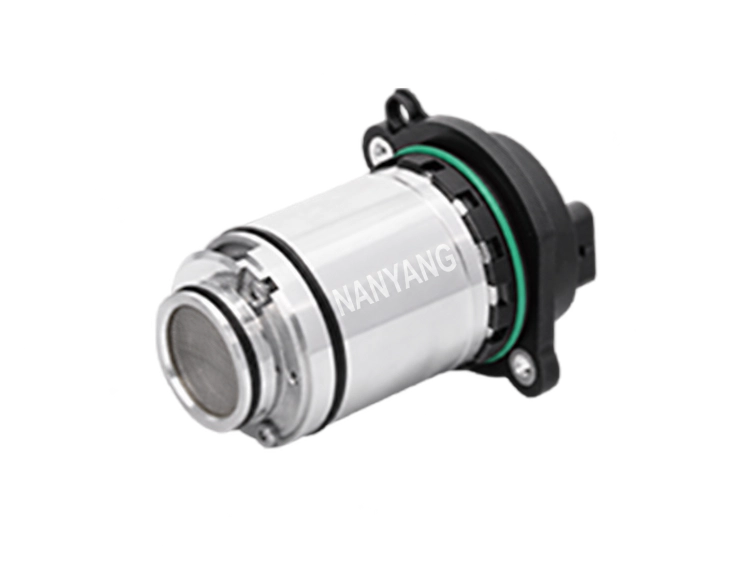
Hence, Nanyang calls an inlet that rest in the oil sump for its own specific application as a segment of an oil-cooled electric-drive unit. Verify that the proposed installation satisfies inlet requirements of the selected variant over all intended operating conditions. An oil level or vehicle attitude might look good in a static drawing but can be impacted by the motion of the oil. Making sure the oil is level, vehicle attitude and movement of oil can be important even when the static drawing looks alright
Inlet passages that are too small, air that’s trapped in the system or oil supply lines that can’t provide a sufficient amount of fluid can all make promises seem unfulfilled. A higher speed does not solve an inlet limitation. Request that supplier make a statement of allowable inlet conditions, fill requirements and any restrictions on dry running for each design. Request the vendor to define allowable inlet conditions, what must be filled and limitations of dry running based on this design
Fluid condition and installation are operating concerns in Parker’s pump service manual. The numerical limits that you’re trained on only apply to the pumps in these manual and not a Nanyang electronic oil pump. Take that same disciplined approach by requesting the limits and then getting these values from the supplier of interest to the actual component. Request limits in the same disciplined manner, then collect the values from supplier of actual part
Distinguish hydraulic output from electrical input
Hydraulic power is differential pressure multiplied by volumetric flow. With pressure in bar and flow in litres per minute:
Hydraulic power in watts = pressure difference × flow × 100 ÷ 60.
Using an example with a required hydraulic power of 20 W connected to the output flow (which is at different pressure) we will have 6 L/min with a delta P =2 bar. Assuming total electrical-to-hydraulic efficiency as high as 60%, then the input power is about just over 33 W; however this assumption of a Nanyang value which claims to be constant across range, and turns out not in practice.
It gives an indication for why motor power and hydraulic output should be not compared as interchangeable numbers. Get real input-current information at that supply and operating point. Separate starting demand and permitted duration from steady operation Record voltage at the pump connector in your testing, especially if there is a significant drop in voltage due to loss though mechanical connectors – harnesses.
Define what the control interface must do
CAN or LIN label is a type of flow; it only tells us what kind of communication there are, however does not describe which messages will be acquired by the vehicle controller. Verify the protocol and hardware on quoted variant Next you would ask for the interface spec — what are all of the commands, how much time should elapse between when something is reported from comms to actually appearing on in a device, and other aspects like timing & behavior if communication dropped. Then ask for the interface specification such as commands to be sent, return values and timing plus behavior when communications are lost.
Indicate if the vehicle requests pump speed, flow or some other controlled quantity. Nicely separate subjective audit from a calculated measure. Circuit conditions having changed, a reported speed does not equate to delivered oil flow. When circuit conditions have changed, a reported speed is not directly an indicator of oil going where it should be delivered
Part the ECR (electric supply & control request together with motor during design discussion). Finalize responsibility for sensors and pressure or flow regulation prior to quote comparison. This prevents us from expecting every pump we propose to contain a function with the vehicle controller. This prevents us from assuming that a function in the vehicle controller is also present within each proposed actuator.
Make the quotation and sample test comparable
The table for the operating-point, with circuit drawing and oil data In short, request every supplier to specify exactly what model/connector/mounting arrangement and control version it delivered in their response. The invisibly gap should account for any non-resolved operating point, not be filled by some other model’s value. The gap should also appropriately reflect the fact that any unresolved operating ramp up is not filled by a value from another model.
Reach a consensus on measurement locations, fluid conditioning and instrument accuracy/acceptance tolerances used to assess the sample. Criteria as well period of record stabilization These factors on Nanyang’s R&D capability serve more like a background information for the technical discussion; test conditions required by the project still need to be explicitly stated in these type of enquiries. As a leading research university, Nanyang has distinct R&D capabilities that are relevant background for the technical discussion but it is still necessary to state out clearly in the enquiry itself on what project test conditions you required.
A component bench test verifies the stated setup. The assembled drive needs its own checks because the final oil paths, inlet arrangement and control strategy affect operation. Keep both records attached to the same component revision.
Frequently asked questions
Can maximum flow be used to select the pump?
The AI can screen them, or aid in screening,, but it is not what you use for your final top selection. Subscribe to flow at the differential pressure of oil circuit and electricity. A maximum is qualified without those conditions does not indicate if the pump (in assembled drive) will have an operating point there. A maximum listed without those qualifications cannot distinguish whether or not the pump will meet the requisite operating point in an assembled drive.
Does a higher-power electric oil pump always provide more useful cooling?
Cooling is predicated on oil coming along the desired routes, and then heat rejection to ambient from that total system. A higher electrical rating does not prove the current flows into a particular component. Please compare the required operating points and installation limits before you decide if additional pump capacity is useful. When a (pump-)train is planned, the required operating points should be compared with each other and must comply as far as possible If it would make sense to install an additional pump
What information should accompany an EOP enquiry?
Draw includes the circuit drawing, oil specification, temperature range and supply conditions along with flowpressure points. Include the requirements for packaging and communications. Some values must be marked as compulsory, and others remain provisional: the supplier will provide a defined configuration for which checks are required before sample approval. Determine which values are hard requirements and which ones remain provisional so the supplier can reply with a specific configuration and outline pre-sample approvals requirements to assess
In order to make a conversation about an electric oil pump for electrical cars, such as send application information from Nanyang Motor. Long-term (including a short operating-point table) gives the supplier a far more productive starting point for what amounts to an ask; much better than max_flow alone. You get a short operating-point table, which provides the supplier with what is much more helpful than simply getting maximum flow.