Washing Machine BLDC Fault Diagnosis: Motor, Drive, or Wiring?
To differentiate between a fault of the BLDC motor and a fault of the controller in a washing machine, a repeatable test has to be conducted. Here commanded operation and measured drive output of the controller as well as the motor’s electrical and mechanical condition have to be compared. Moreover, the fault log of the controller has to be checked. A non-rotating drum does not necessarily have to be caused by a defect motor, and a controller’s alarm message does not necessarily indicate a defect controller.
The framework described is for OEM engineers and authorized service personnel to use for diagnosing faults on a machine, not for amateur ‘circle tracking’ of live wiring for fault finding. Refer to the machine’s safety instructions and use approved test equipment with suitable isolation. First save the original fault data, then test the simplest of interfaces prior to agreeing to replace a motor or control-board.
Collect Evidence Before Swapping Components
Document exactly what the washer was supposed to be doing when it failed. A fault that occurs at start-up, on reverse or during spin acceleration is much easier to investigate than a report that the motor just stopped.
Capture the Command and Fault History
Record the requested cycle step and speed as well as the actual speed if available. Also record the bus or supply status, the current, all temperatures and the reported error by the controller. Note if the fault still occurs at the same load but at different temperatures. Don’t delete a log before writing down the timestamps with the relevant operating parameters.
Fault codes are evidence of a fault and not proof of the root cause of a problem. Overcurrent alarm faults can be caused by a shorted winding, a fault with the controller’s power-stage, a locked drive path or a wiring fault.
Check Supply, Harness, and Connectors
Verify the specified input supply and inspect the relevant harness and connector condition under the approved service procedure. A loose or damaged connection can interrupt a phase or feedback signal and mimic either motor or board failure. Confirm pinout and revision before substituting another unit.
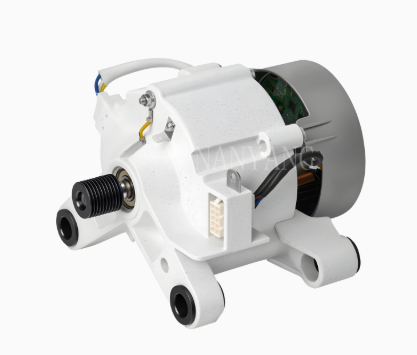
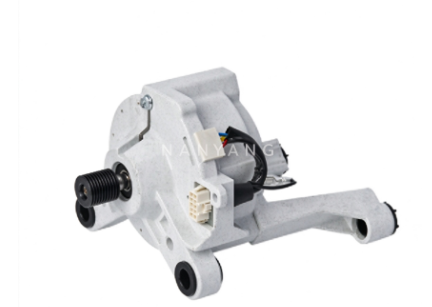
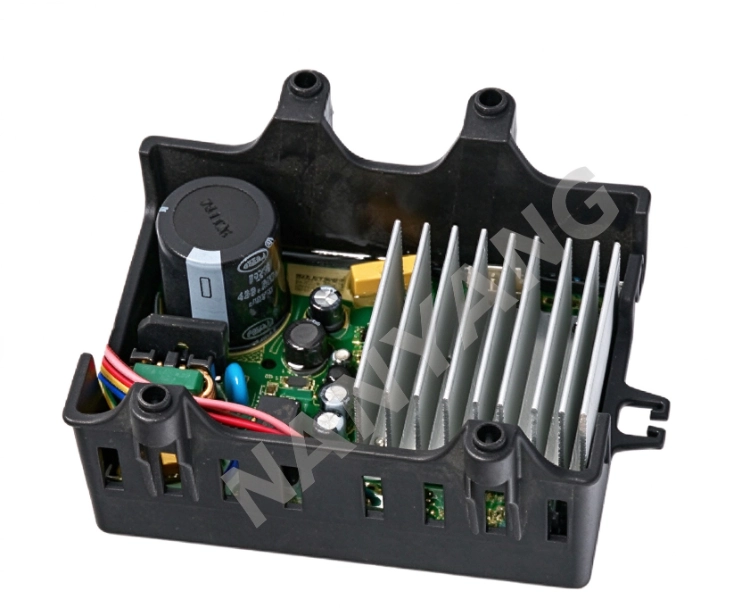
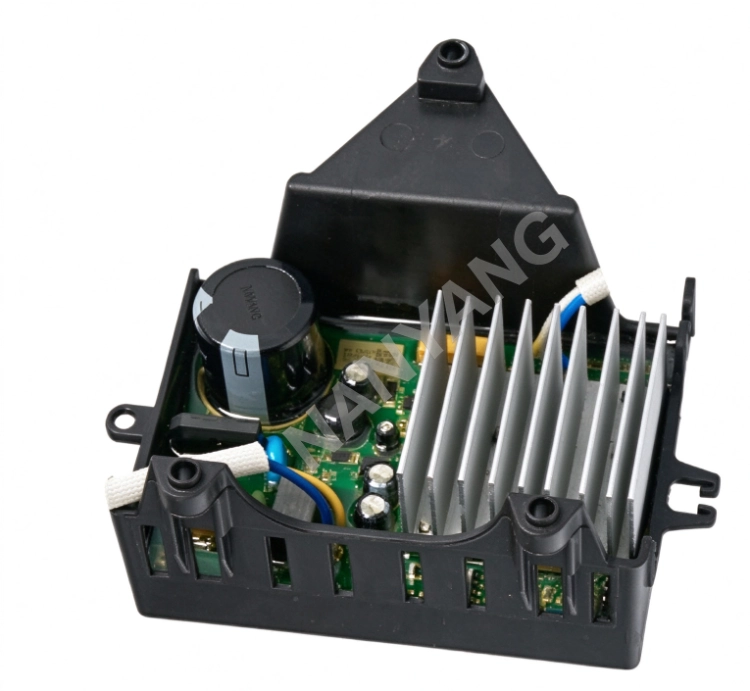
This page describes Nanyang’s BLDC washer motor controller for front-loading washers. Because the controller is also the washer motor Driver, symptoms of the motor can be caused by the controller or by connections to the controller. So you have to read the product description of the controller as well as of the motor to determine which part has failed in your washer.
Rule Out Mechanical Binding
Check the drum and drive path for proper movement with the machine isolated. Determine if any foreign objects, bearing drag etc. are adding additional load to movement. Record any unusual resistance or sounds. Do not attempt to force rotation or to de-energize equipment that may be hazardous to approach.
Be sure to rule out a jammed load before you start substituting electrical components. The motor windings and controller may be perfectly fine.
Look for Motor-Side Evidence
Verify the motor against approved drawings and test specification after verification of power, wiring and mechanical load. A single resistance reading is not sufficient to make a complete diagnosis.
Compare Phase Measurements Consistently
To Measure winding resistance and insulation on your drive disengage it and disconnect it and ensure all terminals are properly isolated. Take the readings and look for any imbalance. Compare readings against the relevant temperature curves for the model in question. A reading on one motor will not be comparable to another unless test points etc have been identical and same conditions applied.
High-voltage insulation testing should not be done through the test controller attached to the device under test. Instead, use a qualified test method to protect test equipment and people.
Inspect Bearings, Temperature, and Damage
Check the machine for signs of rotor interference, unusual bearing feel, discoloration, signs of overheat, signs of moisture entry and damaged cable leads. Link each finding to the original symptom description. A seized bearing will typically cause high current at start-up whereas a localized problem with a winding will typically cause a different set of problems.
Check the running conditions of the suspected motor. If it ran hot, the duty and cooling of that appliance must be reviewed. A new motor will fail too if the program is still overloaded after the motor failure.
Confirm With a Controlled Substitution
Run a known-good compatible motor of the same type on the approved drive and load. Run the suspect motor on an approved test rig. Keep a record of the controller’s revision and settings. This type of test allows you to diagnose a motor-related fault from a fault that is related to the controller or the rest of the machine.
An unapproved BLDC motor should not be used as a universal test part. The winding, the feedback and the number of poles have to match with the controller.
Look for Controller-Side Evidence
Check if the controller is providing the correct excitation and also correctly processing the feedback from the motor and mechanical system.
Compare Requested and Delivered Output
Review drive-enable status, commanded versus actual speed, phase output under the prescribed test method, and relevant protection flags. A valid command with no appropriate drive response points toward the controller, its supply, communication, or safety interlocks. An output that collapses only under load still needs motor and power-supply checks.
Check the official product page for the suitable electronics for BLDC commutation / speed control. Then contact the supplier for the appropriate diagnostic signals / safe measurement points for the respective control module which is already integrated into the board. This does not have to be the same for all boards.
Review Sensors and Software State
Missing rotor-position information, wrong configuration or even incompatibility of software can manifest as a motor failure. Verify the sensor-wiring against the approved hardware revisions as well as the corresponding firmware revisions. Also note the point in time when the failure occurred with respect to a software update of the controller, a swap of the motor or a change of the harness.
Use the pre-approved configuration records from the engineering team. Running tests with random changes to the commutation and protection values to get the machine to run can mask a serious configuration mismatch.
Validate the Repair Under the Original Duty
After correcting the suspected cause, repeat the wash or spin condition that originally failed, including load, temperature, and direction changes. Verify current, speed tracking, noise, and protection behavior. A successful no-load spin does not close a fault that occurred only during a heavy wash reversal.
Nanyang outlines motor testing in this section. Confirm with supplier which of the failed units, logs and machine conditions you require for a joint investigation to be of value.
Keep a Traceable Fault Record
For each case, store the motor and controller serial or batch identifiers, harness revision, program, fault log, inspection results, and repair action. Group repeated symptoms by actual root cause rather than by the part that was initially replaced. This record helps identify a production issue, an integration issue, or an isolated component failure.
In cases where a buyer purchases both motor and controller for an appliance, it is best to agree who will undertake the first-level analysis and who authorizes parts replacement and/or controller firmware change. Reference to Nanyang’s design support department is also relevant for a project-specific hand-off. Otherwise good parts are constantly changed while the underlying root cause for the washer’s failure is never found.
Conclusion
It is useful to be able to distinguish between faults that occur in the motor and those that occur in the controller. The fault context is preserved and supply and mechanics checked before the motor and controller evidence are tested separately for the fault. The correction can then be verified under the same operating duty that caused the fault to occur. Nanyang Motor supply drive components and also undertake motor design and manufacturing services. Should you require project support then please forward the relevant fault logs, part revisions and test conditions.
FAQ
Does an overcurrent code mean the BLDC motor has failed?
None. Overcurrent can be caused by a locked load, wiring problem, controller problem or motor problem.
Can a washing machine controller fail without visible damage?
Yes. Visible inspection alone is not sufficient to rule out a failed component, a supply problem, or a software and configuration problem.
Should technicians replace the motor first when the drum stops?
No. Preserve the fault log and check supply, harness and mechanical drive before authorizing a replacement.
Why does a replacement motor work empty but fail with laundry?
The loaded duty may be greater than the matched drive is rated for or expose a hidden mechanical or controller problem that was not apparent in the no-load test.
What information helps a supplier investigate repeated faults?
Please provide: a) Machine program, b) Load, c) Error log, d) Electrical measurements, e) Part modifications, and f) Results from repeatable test.