How an EV Inverter Controls Drive Motor Torque, Speed, and Regenerative Braking
The EV inverter takes DC power from the battery and outputs controlled multi-phase power to the traction motor. It controls the motor current and the inverter’s switching pattern to control torque during launch, as well as to vary speed within the operating range. It also reverses energy back to the battery during regenerative braking. However, the inverter does not move the vehicle, as that is the function of the drive motor, which uses the inverter-controlled electrical energy to create torque.
For an engineering or sourcing team, the inverter and motor form one motor drive system even when they are purchased as separate components. Their voltage, current, speed, feedback, cooling, software, and protection limits must overlap. Nanyang Motor lists traction products within its official NEV motor portfolio for passenger and commercial vehicle applications.

What the EV Inverter Does During Vehicle Operation
An inverter is used between the high voltage battery and the traction motor. The inverter controls the traction motor based on the torque requested by the driver, within the limits of the components and the rest of the system. The work of the inverter changes constantly depending on the driver’s requests and the state of the vehicle.
Convert Battery DC Into Motor Power
The traction battery supplies direct current. Permanent-magnet synchronous drive motors require controlled multi-phase current. In order to produce the necessary electrical waveforms, a permanent-magnet synchronous drive motor’s inverter is equipped with semiconductor switches. Switching strategy and current regulation determine how effectively the commanded operating point is produced within the available DC bus voltage.
Regulate Torque and Speed
Motor torque is closely related to controlled phase current. The vehicle controller requests torque, and the inverter regulates current using rotor-position and electrical feedback. At higher speed, voltage limits and motor back electromotive force become more important. The result is a coordinated torque-speed envelope, not an independent inverter rating and motor rating.
Control Regenerative Braking
When a vehicle decelerates, the drive motor can function as a generator. Inverter control of the reverse power flow to the battery considers battery charge acceptability, battery voltage, motor temperature, tire friction, and braking strategy. So, vehicle, battery, inverter, motor, and software all have to work together for effective regeneration.
How the Inverter, Drive Motor, and Controllers Divide the Work
Clear component boundaries make an RFQ and interface document easier to evaluate. They also prevent the terms drive motor, motor drive, inverter, and vehicle controller from being treated as interchangeable.
Drive Motor Converts Power Into Torque
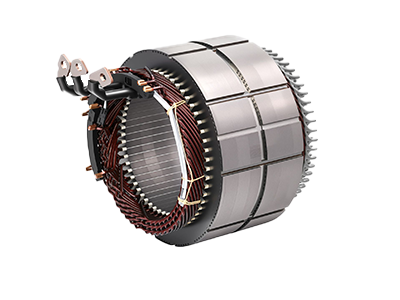
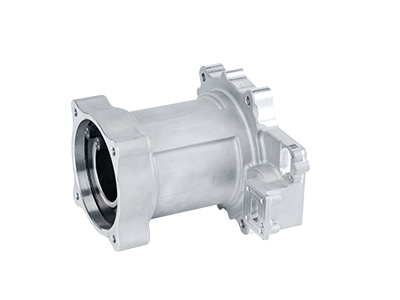
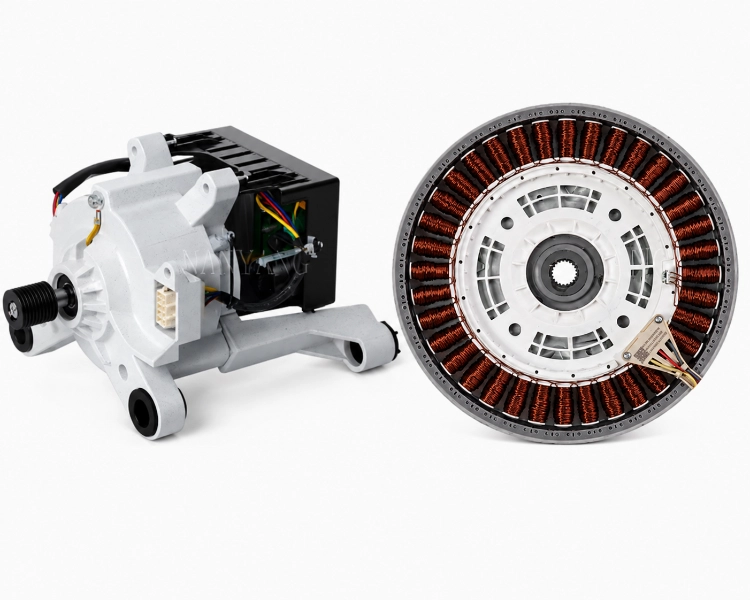
The drive motor is the electromechanical machine that turns controlled electrical power into shaft torque. Its magnetic design, winding, rotor, bearings, insulation, cooling path, and mechanical interfaces determine how it performs across the operating envelope. A drive motor assembly scope may include sensors or mechanical parts, so the supplied boundary must be stated explicitly.
Inverter Executes Motor-Control Commands
The inverter measures electrical and position feedback, switches power devices, regulates phase current, and applies protection or derating logic. It must be calibrated for the selected motor parameters. A compatible voltage label is not enough; control algorithms, sensor type, pole count, current limits, and fault responses must also match.
Vehicle Controller Sets the Higher-Level Request
The vehicle controller interprets accelerator, brake, stability, battery, and thermal information and then sends a torque request. Communication timing, enable logic, fault codes, limp-home behavior, and torque arbitration should be assigned to specific controllers. These interfaces are part of motor drive integration, not late software details.
How to Match an EV Inverter to the Drive Motor
Start from the vehicle duty cycle and check the complete electrical, thermal, mechanical, and control envelope. Peak values are useful, but duration and repetition determine whether the system can deliver them reliably.
Voltage, Current, Torque, and Speed
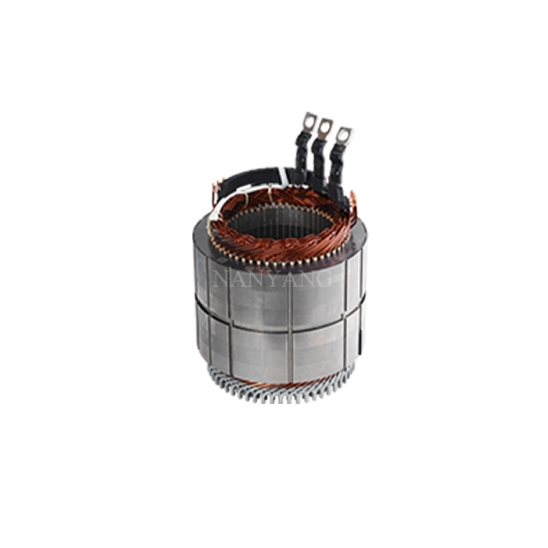
The official Nanyang Motor Drive Motor page describes a permanent-magnet synchronous flat-wire design with a 300-800 VDC range, 55-250 kW peak power, 155-400 N.m peak torque, and maximum speed up to 20,000 rpm across the listed platforms. Treat these as portfolio boundaries, then match the chosen motor to the inverter DC bus, continuous and peak current, torque-speed curve, overload duration, and field-weakening strategy.
Cooling and Thermal Derating
Both inverter and motor generate heat, and their limits may be reached at different times. Define coolant type, inlet temperature, flow, pressure drop, ambient range, packaging, repeated acceleration, hill-climb duty, and derating expectations. A short peak-power test cannot demonstrate thermal margin for a repeated route or hot-soak restart.
Feedback, Protection, and Fault Behavior
Confirm rotor-position sensor type, current and temperature sensing, communication protocol, overcurrent response, DC bus overvoltage handling, overspeed protection, sensor-loss behavior, stall response, isolation monitoring, and safe shutdown. Fault thresholds and recovery rules should be verified in the exact production software and hardware combination.
What an EV Drive Motor RFQ Should Include
A strong RFQ gives the supplier enough information to check the complete operating envelope. It also separates must-meet requirements from target values and records who owns each inverter-motor interface.
Vehicle and Operating Envelope
Provide vehicle type, wheel and gear data, battery voltage range, continuous and peak torque, maximum speed, repeated duty, regenerative requirement, packaging, cooling, ambient conditions, service life target, annual volume, and applicable validation standards. Review these inputs against the selected Nanyang drive motor platform rather than requesting a motor from peak power alone.
Validation and Change Control
Plan prototype stages, torque-speed mapping, efficiency mapping, temperature-rise tests, overspeed checks, vibration, environmental exposure, insulation, connector verification, fault injection, regenerative operation, and end-of-line inspection. Nanyang Motor’s published testing capability should be tied to an agreed validation matrix, approved samples, drawing revisions, software versions, and formal change notification.
Supplier Collaboration and Interface Ownership
Ask who supplies motor parameters, control calibration support, drawings, sensors, connectors, cooling interfaces, and diagnostic definitions. Record responsibility for inverter tuning, vehicle communication, protection thresholds, validation failures, and production changes. Clear ownership reduces iteration when the motor works on a bench but does not yet meet vehicle-level behavior.
Conclusion
An EV inverter controls drive motor torque and speed by converting battery DC into regulated multi-phase power, and it manages reverse power during regenerative braking. Reliable performance depends on matching voltage, current, torque-speed range, feedback, cooling, protection, and software across the full duty cycle. For an application review, send the vehicle envelope and interface requirements to the Nanyang Motor contact team.
FAQs
Q1: What does an inverter do in an electric vehicle?
A1: It converts battery DC into controlled multi-phase power for the traction motor and regulates torque, speed, and regenerative energy flow.
Q2: Is an EV inverter the same as a drive motor?
A2: No. The inverter controls electrical power, while the drive motor converts that controlled power into mechanical torque.
Q3: How does an inverter control motor torque?
A3: It regulates motor phase current using control commands and rotor-position feedback while staying within voltage, current, and thermal limits.
Q4: What happens during regenerative braking?
A4: The motor generates electrical energy and the inverter controls its return toward the battery within battery, motor, inverter, and vehicle limits.
Q5: What data is needed to match an inverter and drive motor?
A5: Provide DC bus range, torque-speed curve, continuous and peak current, duty cycle, cooling, feedback, communication, protection, packaging, and validation requirements.