Inverter Motor vs Normal Motor: Do All Washing Machines Have Inverter Motors?
No. Not all washing machines have inverter motors. The right answer depends on the washer motor type, the control method, and the mechanical layout. A washer may use an AC induction motor with conventional control, a BLDC inverter motor, or a direct drive motor with electronic speed control. Inverter motor vs normal motor is therefore a comparison of control flexibility and system design, not a simple label for every washer.
For OEM teams, the key question is not only what is an inverter motor in a washing machine, but which motor-and-control system fits the load, cycle, cost, and service target. Nanyang Motor supplies AC, BLDC, DD, and DDM motor families for different washer architectures. Start with the official Front-loading BLDC Motor reference when the platform needs electronically controlled front-load motion.
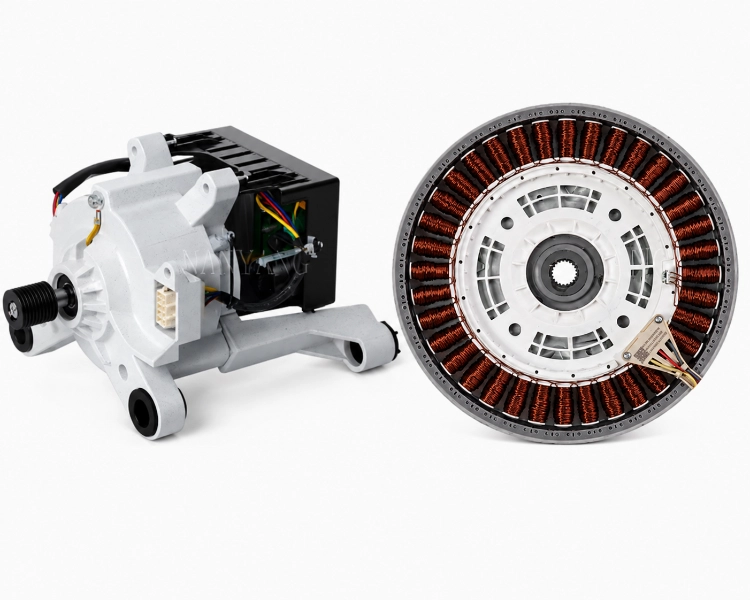
What Is an Inverter Motor in a Washing Machine?
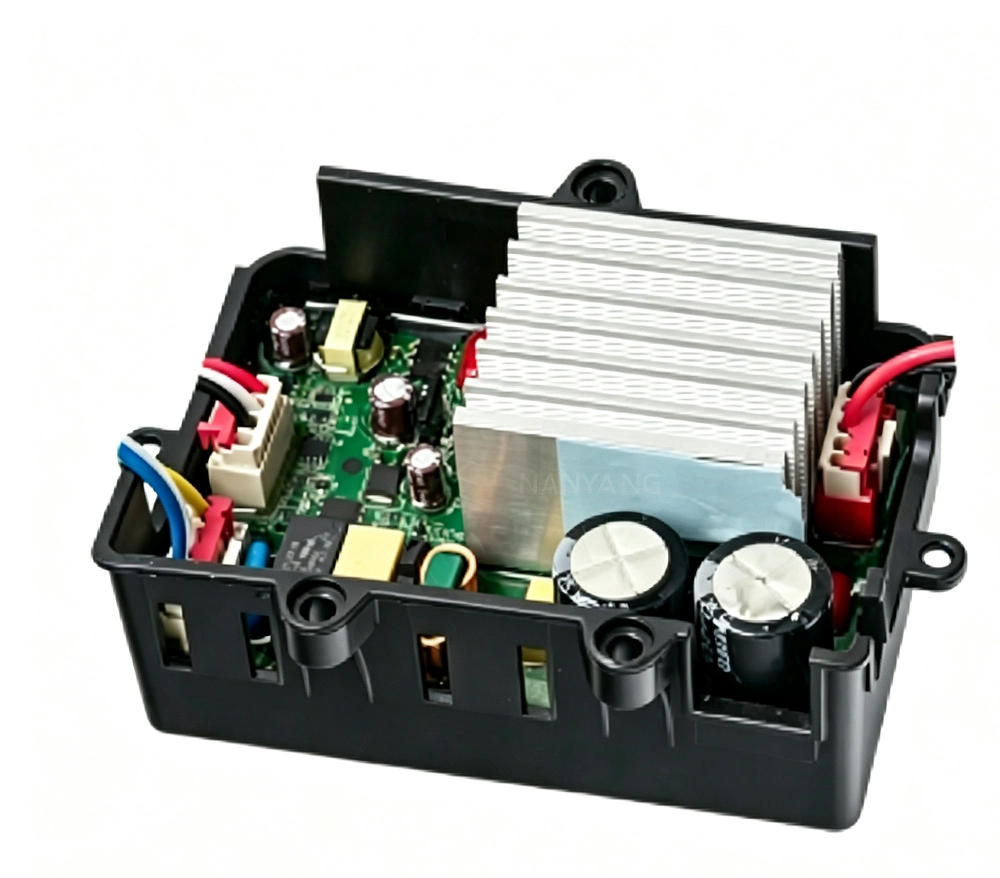
An inverter motor washing machine uses power electronics to vary the electrical output sent to the motor. The controller can change speed and torque during washing, reversing, load redistribution, acceleration, and spin. Inverter motor meaning is about electronic power control; it does not identify one unique mechanical motor construction.
How Inverter Control Works
During low-speed washing, the drive needs smooth torque and frequent direction changes. During spin, it needs controlled acceleration and higher speed. The inverter changes the motor input across these stages while the system monitors current, speed, temperature, and faults.
Inverter Is Not the Same as Direct Drive
Inverter motor vs direct drive compares two different layers. Inverter describes how electrical power is controlled. Direct drive describes how the motor connects to the drum or pulsator without a belt in the mechanical transmission. A direct drive motor can also be inverter controlled, so neither term automatically replaces the other.
Which Washing Machine Motor Types Use Inverter Control?
The phrase types of washing machine motors usually covers AC induction, BLDC, DD, and DDM arrangements. The actual control scheme must be confirmed from the electrical design and supplier specification.
BLDC Inverter Motor
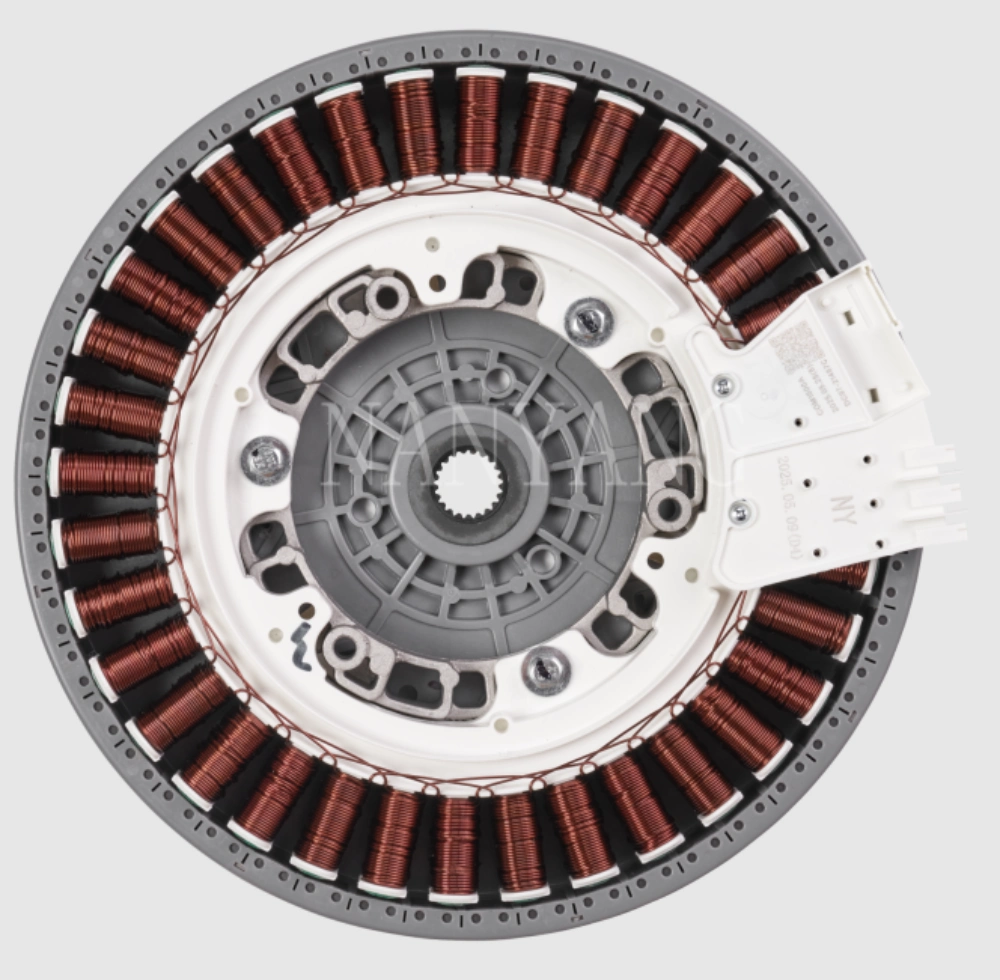
A BLDC inverter motor is suited to front-load programs that need variable speed, repeated reversals, smooth acceleration, and controlled spin. Nanyang Motor’s Front-loading BLDC Motor is specified for drum washing machines up to 20 kg. The motor should be reviewed with its driver, feedback method, speed range, and load profile.
Direct Drive and Direct Motion Motor
Direct drive and direct motion describe beltless mechanical arrangements. When buyers search direct motion motor vs inverter motor, the useful distinction is that direct motion concerns transmission while inverter concerns electronic control. A DD motor can be selected for drum washing machines up to 25 kg, while a DDM motor is used for pulsator or top-loading platforms up to 25 kg, subject to the complete application requirements.
AC Motor
An AC induction motor can use a conventional starting arrangement, but AC does not automatically mean normal motor only. Some AC systems use more controlled electrical architectures. The buyer should confirm voltage, speed steps, starting torque, duty cycle, and controller assumptions instead of inferring them from the word AC.
|
Motor option |
Typical application |
How to interpret the inverter question |
|
AC induction motor |
Established top-load platforms |
Confirm whether the design uses conventional or variable-frequency control. |
|
BLDC inverter motor |
Front-load/drum washers up to 20 kg |
Review the motor and electronic driver as one variable-speed system. |
|
DD motor |
Drum washing machines up to 25 kg |
Direct drive is the layout; inverter control may be part of the drive system. |
|
DDM motor |
Pulsator/top-loading washers up to 25 kg |
Direct-motion layout; confirm controller, speed, torque, and protection requirements. |
Inverter Motor vs Normal Motor: Which Is Better?
An inverter washing machine can offer more speed points, smoother acceleration, controlled reversals, and flexible cycle programming. A normal motor washer may be appropriate when the product needs a simpler control system, lower electronics cost, or a proven fixed-speed duty. The better choice depends on the complete washer target.
Speed, Noise, and Vibration
Electronic speed control can help manage acceleration and low-speed motion, but the inverter alone does not determine noise or vibration. Drum balance, bearings, cabinet stiffness, mounting, electromagnetic design, belt or direct-drive geometry, and software calibration all affect the installed washer. Compare the same wet load and cycle before accepting a quiet-motor claim.
Cost, Service, and Validation
An inverter system adds a driver, sensing, wiring, software, diagnostics, and compatibility requirements. Compare the complete system cost, including motor, inverter, harnesses, sensors, mounting, testing, assembly, service, and replacement strategy. Before mass production, validate starting, low-speed washing, reversals, acceleration, spin, current, temperature rise, vibration, protection response, and the exact controller-motor combination.
How Should OEM Buyers Choose a Washer Motor?
Start with the washer architecture and then match the motor and control system to the duty cycle. The following sequence keeps the decision tied to measurable requirements.
Define the Washer Architecture
Specify front-load or top-load, drum or pulsator, capacity, belt drive or direct drive, voltage, wash and spin speeds, reversal pattern, starting torque, acceleration time, and the longest loaded operating period.
Compare the Complete System
Compare motor output, driver or inverter, harnesses, sensors, mechanics, software work, testing, assembly, service, and expected replacement strategy. Do not compare only the motor unit price.
Verify Supplier and Application Support
Nanyang Motor reports 54 variable-frequency motor production lines, including BLDC, DD, and DDM lines, plus dedicated home-appliance R&D departments and in-house manufacturing of several core components. For an OEM review, connect those capabilities to approved drawings, controller assumptions, load-cycle testing, inspection points, and change control. See the inverter motor vs traditional motor in washing machines guide and the DD Motor product page for related comparison and product information. For project-specific matching, use Nanyang Motor’s contact page.
Conclusion
Not all washing machines have inverter motors. Inverter motor meaning refers to electronic power control, while BLDC, AC, DD, and DDM identify different motor or drive arrangements. Use inverter motor vs normal motor and inverter motor vs direct drive as separate comparisons, then choose by washer type, capacity, torque-speed duty, noise target, total cost, service plan, and validation results. For a front-load variable-speed program, review Nanyang Motor’s Front-loading BLDC Motor with the complete washer requirements.
FAQ
Do all washing machines have inverter motors?
No. Some use inverter-controlled motors, while others use AC or other control arrangements suited to their design and cost target.
What is an inverter motor in a washing machine?
It is a motor system whose electrical power is controlled so speed and torque can change across wash and spin stages.
What is an inverter washing machine?
It is a washer that uses inverter or variable-speed motor control as part of its drive system. The motor may be BLDC, direct drive, or another compatible type.
Is an inverter washing machine better than a normal motor washer?
It can provide more control flexibility, but the added electronics and cost must be justified by the washer cycle, performance target, and validation plan.
Is direct drive the same as an inverter motor?
No. Direct drive describes the mechanical connection to the load, while inverter describes electronic power control. A direct drive motor can also be inverter controlled.