What Is the Purpose of the Inverter in a Motor? Speed, Torque, and Efficiency Explained
The inverter is used to control the amount of power sent to a motor. Unlike simply sending a constant amount of power to the motor, the inverter varies the current going to the windings of the motor to enable the motor to start up, accelerate, slow down, reverse and be able to handle various loads.
In a BLDC motor system, the inverter has another essential job. It switches current between motor phases at the right moment. That electronic commutation replaces the brushes and mechanical commutator found in a brushed motor. The result is a motor whose speed and torque can be adjusted through the control system rather than through simple on-and-off operation.
This matters in a fully automatic washing machine. Washing, reversing, load redistribution and spinning require significantly different operating characteristics from the motor. The matched inverter and motor can deliver this, not running at full output for the whole cycle.
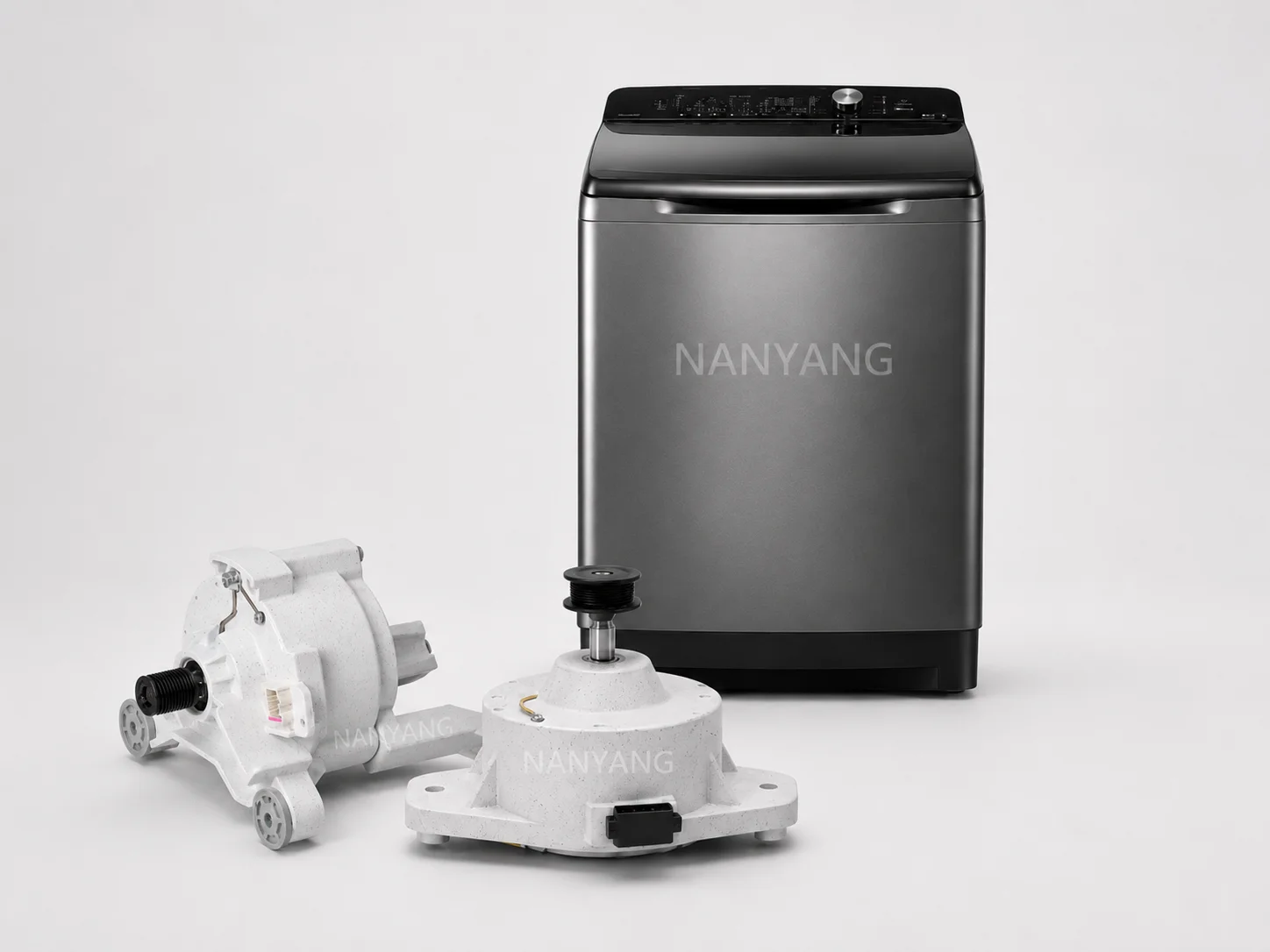
What Is the Inverter’s Purpose in a Motor System?
The inverter sits between the power source and the motor. You may not see it from outside the appliance, but it decides how the motor behaves from one second to the next.
Converting Power Into Controlled Motor Output
Typically AC power is first converted to DC by an appliance’s rectifier. The inverter consists of switch elements which are controlled to supply current to the motor’s phases as required.
By changing the switching pattern, the controller can regulate effective voltage, phase timing, and current. The motor receives only the output needed for the present operating condition. This is the basic reason an inverter motor can run across a wider speed range than a simple fixed-speed system.
Providing Electronic Commutation for a BLDC Motor
A BLDC motor has no brushes and thus no mechanical switching of current. The inverter of a BLDC motor switches the stator windings in sequence to generate a rotating magnetic field that pulls the rotor with it.
The switching must follow the rotor position closely. Poor timing can reduce torque, raise current, and cause rough running. Correct commutation keeps the magnetic field aligned with the rotor, which supports stable torque and more efficient use of current.
Turning Program Commands Into Motor Movement
The washer control board may request slow washing, rapid reversing, load redistribution, or high-speed spinning. The inverter turns each request into a motor output.
This connection between software and movement gives the appliance designer more control over the wash cycle. You can set different speed ramps, reversing intervals, current limits, and stopping behavior for different loads instead of forcing every program to use the same motor response.
How Does an Inverter Control Speed, Torque, and Efficiency?
Speed, torque, and efficiency are closely linked. Changing one without considering the others often creates noise, heat, or unstable operation. A good control system manages all three together.
Adjusting Motor Speed Through Switching Control
The inverter changes the electrical switching rate and output pattern to regulate motor speed. Slow movement can be used when the washer needs controlled fabric movement. A higher output can then accelerate the system for stronger water flow or spinning.
The change should happen through a planned speed ramp. A motor that jumps from low speed to high speed too quickly may create a sudden current peak and a sharp mechanical load. Smooth acceleration is easier on the motor, transmission parts, and washer structure.
Regulating Current to Produce the Required Torque
Torque demand rises when the laundry load becomes heavier or the mechanical resistance increases. The inverter responds by adjusting phase current within the safe range of the motor and controller.
Too little current may leave the motor unable to start or maintain speed. Too much current creates unnecessary heat and may trigger protection. The right setting gives you enough torque for the load without treating every wash cycle as a maximum-load cycle.
Using Feedback to Reduce Wasted Output
A closed-loop system checks actual speed, current, or rotor position and compares it with the target value. The inverter then corrects the output.
This matters when the load changes during washing. Wet clothes move, gather, and spread out, so the required torque is not constant. Feedback helps the motor hold the requested condition without repeatedly overshooting it. Proper current and commutation control can also reduce torque ripple, audible noise, and wasted electrical input.
Why Can Poor Motor Control Increase Noise, Heat, and Energy Use?
An inverter does not improve a machine simply because it is present. The motor, control logic, load, and mechanical structure still need to match. Problems often appear when one part is selected without checking the rest of the drive system.
Match Output to the Actual Laundry Load
A lightly loaded washer does not need the same torque as a full 15 kg load. Supplying excessive current wastes energy and raises motor temperature. Supplying too little current causes slow starting or repeated speed correction.
Load-based control gives the motor enough output for the work being done. It also lets the washer use gentler movement when the program or load does not need aggressive action.
Use Smooth Starting, Reversing, and Stopping
Frequent forward and reverse rotation is useful in a top-loading washer, but abrupt changes put stress on the shaft, mounting points, pulsator, and cabinet.
The inverter can reduce speed before changing direction, then raise torque again in a controlled way. This small detail has a noticeable effect on vibration and operating sound. It also reduces the shock that reaches mechanical parts over thousands of wash cycles.
Set Current and Thermal Protection Correctly
Protection limits need to reflect the actual motor. Voltage, rated power, insulation class, speed range, cooling, and expected duty cycle all matter.
A controller may monitor overcurrent, undervoltage, excessive temperature, or a locked rotor. Those protections help, but they should not replace correct selection. If the motor is undersized for the load, repeated shutdowns are a symptom rather than a solution.
What Does the Inverter Do in a Fully Automatic Washing Machine?
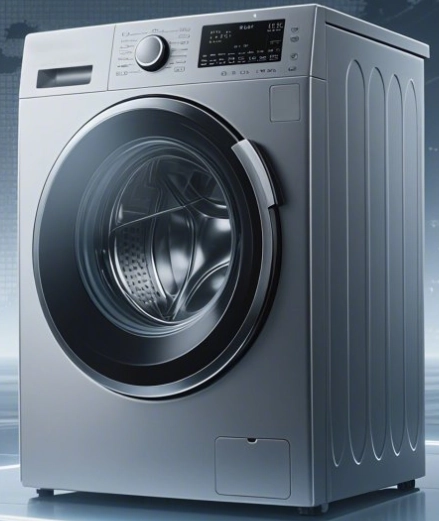
A fully automatic top-loading washer moves through several operating conditions during one cycle. The inverter allows the same motor to respond differently at each stage.
Supporting Controlled Movement During Washing
During washing, the motor may need moderate speed and repeated changes of direction. The purpose is not simply to spin as fast as possible. The movement must produce useful water flow while keeping the load under control.
An inverter lets the machine tune speed, rotation time, and torque for the selected program. This gives you more room to balance cleaning performance, fabric movement, and energy use.
Creating Strong Water Flow Through Reversing
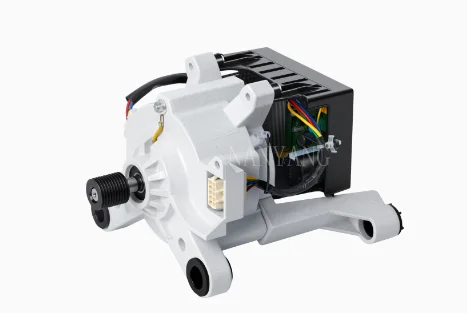
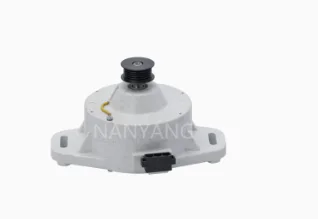
The BLDC Motor developed for top-loading washing machines uses high-speed, frequent forward and reverse rotation to generate strong water flow. Its compact housing, mounting flanges, precision shaft, and plug-in connection are designed for integration into a fully automatic washer.
The inverter is what makes that operating pattern practical. It controls the phase sequence when direction changes, regulates speed, and supplies the torque needed as the laundry load shifts.
Moving From Washing to Spinning
The motor’s task changes again when the washer moves into spinning. The control system must raise speed while checking whether the load is stable enough for the transition.
A sensible ramp reduces sudden vibration. If the load is uneven, the system can lower speed and attempt redistribution before accelerating again. Motor control cannot fix a weak suspension or poor tub balance, but it gives the appliance a better way to respond to changing conditions.
Why Is the TL BLDC Motor a Suitable Inverter-Controlled Solution?
Motor selection is easier when the supplier works with both the electromagnetic design and the wider drive system. Founded in 1992, Huzhou Nanyang Electric-Motor Co., Ltd. develops and manufactures motors for home appliances and new energy vehicles. Its work covers drive-system design, core component supply, motor assembly, testing, and mass production. The company reports a 420,000-square-meter factory area, annual capacity of 46 million home appliance motors, and 134 patents.
That scale matters to an appliance buyer, but the practical point is simpler: you can discuss the motor as part of the washer system rather than as an isolated component.
Built for Fully Automatic Top-Loading Washers
The TL BLDC Motor is designed for 6–15 kg top-loading washing machines. It provides consistent torque for changing loads and supports the frequent reversing pattern used to create water movement.
The product is a practical choice when you need variable control but do not want to move to a more complex direct-drive structure. It offers a clear path for fully automatic washer projects that need controlled speed, reasonable cost, compact installation, and brushless operation.
Match the Technical Parameters to Your Design
The motor uses a 310 VDC platform, rated power from 100 to 250 W, Class F insulation, an eight-pole structure, and a listed speed range of 2,700–3,000 rpm. You should match those figures with washer capacity, load profile, transmission ratio, desired water flow, controller output, and thermal limits.
Before confirming an order, check the TL BLDC Motor specifications against the complete wash cycle. A motor may fit the available space and still be wrong for the required torque, reversing frequency, or controller platform.
Use Manufacturing and R&D Support to Reduce Integration Risk
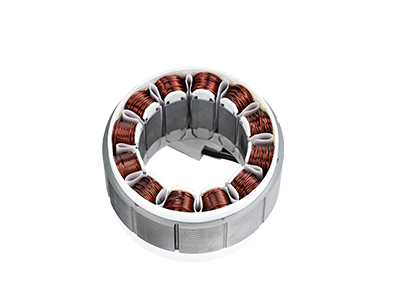
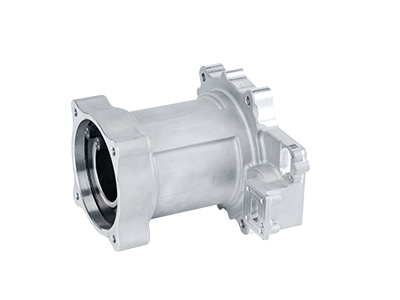
The company produces core items such as enamelled wire, stator and rotor cores, injection-molded parts, aluminum die-cast parts, and stamped sheet-metal parts in-house. This gives its engineering team more control over material matching and dimensional consistency.
Its R&D strength also covers BLDC rotor design, magnetic-loss reduction, torque-ripple control, molding technology, insulation, sealing, noise, and thermal performance. These are the details that affect whether an inverter-controlled motor behaves well after it is installed in the washer, not only during a short bench test.
Conclusion
The inverter’s purpose goes well beyond changing motor speed. It manages electronic commutation, torque, direction, acceleration, stopping, feedback, and protection. In a fully automatic washing machine, those functions shape how the appliance washes, reverses, responds to load changes, and enters the spin stage.
Start With the Required Motor Behavior
Define the washer capacity, wash pattern, reversing frequency, target speed, expected torque, noise limit, and duty cycle first. These requirements should guide the motor and controller selection.
Do not begin with rated power alone. A successful design depends on how the motor behaves across the whole cycle.
Confirm Electrical and Mechanical Compatibility
Check voltage, current limits, winding data, pole count, controller interface, shaft design, mounting points, transmission, insulation, and temperature rise.
The TL BLDC Motor offers a useful base for 6–15 kg top-loading washers, but final settings still need to reflect your own appliance structure and program.
Ask for Service Before Finalizing the Design
Huzhou Nanyang Electric-Motor Co., Ltd. can support product configuration, application review, quotations, and customized motor solutions. Send the washer capacity, voltage platform, installation drawing, load profile, speed target, and controller requirements when you request service.
You can contact the sales and engineering team to review the TL BLDC Motor, confirm compatibility, and discuss a matched motor-and-control solution before moving into tooling or production.
FAQ
Q1: What Is the Main Purpose of an Inverter in a Motor?
A1: The inverter controls the electrical output sent to the motor. It manages speed, torque, direction, starting, stopping, and phase switching.
Q2: Why Does a BLDC Motor Need an Inverter?
A2: A BLDC Motor has no brushes to perform mechanical commutation. The inverter switches current between the stator phases so the rotor can continue turning.
Q3: Does an Inverter Always Make a Motor More Efficient?
A3: No. It helps the motor match output to the load, but total efficiency still depends on motor design, control settings, transmission losses, washer mechanics, and operating conditions.
Q4: Is the TL BLDC Motor Suitable for Fully Automatic Washing Machines?
A4: Yes. It is designed for 6–15 kg fully automatic top-loading washing machines and supports frequent forward and reverse rotation for strong water-flow generation.
Q5: What Information Should You Provide When Requesting a Motor Solution?
A5: Provide washer capacity, voltage, target power, speed, reversing pattern, installation dimensions, transmission design, load profile, noise target, and controller details.