Can a 50 Hz Washing Machine Motor Run on 60 Hz Power?
A 50 Hz washing machine motor is approved for use on 60 Hz power when the exact motor and entire washer have been approved for that particular voltage-frequency. A plug that fits or a voltage that looks nearly the same is not sufficient. Frequency changes the operating point of an induction motor and can also affect the pump, timer, brake, transmission, capacitor, and other parts of the washing machine drive system.
This matters especially for an AC motor washing machine. A frequency decision must account for the washing machine motor, the motor type, the electrical supply, and the mechanism the motor drives. For export programs, frequency should be treated as an early specification item rather than a late label change.
The practical rule to approve a 50 Hz motor for 60 Hz service is to verify nameplate information, winding, capacitors, number of poles, terminal voltage and current, speed, service factor, temperature rise and washer load.
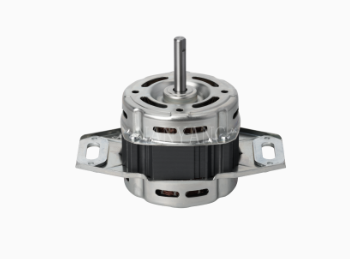
What Changes When a 50 Hz Washing Machine Motor Runs on 60 Hz?
The effect depends on the washing machine motor type, voltage, pole count, slip, winding design, and mechanical load. An induction motor washing machine does not respond to frequency in the same way as an electronically controlled BLDC drive, so the motor technology must be identified before any decision is made.
Synchronous Speed Increases With Supply Frequency
For an AC induction motor, synchronous speed is proportional to supply frequency. Moving from 50 Hz to 60 Hz increases synchronous speed by 20% for the same pole count. Actual shaft speed remains lower because of slip, but it normally rises as well. In a belt-driven washer, that can change agitator speed, spin speed, pump speed, transmission loading, noise, vibration, and brake timing. This behavior is especially relevant to AC motor washing machine designs that rely directly on mains frequency.
The Volts-per-Hertz Operating Point Changes
Motor magnetic flux is related to the voltage-to-frequency ratio. If voltage remains unchanged while frequency rises from 50 Hz to 60 Hz, the volts-per-hertz ratio falls. That can change available torque, current, slip, and temperature under load. The motor may appear to rotate normally with no load and still fail to meet starting or thermal requirements in the washer.
Starting Torque and Temperature Still Require Full-Cycle Testing
A useful test is not simply whether the shaft turns. The motor must start the intended wet load, reverse repeatedly, reach the required wash and spin speeds, and remain within winding-temperature, capacitor, current, and protection limits. Repeated starts and long spin periods can reveal problems that a short bench run will miss.
What Does 50/60 Hz Mean on a Washing Machine Motor Nameplate?
A 50/60 Hz marking indicates that the specified motor model has been rated for both frequencies under stated electrical and mechanical conditions. It does not mean that every voltage-frequency combination is permitted, and it does not mean that every member of the same product family has the same dual-frequency rating.
Read the Complete Rating Instead of Frequency Alone
Check voltage, current, output, capacitor, speed, pole count, duty, insulation class, wiring, and protection together. A 220 V 50 Hz winding and a 220 V 60 Hz winding can have different design data even when the housing is identical. This is why “which motor is used in washing machine” cannot be answered reliably from appearance alone.
Use the Exact AC Motor Configuration for the Target Market
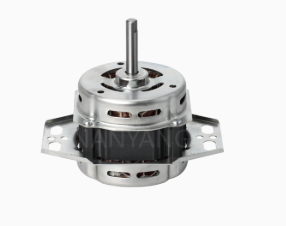
Nanyang’s AC Auto-motor range includes 50 Hz, 60 Hz, and 50/60 Hz options within the product family. Those entries are a starting point for selection, not permission to combine ratings from different variants. The exact part number should be confirmed for the washer capacity, voltage, mechanism, capacitor, and destination market.
The Washer Nameplate Must Match the Approved Assembly
A dual-frequency motor does not automatically make the full washer dual-frequency. The appliance label should reflect the configuration that passed validation. Nanyang R&D support can be used to coordinate the motor requirement with the complete washing machine drive and control design before tooling, wiring, and labels are locked.
Is Matching Voltage Enough for 50 Hz and 60 Hz?
No. Voltage and frequency must be evaluated together. The same nominal voltage can produce different motor speed, magnetic loading, current, and torque when frequency changes. Other mains-frequency components can also have independent limitations. The distinction between inverter motor vs induction motor in washing machines is also relevant because electronically controlled drives can decouple motor operating frequency from mains frequency.
Check Electrical and Mechanical Compatibility Together
Record nominal voltage and tolerance, frequency, phase, capacitor value, current, winding data, speed, torque, shaft dimensions, mounting, pulley ratio, and protection. A pulley change can correct driven speed, but it also changes torque at the mechanism and should not be treated as an automatic fix.
Do Not Forget the Rest of the Washing Machine Drive System
Timers, pumps, valves, solenoids, transformers, brake systems, fans, and control power supplies may respond differently to frequency. Even when the motor used in washing machine testing is dual-rated, the entire appliance still needs destination-market validation.
50 Hz vs 60 Hz Washing Machine Motor: Quick Engineering Check
|
Engineering Check |
Related Motor Term |
Engineering Answer |
|
Motor identification |
washing machine motor / washing machine motor type |
Confirm induction, AC, BLDC, DD, or other drive type before evaluating frequency. |
|
Frequency effect |
induction motor washing machine / AC motor washing machine |
For induction motors, speed and V/Hz operating point change when frequency changes. |
|
Compatibility |
electric motor in washing machine |
Check winding, capacitor, current, torque, speed, duty, and thermal limits. |
|
Appliance approval |
motor used in washing machine |
Validate the motor together with pump, controls, transmission, brake, and real washer load. |
A practical engineering check separates four questions: motor type, frequency effect, motor compatibility, and complete-appliance approval.
How Should OEMs Approve a Motor for Both Frequencies?
Request a Model-Specific Rating Sheet
Ask for the exact part number, winding, rated voltage-frequency combinations, capacitor, current, speed, output, torque, duty, insulation, ambient range, mounting, shaft, and wiring. Start with the Nanyang AC Auto-motor range and then obtain controlled data for the selected configuration.
Test 50 Hz and 60 Hz as Separate Operating Conditions
At each frequency, measure loaded starting, current, shaft speed, wash or spin performance, temperature rise, noise, vibration, capacitor behavior, stopping, and protection. Include low and high voltage tolerance, intended ambient temperature, and repeated cycles. The Nanyang testing capability can support the definition of a complete application validation plan.
Keep Market Variants and Parts Traceable
If one motor is approved for both markets, record the dual rating and common bill of materials. If different windings, capacitors, pulleys, labels, or controllers are needed, use distinct part numbers and prevent mixing during production and service.
Conclusion
A 50 Hz washing machine motor should run on 60 Hz only when the exact motor and the complete appliance configuration are approved for that condition. Frequency can change induction-motor speed, volts-per-hertz operating point, torque, current, and washer mechanism behavior. Use a model-specific rating sheet, validate the real washing machine motor under both frequencies, and submit the destination-market requirements through the Nanyang contact page before releasing a dual-frequency design.
FAQ
Q1: Will a 50 Hz washing machine motor run faster on 60 Hz?
A1: For an induction motor, synchronous speed rises with frequency. Actual shaft speed also depends on pole count, slip, voltage, and load.
Q2: Is the same voltage enough to use a 50 Hz motor on 60 Hz?
A2: No. Voltage and frequency must be checked together with winding, capacitor, current, torque, speed, duty, and the driven washer mechanism.
Q3: What does 50/60 Hz mean on a motor nameplate?
A3: It indicates approved operation at both frequencies under the manufacturer’s stated ratings and conditions.
Q4: Which washing machine motor type is most sensitive to supply frequency?
A4: A mains-fed AC induction motor has speed directly linked to supply frequency. Electronically controlled drives can behave differently because an inverter controls motor frequency.
Q5: Should the complete washing machine be tested at both frequencies?
A5: Yes. Pumps, controls, capacitors, timers, brakes, transmission parts, noise, vibration, and thermal behavior can also be affected.