AC Motor vs BLDC Motor in Washing Machines: Which One Fits Your Product?
For a washing machine, an AC induction motor is usually the better fit when the design prioritizes simple architecture, stable fixed or limited-speed operation, and controlled cost. A BLDC motor is usually the stronger option when the washer needs a wide speed range, precise reversing, quieter variable-speed operation, and closer electronic control. The better choice depends on washer type, load, controller, noise target, and production budget.
For product teams, the useful comparison is not AC or DC in general. A washer motor has to match the drum structure, transmission, controller, torque curve, speed range, noise target, and service plan. Narrowing the question to the real washer architecture produces a more useful engineering decision.
Nanyang Motor, founded in 1992, develops and manufactures home-appliance motors including AC induction, BLDC, DD, DDM, and dryer motor categories. Its portfolio provides a practical reference for comparing an AC motor with an electronically controlled BLDC washing machine motor.
What Is the Difference Between an AC Motor and a BLDC Motor in a Washing Machine?
Both can drive a washing machine, but they solve the motion-control problem differently. The distinction starts with how the magnetic field is produced and how speed and torque are controlled. For a broader operating overview, the existing guide on how a washing machine motor works explains how motor behavior changes across wash and spin stages.
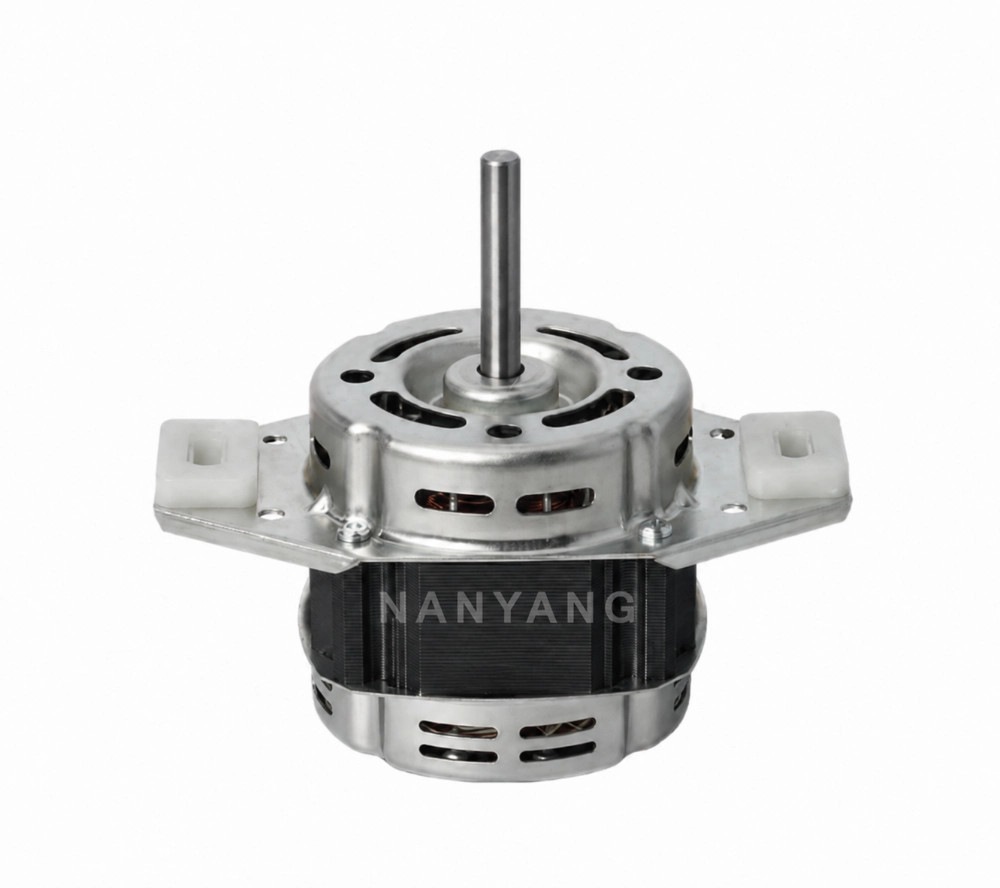
AC Induction Motor
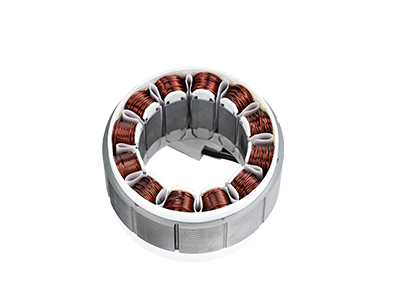
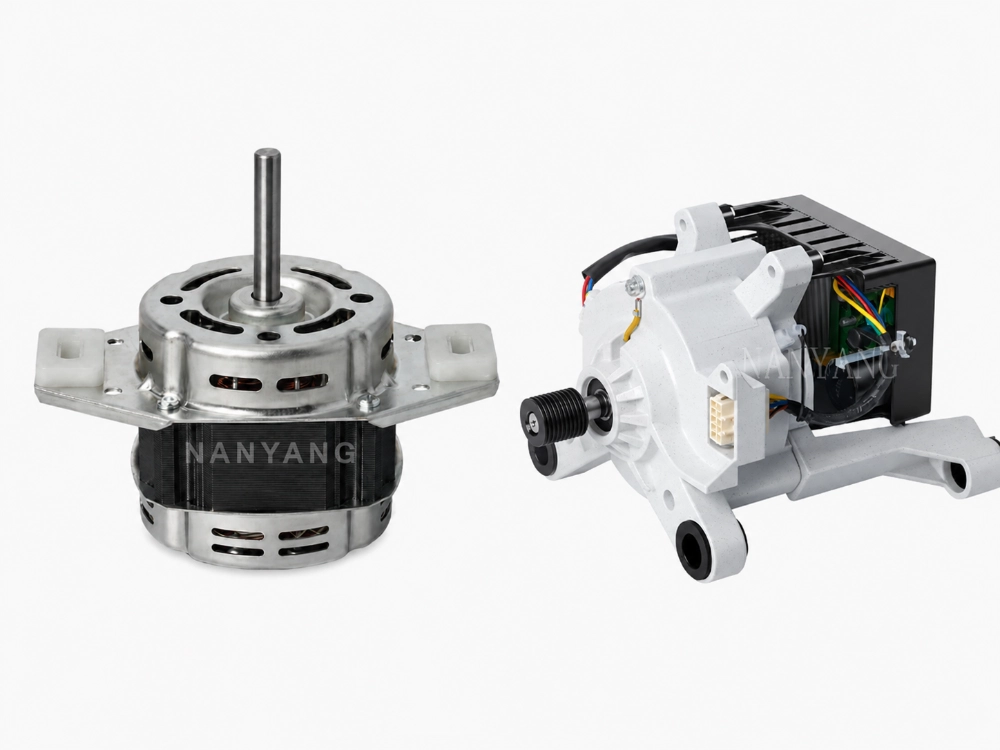
An AC induction motor uses alternating current to create a rotating magnetic field in the stator. The rotor follows that field and produces torque without brushes. In a suitable top-loading washer, this architecture is mature, robust, and cost-effective. Nanyang’s top-loading AC motors are designed for washing machines up to 15 kg, with final power and torque requirements depending on the washer design.
BLDC Washing Machine Motor
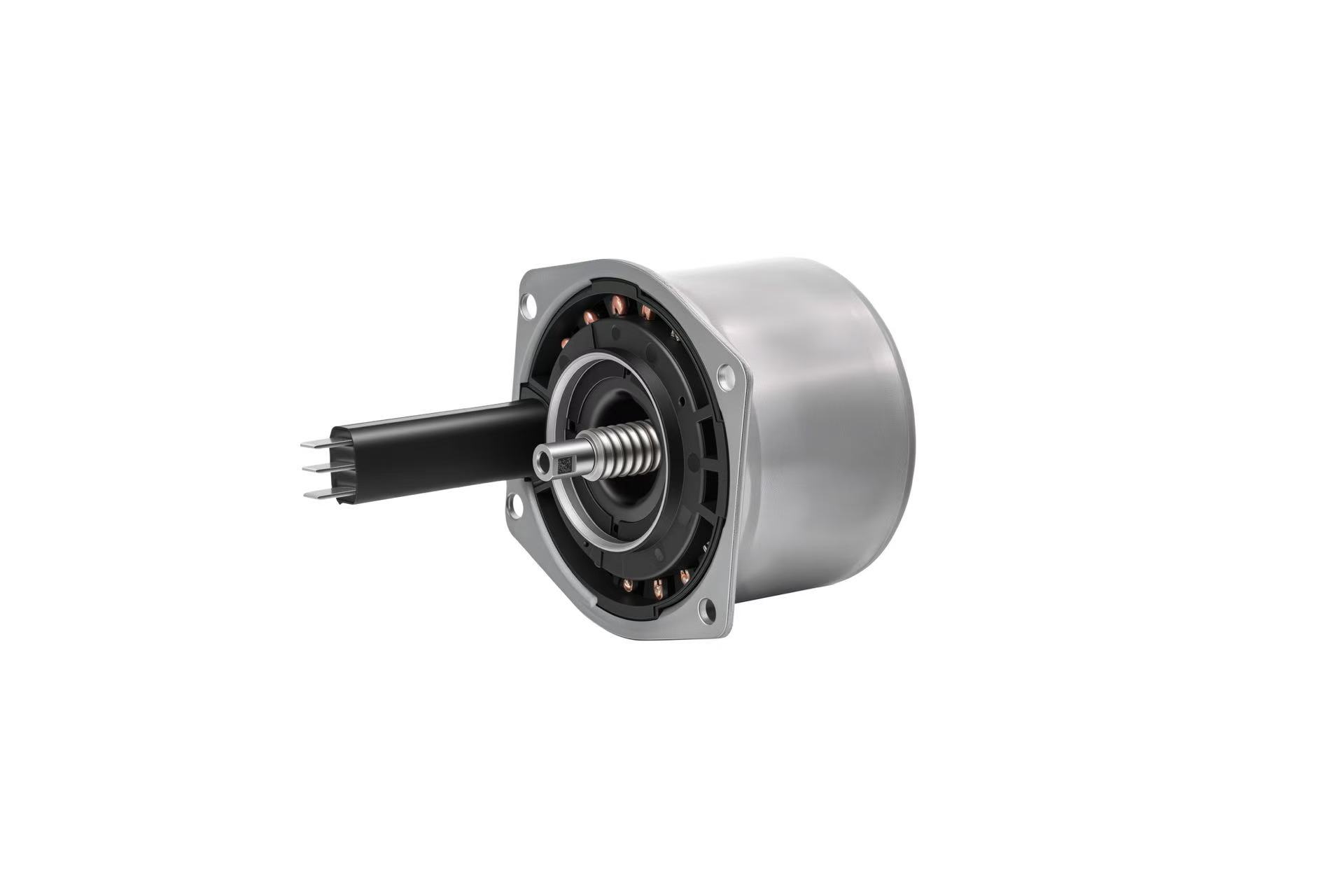
A BLDC motor uses permanent magnets on the rotor and electronic commutation in a controller or driver. The electronics switch current through the stator phases according to rotor position and the requested speed or torque. BLDC and inverter should not be treated as interchangeable terms: BLDC describes the motor construction, while inverter refers to the electronic control method.
Quick Buyer Comparison
The practical difference is control depth. An AC induction motor can be the simpler choice when the operating window is narrow. A BLDC system adds electronic control but gives the product team more freedom over speed, torque, braking, and program behavior. Neither label alone tells you which system will be quieter or more durable inside the finished washer.
Where Do AC and BLDC Motors Fit in Washing Machines?
Motor fit varies by drum structure, capacity, transmission, and product positioning. AC and BLDC motors suit different washer structures, capacities, transmission layouts, and control requirements. The more useful OEM question is which architecture best matches the intended motion profile and product positioning.
Top-Loading Washing Machines
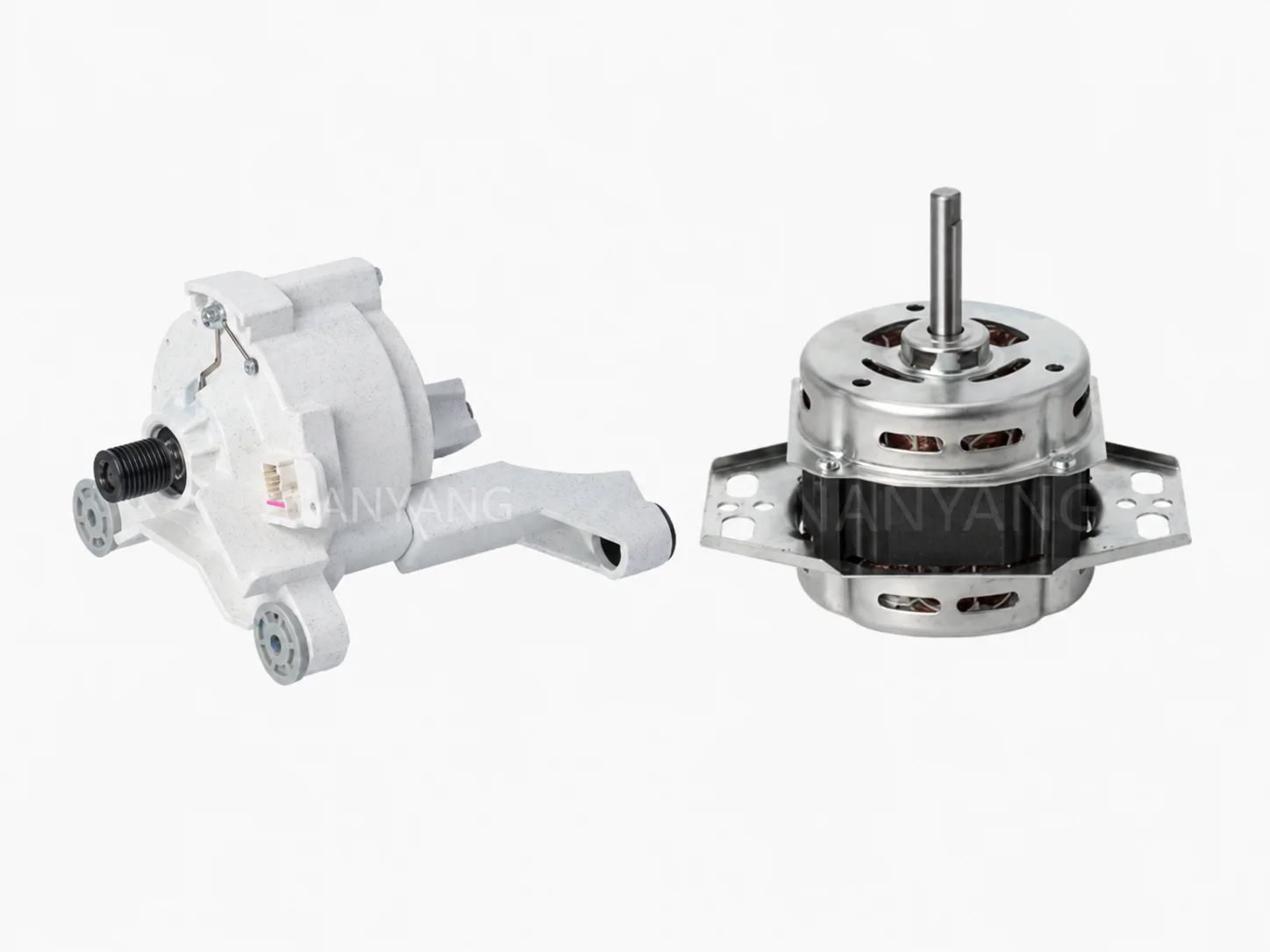
A top-loading washing machine may use an AC induction motor when the product needs a proven, economical drive architecture. For higher-capacity or higher-control designs, a DDM direct-drive layout may be used instead. Nanyang’s AC top-load motor category supports washing machines up to 15 kg, while its DDM category is designed for top-loading applications up to 25 kg.
Front-Loading Washing Machines
Front-load washers usually need a much wider operating range. The drum must rotate slowly in both directions during washing and then accelerate to high speed for spin extraction. A BLDC motor is a strong fit because the controller can regulate these transitions precisely. Nanyang’s drum BLDC category is designed for front-loading washing machine applications up to 20 kg.
Direct Drive and DDM Variants
Direct drive describes the transmission architecture rather than the basic electrical label. A DD motor can remove the belt and act directly on the drum, while a DDM motor serves direct-drive top-loading designs. This is why BLDC, inverter, and direct drive should not be treated as interchangeable terms.
AC Motor vs BLDC Motor: Which Is Better for Noise, Efficiency, and Control?
Speed and Torque Control
A BLDC system usually has the advantage when the washer needs many speed points, smooth reversal, controlled acceleration, and braking. The driver can regulate phase current and respond to changing load. An AC induction motor remains practical when the required operating window is simpler and the product does not need the same degree of closed-loop control.
Noise and Heat
Motor type is only one source of sound. Electromagnetic force, bearings, rotor balance, belt behavior, drum imbalance, cabinet stiffness, suspension, and control tuning all affect washer noise. A BLDC motor can support quiet variable-speed operation, but poor current control or structural resonance can still create audible tones. Thermal checks should include repeated wash and spin cycles, ambient temperature, airflow, and heat from the electronic stage.
Cost and Service
AC induction motors can offer a simple and familiar service path. BLDC motors remove brush wear but add a driver, feedback method, and software logic. Compare total system cost: motor, controller, wiring, mounting, test time, spare parts, and expected service effort. A lower motor price is not automatically the lower lifecycle cost.
How Do You Choose Between AC and BLDC for an OEM Washer?
Load and Capacity
Do not select from washer capacity alone. Define drum diameter, water and textile load, acceleration time, wash speed, spin speed, imbalance condition, starting torque, peak torque, and duty cycle. These values determine the torque-speed curve the motor must actually deliver.
Controller and Mechanical Fit
For a BLDC design, confirm DC-bus voltage, phase current, feedback method, commutation logic, protection, and communication. For any motor, confirm shaft, mounting, connector, cabinet space, insulation, and cooling. Nanyang’s AC Auto-motor is relevant when an AC architecture fits the washer, while BLDC projects should be matched to the motor and electronic-control requirements together.
Validation Before Mass Production
Prototype testing should cover cold start, hot start, low voltage, heavy load, low-speed reversal, acceleration, high-speed spin, temperature rise, noise, vibration, and abnormal-load protection. Supplier evaluation should also review traceability, winding consistency, rotor balance, process control, and change management. Nanyang operates 54 variable-frequency motor production lines across DD, DDM, BLDC, and dryer motor categories, supporting volume production after design validation.
When Should an OEM Choose AC or BLDC?
Choose AC for Simpler Cost-Controlled Platforms
Choose an AC induction motor when mains-powered architecture, stable operating points, mature service methods, and controlled cost are the main priorities. This is especially relevant to appropriate top-loading washer designs.
Choose BLDC for Wider Variable-Speed Control
Choose BLDC when the washer needs precise low-speed reversing, smooth acceleration, high-speed spin, electronic braking, and multiple programs. The motor and driver should be treated as one system because control quality directly affects startup, sound, heat, and torque response.
Freeze the System Only After Joint Review
Before final approval, give the supplier washer type, capacity, torque-speed profile, voltage, controller status, mechanical envelope, noise target, duty cycle, certification requirements, and annual quantity. R&D coordination is more valuable before motor, controller, and mounting interfaces are frozen than after prototype problems appear.
Conclusion
For washing machines, the useful AC motor vs BLDC motor decision is application-specific. AC induction motors can provide a practical, cost-controlled architecture for suitable platforms. BLDC washing machine motors are stronger when variable-speed control, precise reversing, and flexible program behavior are central to the design. Choose from the complete washer duty cycle, not from the motor label alone.
For a project review,contact Nanyang Motor with washer type, capacity, voltage, speed and torque requirements, controller details, dimensions, test plan, and expected production quantity.
FAQ
Where is an AC induction motor a practical choice in a washing machine?
It is a practical choice for suitable top-loading or cost-controlled platforms with a relatively simple operating window and mature service architecture.
Is a BLDC motor better than an AC motor in a washing machine?
BLDC is usually better for wide variable-speed control and precise reversing, while AC induction can be better for simpler, cost-controlled designs.
What is a BLDC washing machine motor?
It is a brushless permanent-magnet motor whose phases are electronically commutated by a driver or controller.
Can an AC motor run at variable speed?
Yes. An appropriate inverter or variable-frequency drive can vary the frequency and voltage supplied to a compatible AC motor.
What should an OEM send to a washing machine motor supplier?
Send washer type, capacity, torque-speed profile, voltage, controller details, mechanical dimensions, duty cycle, noise target, certification requirements, and annual quantity.